People Have Watched ‘Valley Girl’ for 43 Years. Deborah Foreman Says She and Nicolas Cage Hid a Private Signal in the Film
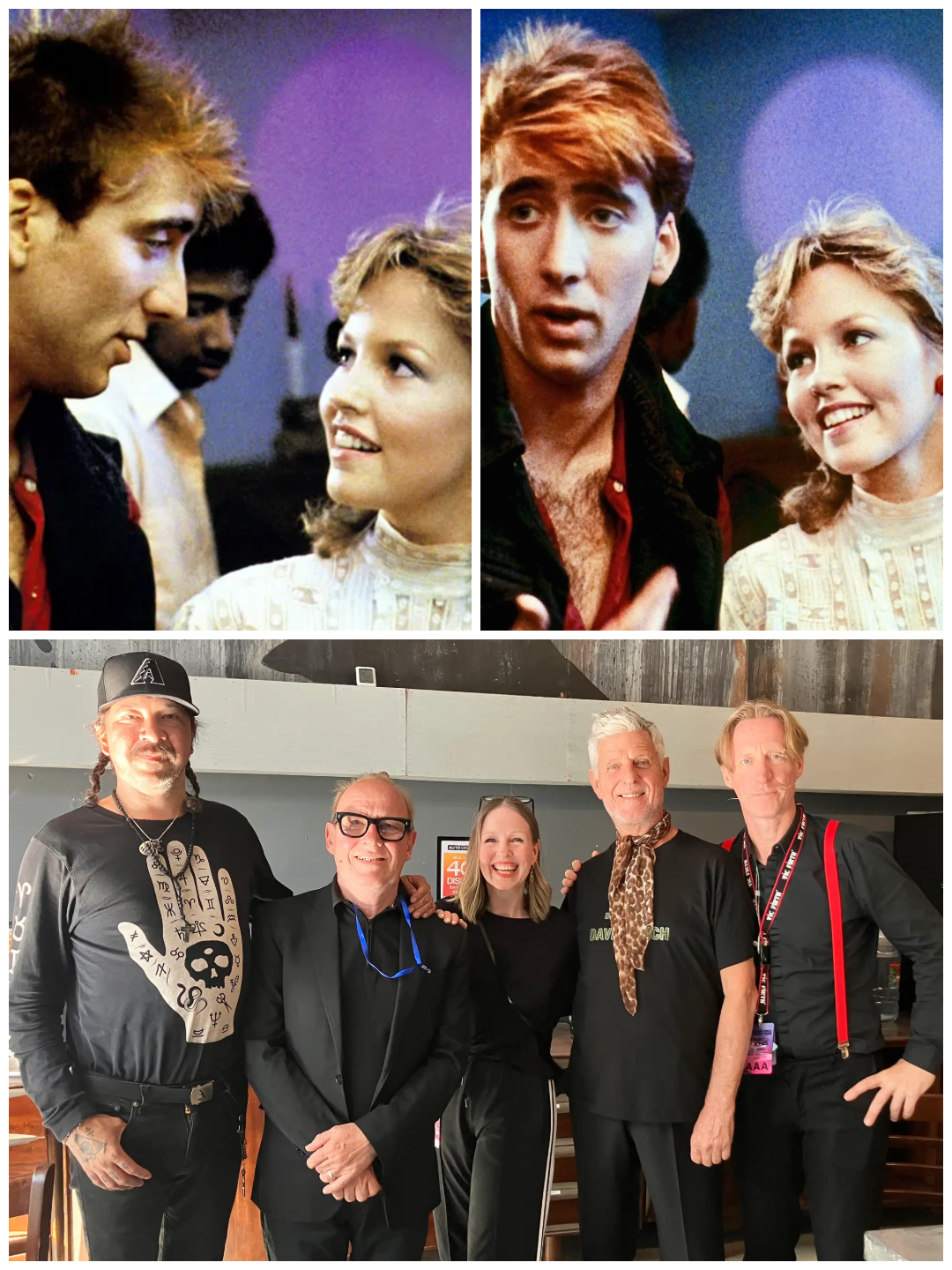
For more than four decades, fans of Valley Girl have watched Nicolas Cage and Deborah Foreman fall for each other against a soundtrack that helped define an era.
The 1983 romantic comedy turned Cage’s Randy and Foreman’s Julie into one of the most memorable young couples of early-’80s movies. Their relationship felt impulsive, awkward, funny and unusually natural.
Now Foreman has revealed that some of that chemistry contained something viewers were never supposed to fully understand.
She and Cage had a private signal.
It was not written into the screenplay.
The director did not instruct them to do it.
And according to Foreman, the gesture actually remains visible in the finished movie — even though most people who have watched Valley Girl for decades probably never realized what they were seeing.
Foreman says she and Cage developed a strange little ritual they called giving each other their “noses.”
It was their thing.
And once fans know about it, they can go back through the movie and try to spot the moments for themselves.
Foreman Says the Chemistry Started Almost Immediately
Valley Girl arrived in theaters in 1983, loosely borrowing the basic structure of Romeo and Juliet and transplanting it into the culture clash between Los Angeles neighborhoods.
Foreman played Julie Richman, a popular girl from the San Fernando Valley.
Cage played Randy, a punk-loving Hollywood outsider who did not fit comfortably into Julie’s social world.
Their attraction drives the movie.
Julie is expected to stay with the kind of boyfriend her friends understand. Randy represents something messier and more exciting.
For the story to work, audiences had to believe the connection between the two characters.
Foreman says that connection between herself and Cage developed quickly.
Rather than spending the entire production trying to manufacture romantic chemistry, the two actors found an easy, playful rhythm.
That included small things that had nothing to do with the written dialogue.
One of them became their private signal.:max_bytes(150000):strip_icc():focal(1067x788:1069x790):format(webp)/FOREMAN-VALLEY-GIRL-082626-262bef0c20114f2ab334f8df5174ba45.jpg)
They Started Giving Each Other Their ‘Noses’
Foreman’s description of the gesture is unusual enough that it almost sounds like an inside joke that should have disappeared once filming ended.
She and Cage began exchanging what they called their “noses.”
It was spontaneous.
There was no complicated meaning behind it.
They were not secretly communicating some major emotional message about Randy and Julie.
It was simply something between the two actors that amused them.
The important detail is that they sometimes did it while the cameras were rolling.
Foreman says those moments survived the editing process.
The signal is therefore still sitting inside Valley Girl more than 40 years later.
Most viewers simply did not know there was anything to look for.
She has described it as something that is “not really evident unless I point it out.”
That may be the best kind of movie secret.
It was never hidden through editing or removed from the film.
It has been visible the entire time.
The audience just lacked the information needed to recognize it.:max_bytes(150000):strip_icc():focal(899x1032:901x1034):format(webp)/Deborah-Foreman-Nicolas-Cage-Valley-Girl-082626-45533381f16a426ca6e7e0a246eaf127.jpg)
It Wasn’t a Director’s Trick
Behind-the-scenes stories about famous movies often involve clever decisions made by directors.
A prop is placed somewhere intentionally.
An actor is told to improvise.
A reaction is secretly captured.
A tiny Easter egg is inserted for fans.
This was different.
Foreman says the “nose” gesture belonged to her and Cage.
It developed naturally between them rather than being planned as part of the movie.
That makes it more personal.
When viewers see one of those moments, they are not necessarily watching Julie and Randy perform something required by the plot.
They may be catching Foreman and Cage briefly acknowledging each other inside the scene.
The private joke became part of the fictional relationship.
And because nobody told audiences to look for it, it blended into the overall chemistry between the characters.
‘Valley Girl’ Needed That Chemistry
The secret signal might seem insignificant until you consider how much Valley Girl depends on the relationship at its center.
The movie is not built around complicated plot mechanics.
Its appeal comes from watching two young people who seem to belong to different worlds decide that they want each other anyway.
Randy does not fit Julie’s carefully defined Valley social circle.
Julie knows being with him could disrupt her friendships and reputation.
That tension only works if viewers understand why she keeps being drawn back to him.
Cage and Foreman had to sell that attraction through much more than dialogue.
Looks mattered.
Body language mattered.
Tiny reactions mattered.
So did the sense that the two characters shared something other people around them could not completely understand.
Knowing that the actors themselves had a private signal gives that dynamic an unexpected real-life parallel.
Randy and Julie have their own connection inside the story.
Cage and Foreman apparently had one inside the performance.
The Film Became Part of Cage’s Early Hollywood Identity
Cage was still at the beginning of his career when Valley Girl was made.
He had not yet become the star associated with movies such as Moonstruck, Leaving Las Vegas, The Rock, Con Air and National Treasure.
In Valley Girl, audiences were seeing a much younger performer establishing the unpredictable quality that would later become part of his screen identity.
Randy is rebellious without feeling completely calculated.
He is romantic but strange.
He can be confident one moment and vulnerable the next.
Foreman’s Julie gives him someone to play against who feels equally alive.
Their chemistry became one of the main reasons the movie survived beyond its original release.
More than 40 years later, people still discuss the pair.
Now they have another reason to revisit their scenes.:max_bytes(150000):strip_icc():focal(1010x484:1012x486):format(webp)/Deborah-Foreman-Modern-English-082626-469a66627abe42d4917daf1fd8f5f1ef.jpg)
‘I Melt With You’ Became Part of the Movie’s Afterlife
The lasting appeal of Valley Girl also owes a great deal to its music.
Modern English’s “I Melt With You” became permanently connected to the film for generations of viewers.
Even people who have not watched the movie recently can hear the song and immediately associate it with ’80s romance and the atmosphere surrounding Valley Girl.
Foreman has recently revisited that connection by appearing with Modern English, bringing the movie’s legacy back into view more than four decades after its original release.
That renewed attention has also created space for stories that fans may never have heard during the film’s first life.
The “nose” signal is exactly that kind of revelation.
It does not rewrite the story.
It gives viewers a new reason to watch familiar scenes differently.
The Signal Has Been There Since 1983
That is what makes Foreman’s revelation more satisfying than a simple story about having good chemistry with Nicolas Cage.
Fans can test it.
The gesture was not something that happened only between takes.
It was not confined to a rehearsal room or remembered only by the actors.
Foreman says it is still there.
Somewhere inside a movie audiences have been watching since 1983 are small moments when the two stars were communicating with each other in a way nobody else fully understood.
For decades, viewers saw Julie and Randy.
Now they can also watch Deborah Foreman and Nicolas Cage.
And if they look closely enough, they may finally notice the strange little private signal the two actors never expected audiences to decode.
They were giving each other their “noses.”
It has been hiding in plain sight for 43 years.