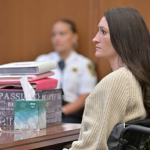
LINDSAY CLANCY JURY APPEARS SPLIT 11-1 AS DEFENSE DEMANDS ACTION OVER HOLDOUT JUROR
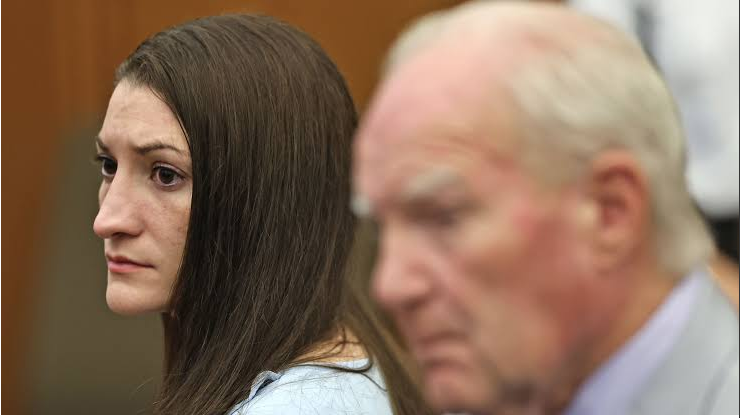
LINDSAY CLANCY JURY APPEARS SPLIT 11-1 AS DEFENSE DEMANDS ACTION OVER HOLDOUT JUROR
SIX DAYS OF DELIBERATIONS END WITHOUT A VERDICT AS ONE JUROR BECOMES THE FOCUS OF A DRAMATIC COURTROOM DISPUTE
:max_bytes(150000):strip_icc():focal(886x640:888x642):format(webp)/lindsay-clancy-trial3-9326-b486bdcc6dcf409990e5bd6aaab24ded.jpg) PLYMOUTH, MASS. — The closely watched trial of Lindsay Clancy has reached another dramatic turning point after six days of jury deliberations ended without a verdict, with her defense attorney claiming that a single juror is preventing the panel from reaching a unanimous decision.
PLYMOUTH, MASS. — The closely watched trial of Lindsay Clancy has reached another dramatic turning point after six days of jury deliberations ended without a verdict, with her defense attorney claiming that a single juror is preventing the panel from reaching a unanimous decision.
Clancy, a former labor and delivery nurse, is accused of causing the deaths of her three young children at the family’s home in Duxbury, Massachusetts, in January 2023.
She does not dispute that she caused the children’s deaths. Instead, her defense has argued that she was experiencing severe postpartum psychosis and was not criminally responsible for her actions.
The prosecution has presented a sharply different account, arguing that Clancy understood what she was doing and acted intentionally.
Now, after more than 35 hours of deliberations, the jury remains deadlocked.
 DEFENSE CLAIMS ONE JUROR IS HOLDING UP THE VERDICT
The latest courtroom drama began after the jury’s foreperson sent Judge William Sullivan a note concerning a juror who allegedly was not following the court’s instructions regarding reasonable doubt.
Defense attorney Kevin Reddington responded by asking the judge to remove that juror from the panel.
Reddington argued that the juror was refusing to follow the judge’s instructions and warned that the disagreement could ultimately force the court to declare a mistrial.
The judge rejected the request.
Instead, Sullivan questioned the jurors individually under oath before addressing the entire panel about the legal meaning of reasonable doubt.
All of the jurors indicated that they could follow the court’s instructions.
The jury was then sent back to deliberate.
By the end of Thursday, however, there was still no verdict. The jurors were dismissed and are expected to return Friday for another day of deliberations.
THE 11-1 SPLIT HAS NOT BEEN OFFICIALLY CONFIRMED
Reddington told reporters that the jury appeared to be divided 11-1, with one juror apparently standing apart from the other 11.
However, the court has not publicly released an official vote count, and it remains unclear which way the juror is leaning.
That distinction is important because the public does not yet know whether the reported holdout favors conviction or acquittal.
What is known is that the jury has twice indicated that it was having difficulty reaching a unanimous decision.
The judge has already used a so-called “dynamite charge,” a standard instruction encouraging jurors to continue working toward a verdict when they appear deadlocked.
WHY “REASONABLE DOUBT” MATTERS
At the center of the latest dispute is one of the most important principles in American criminal law: reasonable doubt.
The prosecution carries the burden of proving the defendant’s guilt beyond a reasonable doubt.
Judge Sullivan reminded the jurors that a conviction cannot be based simply on a belief that guilt is probable or even highly likely. The evidence must meet the much higher legal standard required for a criminal conviction.
Reddington claims the holdout juror is refusing to follow that instruction.
The judge, however, determined that there was not sufficient reason to remove the juror and instead directed the panel to continue deliberating.
THE CENTRAL QUESTION: CLANCY’S STATE OF MIND
The case has never primarily been about whether Clancy caused the deaths of her children.
The defense acknowledges that she did.
The central question for jurors is whether she was criminally responsible for her actions at the time.
Reddington has argued that Clancy was suffering from severe postpartum psychosis and had become detached from reality.
Her defense has presented evidence concerning her mental-health struggles, treatment and medications in the weeks leading up to the January 2023 incident.
The defense argues that she was experiencing hallucinations and believed she was acting under forces she could not control.
Prosecutors have rejected that explanation.
They argue that Clancy was aware of her actions and that evidence surrounding the events demonstrated planning and intent.
Assistant District Attorney Jennifer Sprague has argued that Clancy’s children became connected in her mind to her own suffering and that she deliberately acted against them.
The competing narratives have left the jury with a difficult question about the difference between severe mental illness and legal insanity.
WHAT HAPPENED IN JANUARY 2023
On Jan. 24, 2023, Clancy’s three children — Cora, 5, Dawson, 3, and Callan, 8 months — were found at the family’s home in Duxbury.
The children later died.
Clancy subsequently attempted suicide by jumping from a window of the home. She survived but suffered catastrophic spinal injuries that left her paralyzed.
The case has since become one of the most closely followed criminal trials in Massachusetts.
Much of the courtroom testimony has focused on Clancy’s mental state, her interactions with medical professionals and the treatment she received before the tragedy.
A MISTRIAL IS NOW A REAL POSSIBILITY
The latest deadlock has raised the possibility that the trial could end without a verdict.
If the jury cannot unanimously agree, Judge Sullivan could eventually declare a mistrial, meaning the case would end without a final determination of guilt or innocence.
A mistrial would not necessarily mean the legal case against Clancy was over.
Depending on the circumstances, prosecutors could seek a new trial. Other possibilities could include negotiations between the defense and prosecution or a decision not to pursue another trial.
For now, however, the judge is giving the jury additional time.
The panel is expected to return Friday for its seventh day of deliberations.
“I DON’T WANT A MISTRIAL”
Despite requesting that the holdout juror be removed, Reddington has made clear that he does not want the case to end in a mistrial.
Speaking to reporters, the defense attorney expressed confidence in his presentation of the case and argued that he had effectively challenged the prosecution’s evidence.
His comments came as tensions surrounding the jury deadlock intensified.
The judge, meanwhile, has attempted to avoid improperly influencing any individual juror while ensuring that every member of the panel follows the law.
That balance could become increasingly important if deliberations continue without progress.
WHAT HAPPENS NEXT?
For now, the jury remains together.
The next stage could produce a verdict, another deadlock or further questions from the panel.
If the jurors reach a unanimous decision, the court will announce the verdict and the case will move into its next phase.
If they remain divided, however, the possibility of a mistrial could become unavoidable.
For the families involved, the uncertainty comes more than three years after the January 2023 tragedy.
And for Clancy, the outcome could determine whether she is found criminally responsible for the deaths of her three children or whether the jury accepts the defense’s argument that severe mental illness prevented her from being legally responsible for her actions.
After six days of deliberations, one question now dominates the courtroom:
WILL THE JURY FINALLY REACH A VERDICT — OR WILL ONE HOLDOUT JUROR BRING THE HIGH-PROFILE TRIAL TO A MISTRIAL?