TOMMY ROBINSON ASSOCIATE CLAIMS CREDIT FOR MASKED DOVER PROTEST — HUNDREDS BLOCK PORT AS “STOP THE BOATS” DEMONSTRATION BRINGS TOWN TO A STANDSTILL
TOMMY ROBINSON ASSOCIATE CLAIMS CREDIT FOR MASKED DOVER PROTEST — HUNDREDS BLOCK PORT AS “STOP THE BOATS” DEMONSTRATION BRINGS TOWN TO A STANDSTILL
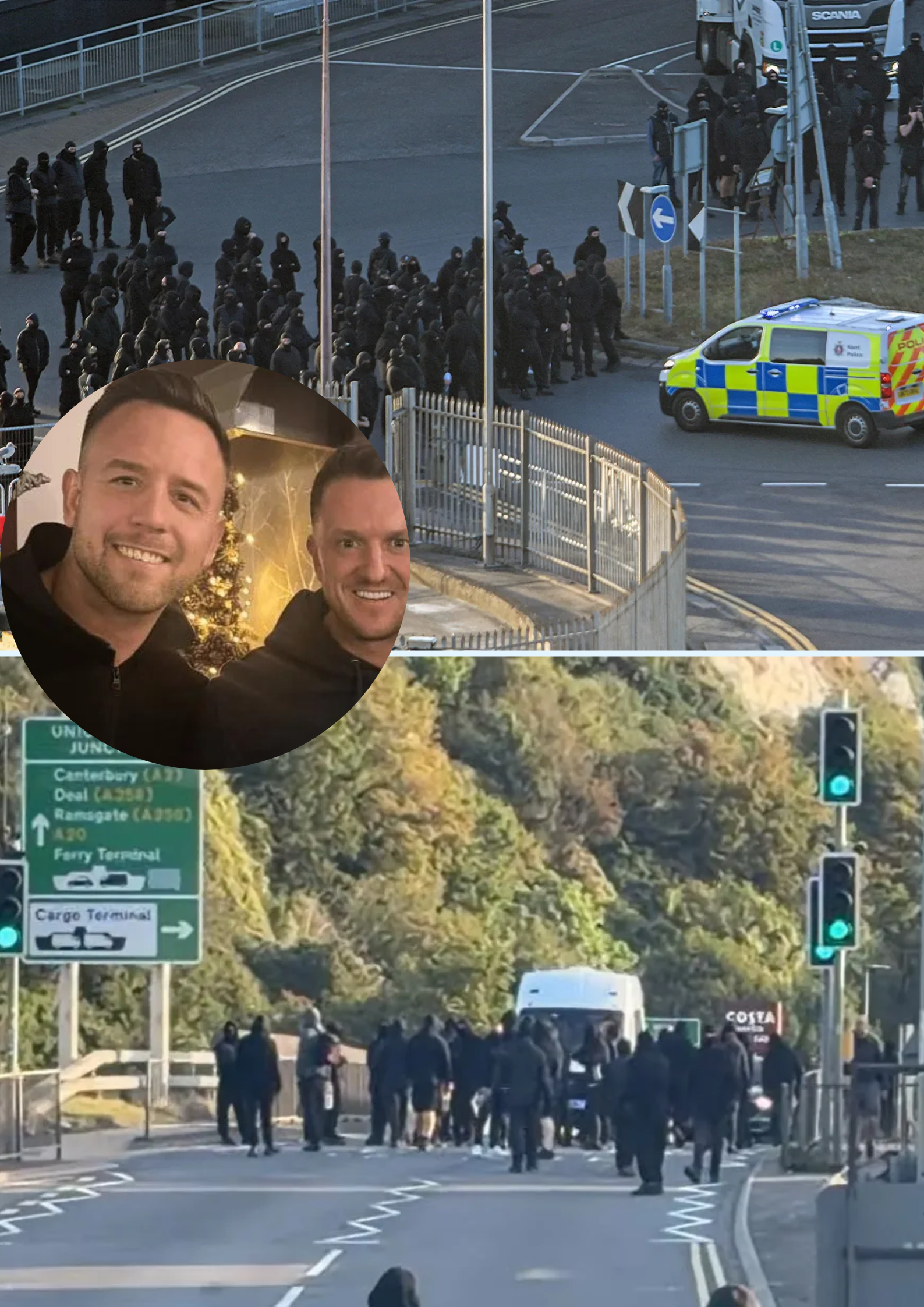
Hundreds of masked protesters dressed in black descended on Dover, blocking roads to one of Britain’s busiest ferry ports — as a prominent associate of Tommy Robinson appeared to claim responsibility and warned: “This is our warning.”
The dramatic scenes unfolded on Saturday, September 5, when protesters wearing black clothing and balaclavas gathered around Dover and blocked key roads leading to the port.
Traffic was brought to a halt, ferry passengers were caught in lengthy queues and National Highways warned that congestion stretched for around four miles.
At the centre of the controversy was Daniel Thomas, known online as “Danny Tommo,” an anti-immigration activist and associate of Tommy Robinson.
Thomas shared footage from the demonstration on social media and wrote:
“It’s time! Protect our country! And more importantly our women and children! This is our warning.”
The message quickly drew attention as questions mounted over who had organised the protest and whether the gathering had been planned in advance.
 MASKED MEN FLOOD DOVER
Witnesses described a large group of men, many dressed entirely in black and wearing face coverings.
Video footage showed protesters marching through Dover while chanting “Whose streets? Our streets” and “Stop the boats.”
At various points, groups blocked roads and intersections, preventing vehicles from reaching the port.
The disruption was particularly significant because Dover is the UK’s main international ferry gateway to France.
National Highways said the A20 had been closed in both directions, while queues built up to around four miles. Holidaymakers, lorry drivers and ferry passengers were among those caught in the resulting traffic chaos.
WHO IS DANNY TOMMO?
Thomas has emerged as a prominent figure in Britain’s anti-immigration activist scene.
He recently launched a group called Patriot Platform, describing it as “the resistance standing against the downfall of the United Kingdom.”
Anti-extremism organisation Hope Not Hate has linked the Dover demonstration to the group and described Patriot Platform as a far-right network.
Thomas has previously appeared alongside Tommy Robinson at political rallies and events, and the pair have frequently been photographed together.
The Times reported that Thomas is a 37-year-old father of four from Hampshire and that he was jailed in 2016 after being convicted of attempted kidnapping. He has since said that religion helped him turn his life around.
Thomas has rejected the characterisation of his group as violent or extremist, presenting Patriot Platform as a movement opposed to illegal immigration.
 DID TOMMY ROBINSON ORGANISE IT?
That question quickly became one of the biggest controversies surrounding the demonstration.
There is no suggestion that Robinson knew about the protest in advance or directly organised it, according to The Sun.
However, after the demonstration began, Robinson shared footage and appeared to suggest that the events were part of a wider coordinated action.
He wrote on X that patriots had “mobilised to close down the port” at different locations around Dover.
He later described the action as a “warning shot to the establishment.”
That prompted fresh questions about how the protest had been organised — and why police appeared to have been caught off guard.
POLICE UNDER PRESSURE
Kent Police described the demonstration as “spontaneous.”
No arrests were made.
The force said officers responded to the protest during Saturday morning and that everyone involved had dispersed by midday, with traffic subsequently returning to normal.
But local politicians questioned whether authorities should have known about the gathering beforehand.
Chris Vinson, leader of the Conservative group on Dover District Council, described the protesters as a coordinated group of several hundred masked men and said their presence had brought the town to a standstill.
He also described the sight of men dressed in black and wearing balaclavas blocking vehicles as intimidating, particularly for people who were unaware of why the group had gathered.
Dover and Deal MP Mike Tapp said he would ask whether intelligence had been missed and whether additional police resources could be deployed quickly if Dover faced another similar protest.
POLITICAL BACKLASH
The demonstration was condemned across the political spectrum.
Reform UK leader Nigel Farage called the scenes “disgusting” and criticised protesters for wearing balaclavas.
His colleague Robert Jenrick described the disruption as “disgraceful,” saying ordinary people and businesses should not have their lives disrupted.
The Government also condemned the disruption while stressing that peaceful protest remains a fundamental democratic right.
The controversy comes amid intense political debate over small-boat Channel crossings and Britain’s immigration system.
And Sunday’s events in Portsmouth — where another major anti-migration protest followed the arrival of a boat carrying around 140 people — only intensified concerns about the possibility of similar demonstrations spreading elsewhere.
A WARNING OF WHAT COULD COME NEXT?
The Dover protest eventually ended without arrests and traffic was restored.
But the images of hundreds of black-clad, masked demonstrators blocking access to a major international port have already triggered a much bigger debate.
Who organised the mobilisation?
How did hundreds of people arrive at the same location apparently without police being prepared?
And was Saturday’s demonstration a one-off — or the beginning of something larger?
Thomas has already described his movement as a nationwide resistance.
For police and local communities, the bigger concern may now be what happens the next time the call goes out.