Hiroyuki Sanada Had Never Played Mortal Kombat — Then One Scorpion Rehearsal Made the Entire Set Cheer
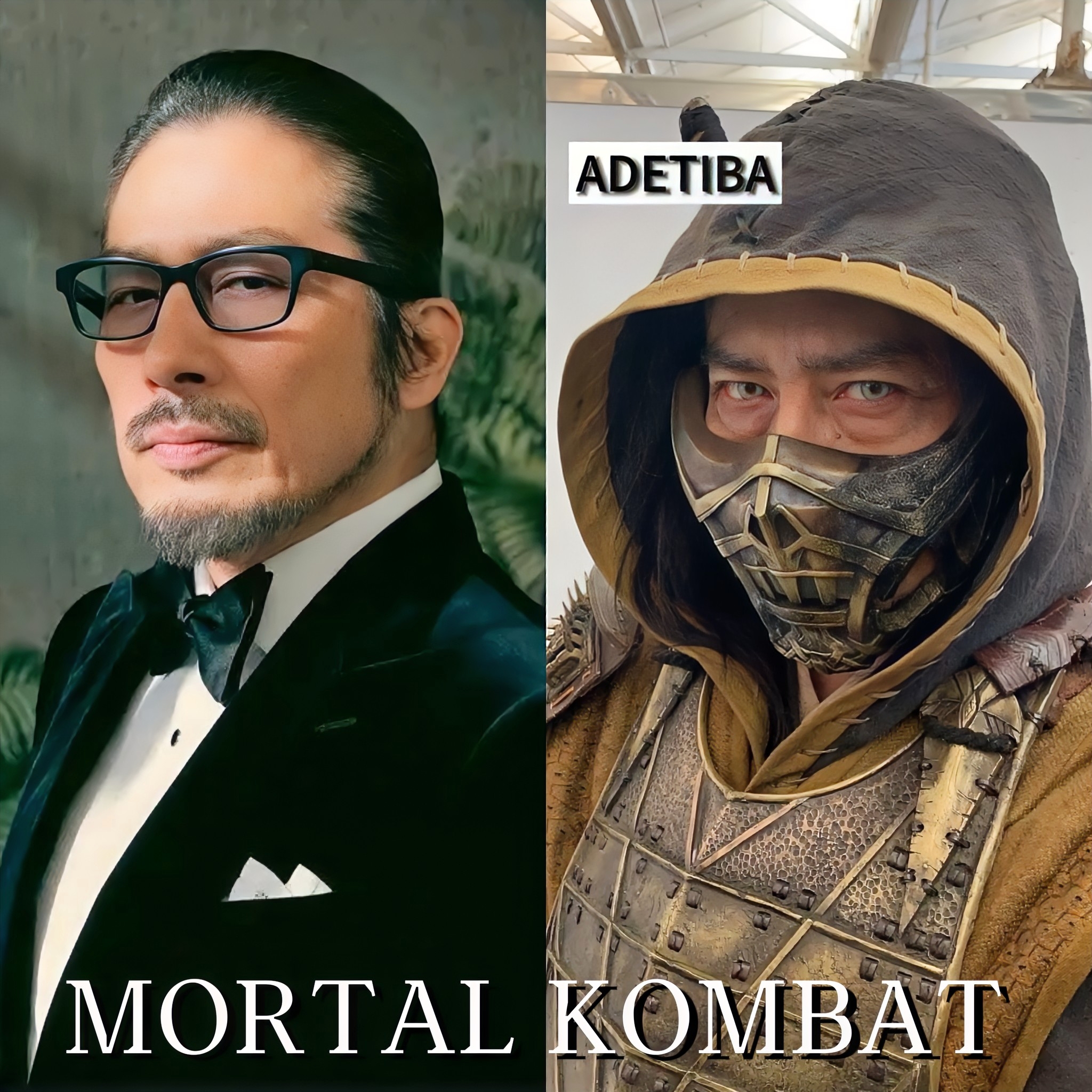
Millions of Mortal Kombat fans knew exactly who Scorpion was.
Hiroyuki Sanada didn’t.
Sanada knew Mortal Kombat existed, but before being offered the role of Hanzo Hasashi — the warrior who becomes Scorpion — in the 2021 film, he had never actually played one of the games himself.
That left him in an unusual position.
He was an internationally respected Japanese actor with decades of martial-arts and action experience, preparing to portray a character whose smallest movements had already been memorized by generations of gamers.
Once he accepted the role, Sanada began studying.
He researched Hanzo’s history, his fighting style, his weapons and the visual language players associated with Scorpion. The deeper he went, the more he understood the scale of what he had agreed to do.
“This was my first time playing a famous game character,” Sanada later explained, acknowledging the pressure that came from knowing fans already understood Scorpion’s weapons and movements.
But simply reproducing what players had seen on a screen was never going to be enough for him.

Scorpion Had to Look Familiar — but Hanzo Had to Feel Japanese
Sanada quickly identified another responsibility.
Hanzo Hasashi is Japanese. Now the character was being played by a Japanese actor who had spent much of his career working in both Japanese productions and Hollywood.
Sanada felt that mattered.
He later explained that if he was going to portray Hanzo himself, he wanted the character’s Japanese qualities to feel convincing. That meant looking beyond the performance.
Sanada worked with departments responsible for the sets, costumes and props, discussing details and pushing the production toward something he believed felt more authentic. With Scorpion, the challenge became finding a balance: preserve the instantly recognizable image gamers expected while grounding that image in a more believable Japanese aesthetic.
The same thinking carried into the action.
Sanada became involved while the opening fight was still being choreographed, working with the director and action team on how Hanzo should move. He did not want the confrontation to function only as a demonstration of martial-arts technique.
The emotion had to drive it.
Hanzo has just suffered an unimaginable attack on his family. Sanada wanted the audience to understand why he was fighting, not merely admire how he fought.
That approach helped give the film’s opening sequence its strikingly different atmosphere.
For roughly the first 13 minutes, the filmmakers deliberately avoided having the Asian characters suddenly speak English for the audience’s convenience. Hanzo speaks Japanese; Bi-Han, the man who will become Sub-Zero, speaks Chinese.
Producer Todd Garner said the decision was intentional. Viewers were expected to read subtitles and recognize that the two men came from different worlds — even that they could not simply understand one another because the story needed them to.
For Sanada, the result was closer to a Japanese period drama fused with the heightened mythology of Mortal Kombat.
Then came a rehearsal that showed him just how seriously fans took the other half of that equation.

One Line Changed Sanada’s Understanding of Scorpion
At some point during rehearsals, Sanada practiced one of Scorpion’s most recognizable attacks.
The spear shoots toward an opponent.
It connects.
And Sanada delivered the words attached to that move for decades:
“GET OVER HERE!”
He was not prepared for what happened around him.
The cast and crew erupted.
Sanada recalled people cheering and applauding as though they had been waiting for that exact moment. Some essentially told him: this was it — this was the thing they wanted to hear.
Until then, Sanada knew intellectually that Scorpion was popular.
The reaction made him understand it emotionally.
He later said that hearing the response during the first rehearsal made him realize just how important the line was. He even began hoping movie audiences would react with the same excitement when they finally heard it in a theater.
For longtime players, the response was hardly surprising.
Scorpion’s spear attack and the shouted command attached to it had survived multiple generations of Mortal Kombat, becoming one of the franchise’s defining sounds.
For Sanada, however, the moment worked almost in reverse.
Most actors playing a beloved game character arrive knowing the catchphrase and then try to find the person underneath it.
Sanada first built the person.
Only later did he fully understand the cultural weight of the catchphrase.

And He Wasn’t Planning to Let a Double Do All the Fighting
Sanada’s commitment did not stop with the character’s Japanese identity or famous dialogue.
He wanted Scorpion’s physical performance to remain his own as much as possible.
Sanada explained that he performed the fight choreography himself because another performer’s movements would inevitably look different from his. Producer E. Bennett Walsh also recalled being impressed that Sanada, then nearly 60, was performing his own stunts and fights.
There was one major complication.
The Scorpion costume was heavy.
Sanada said fighting while planted on the ground was manageable. Jumping and rolling in the armor were another matter. Those movements put considerably more strain on him, especially when the production required repeated takes.
His solution was wonderfully unglamorous.

Whenever he had spare time, he stretched.
Then he went back and did it again.
It fit the broader philosophy behind director Simon McQuoid’s film. The filmmakers wanted actors who could convincingly perform the action themselves, allowing fights to be photographed more openly instead of constantly hiding stunt doubles with cuts and camera angles.
For a movie adapted from a fighting game, the fights were not supposed to feel detached from the characters.
They were part of the characters.
That made Sanada an unusually fitting Scorpion even though he began with far less Mortal Kombat knowledge than many of the people around him.
He brought decades of physical training. He understood Japanese movement and period-film traditions. He challenged design choices when they did not feel right. He helped shape Hanzo’s choreography around emotion.
Then the game taught him the rest.
Hiroyuki Sanada entered Mortal Kombat knowing he had been asked to play a famous character.
It took one rehearsal for him to understand just how famous.
By the time Scorpion finally said “Get over here” on screen, Sanada wasn’t simply repeating a game catchphrase anymore — he knew exactly what audiences were waiting for.