MIDDLESBROUGH SCHOOLS SHUT EARLY FOR A66 FUNERAL — HEADTEACHERS ACCUSED OF “GIVING IN TO THUGS”
MIDDLESBROUGH SCHOOLS SHUT EARLY FOR A66 FUNERAL — HEADTEACHERS ACCUSED OF “GIVING IN TO THUGS”
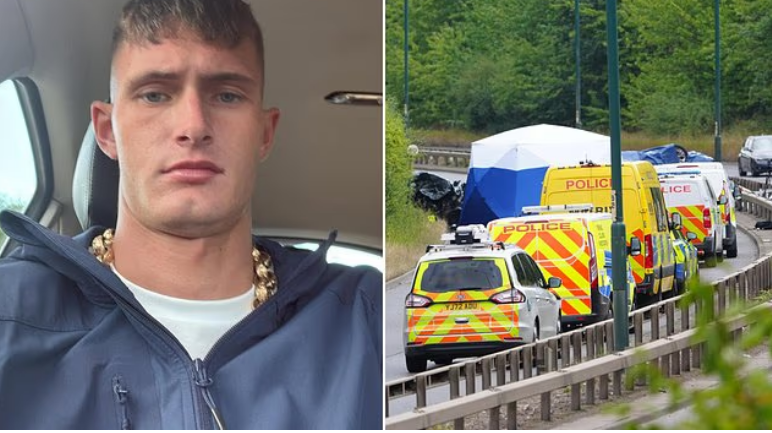
Several schools in Middlesbrough were forced to close early as hundreds of mourners gathered for the funeral of A66 crash victim Jakub Matusiak — sparking a furious political row over whether officials were putting safety first or “giving in to thugs.”
Four schools in the South Bank area closed around lunchtime on Friday ahead of the funeral of 23-year-old Jakub Matusiak, also known as Jacob.
Large crowds, cars, motorbikes and quad bikes were expected in the area around St John the Evangelist Church, with authorities warning of significant traffic congestion and disruption.
But the decision immediately triggered a political backlash.
 “GIVING IN TO THUGS?”
Conservative shadow education secretary Laura Trott condemned the school closures and argued that children should not have to miss school because of concerns about disorder.
She accused officials of effectively allowing bad behaviour to dictate whether schools could remain open.
Her comments sparked a response from local Labour MP Andy McDonald, who defended the headteachers’ decision and urged her to “zip it,” arguing that keeping children safe had to come first.
The controversy exposed a difficult question facing the community:
Should schools remain open and rely on a major police operation to maintain order — or should they take precautions before large crowds arrive?
 WHY WERE THE SCHOOLS CLOSED?
Local authorities said the decision was not simply about the funeral itself.
Redcar & Cleveland Council said schools had been closed early because of anticipated congestion and transport disruption, with concerns about pupils, staff and families trying to leave the area while the funeral procession was taking place.
The schools affected included South Bank Primary School, St Peter’s Catholic College, St Margaret Clitherow, Outwood Normanby and Archway, while the Mackenzie Thorpe Centre closed for the full day.
Headteachers also warned that unusually large numbers of people were expected around Normanby Road.
For schools located close to the funeral route, the timing created an obvious logistical problem.
THE FUNERAL THAT BROUGHT MIDDLESBROUGH TO A STANDSTILL
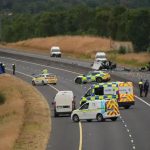
Jakub Matusiak was one of five young men who died in the devastating A66 crash on August 22.
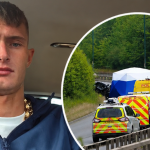
The Volkswagen Passat they were travelling in collided head-on with a marked police vehicle while travelling the wrong way along the dual carriageway.
Jakub, 23, died alongside Michael Cahill, 23, Cole Worthy, 17, Theo Rae, 17, and Makai Saddington, 18.
PC Matthew Blades, 37, and PC Tom Clough, 38, were also killed in the crash.
The tragedy has since been followed by a series of controversial memorial gatherings.
An earlier vigil for Michael Cahill descended into chaos, with vehicles reportedly set alight and masked youths seen riding quad bikes and setting off flares.
Those scenes heightened concerns about what could happen when hundreds of people gathered for Jakub’s funeral.
THEN THE CROWD ARRIVED
On Friday, hundreds of mourners gathered outside St John the Evangelist Church.
The procession included a horse-drawn hearse and a line of expensive cars, while many mourners wore orange — reportedly Jakub’s favourite colour.
Despite fears of major disorder, the funeral itself remained largely peaceful.
There were some tense moments, however, including reports that photographers were chased away and a reporter was forced to leave the area.
The feared mass arrival of quad bikes and motorbikes also did not materialise on the scale some had predicted.
A COMMUNITY CAUGHT IN THE MIDDLE
The dispute over the school closures reflects the wider tension surrounding the A66 tragedy.
Families are grieving seven deaths.
Residents are dealing with disruption and heightened police activity.
And authorities are trying to prevent further disorder while allowing grieving families to hold funerals and memorials.
For the headteachers involved, the decision was ultimately presented as a precaution — not a reward for bad behaviour.
Education Secretary Lucy Powell backed that approach, saying pupil safety and wellbeing should come first.
By the time Jakub’s funeral ended, the feared major disorder had largely failed to materialise.
But the political argument is unlikely to disappear so quickly.
Because behind the debate over school gates, police patrols and funeral processions lies a much bigger question:
How far should a community have to change its normal life when fears of disorder become part of the aftermath of a tragedy?