“I DIDN’T EVEN REALISE IT WAS MY SISTER”: MARIOARA ROSTAS’ BROTHER RECALLS THE HORROR OF IDENTIFYING HER REMAINS
“I DIDN’T EVEN REALISE IT WAS MY SISTER”: MARIOARA ROSTAS’ BROTHER RECALLS THE HORROR OF IDENTIFYING HER REMAINS
DUMITRU JR. HAS SPOKEN ABOUT THE DEVASTATING MOMENT HIS FAMILY  SAW MARIOARA’S BODY AFTER SHE DISAPPEARED IN DUBLIN
Nearly 18 years after Marioara Rostas disappeared from a Dublin street, her younger brother has recalled the devastating moment his family finally saw her remains.
Marioara was just 18 years old when she vanished on January 6, 2008.
She had been in Ireland for only around 18 days when she disappeared while begging with members of her family near the junction of Lombard Street and Pearse Street in Dublin.
Four years later, her remains were discovered in a shallow grave in the Dublin Mountains.
For her family, the discovery finally answered the question of where Marioara was — but seeing her remains created another traumatic memory that her brother says he will never forget.
 “I DIDN’T EVEN REALISE IT WAS MY SISTER”
Speaking to The Irish Sun, Dumitru Jr. described the moment he and his family were allowed to see Marioara’s remains.
“I didn’t even realise it was my sister,” he said.
He recalled that his mother passed out when she saw the condition of the body.
“It was almost destroyed. She had no face anymore,” Dumitru said.
The family had insisted on seeing Marioara’s remains despite the devastating condition in which they had been found.
The teenager had been buried in a shallow grave after her disappearance. Gardaí later established that she had died from gunshot wounds.
FOUR YEARS OF UNCERTAINTY
Marioara disappeared after leaving the family while they were begging on a Dublin street.
Her younger brother had seen her get into a car.
According to evidence later heard in court, a man had approached Marioara and offered to take her for food.
She never returned.
The family initially struggled to report her disappearance because of language difficulties. They eventually obtained an interpreter and reported her missing several days later.
A phone call Marioara made to relatives in Romania the day after she disappeared became an important part of the subsequent investigation.
Her family spent years without knowing where she was.
Then, in January 2012, Gardaí searching the Kippure area of the Dublin Mountains discovered human remains buried in woodland.
The remains were formally identified as Marioara.
Gardaí said the body had been buried following a 13-day search of the area, and an initial post-mortem examination indicated that she had died from gunshot wounds.
THE INVESTIGATION LED GARDAÍ TO A DUBLIN HOUSE
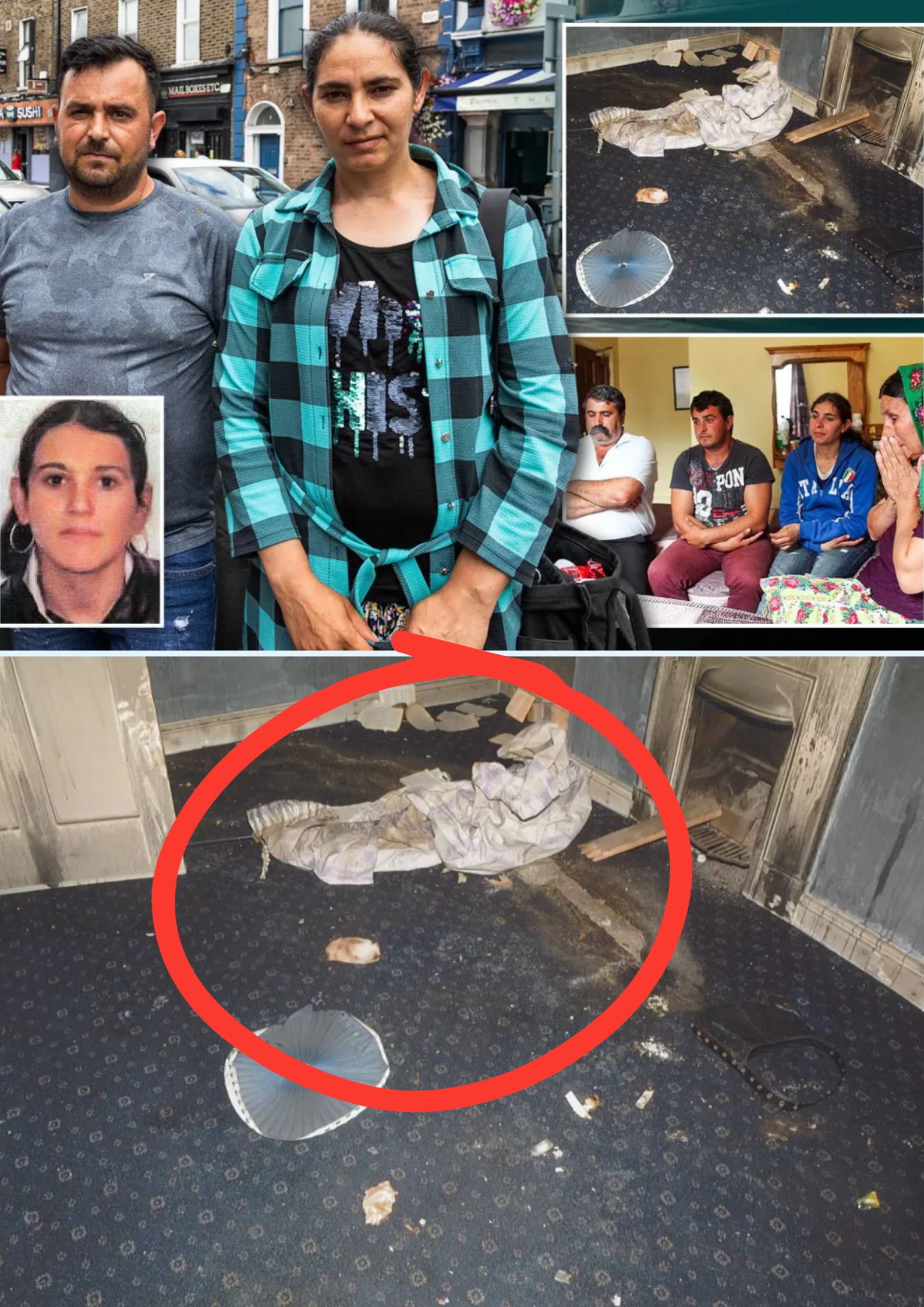
The investigation had previously focused on a house on Brabazon Street in Dublin’s Liberties, which had been damaged by fire shortly after Marioara disappeared.
During searches of the property, Gardaí discovered bullet holes in a wall and a lock on the outside of a door.
Investigators later established that the bullets recovered from Marioara’s remains were consistent with .22-calibre ammunition, although evidence concerning the comparison between bullets found at the house and those recovered from her remains was described in court as inconclusive.
The investigation eventually led to the arrest of several people.
One of those who became central to the case was Fergus O’Hanlon, who later told Gardaí that he had helped dispose of Marioara’s body.
O’Hanlon was granted immunity from prosecution and entered witness protection.
He eventually gave evidence during the murder trial, claiming that he had been involved in moving and burying Marioara’s body.
However, his evidence became a major issue during the trial.
ALAN WILSON WAS CLEARED OF HER MURDER
In 2014, Alan Wilson stood trial for Marioara’s murder.
The prosecution alleged that Marioara had been taken to the Brabazon Street property, where she was killed before her body was transported to the mountains.
Wilson pleaded not guilty.
The prosecution case relied heavily on O’Hanlon’s evidence, while the defence challenged his credibility and highlighted the benefits he had received after agreeing to assist Gardaí.
The trial also heard that there was no DNA evidence linking Wilson to the crime.
After deliberating for less than three hours, the jury returned a unanimous not-guilty verdict.
No conviction followed for Marioara’s murder.
The verdict left her family without the justice they had hoped would follow the discovery of her remains.
“SHE’S NOT GOING TO BE FORGOTTEN”
Despite the years that have passed, Dumitru says his sister remains a part of his family’s life.
He returned to Ireland after Marioara’s death and worked to help his family recover financially from the enormous costs surrounding her funeral.
Today, he has three sons of his own.
He said he continues to tell his children about their aunt so that Marioara’s memory will survive.
“I think there are still people who still remember but I don’t know,” he told The Irish Sun.
“If there is anybody who has information that could help and they want to share it, I would be very grateful to them if they did.”
“As long as we live she’s not going to be forgotten by us.”
The family reportedly has only one photograph of Marioara to preserve her memory.
For Dumitru, however, remembering his sister means more than keeping a photograph.
It means telling his children who she was, returning to the places connected with her disappearance and continuing to hope that someone who knows what happened will eventually come forward.
A CASE THAT HAS NEVER LEFT THE FAMILY
Marioara arrived in Ireland hoping for a better life with her family.
She was only 18 when she disappeared.
Four years later, Gardaí found her remains hidden in the mountains, ending the family’s agonising wait for answers about where she had gone.
But the discovery did not bring a conviction.
The man who stood trial for her murder was cleared, and the family has continued to live with the unanswered questions surrounding Marioara’s final days.
Nearly two decades after Marioara vanished, her brother is still asking anyone who may know something to come forward.
For Dumitru, the passage of time has not erased the loss.
He says that as long as his family is alive, Marioara will not be forgotten.