More Than 100,000 Messages Take Center Stage in Caleb Flynn’s Murder Trial
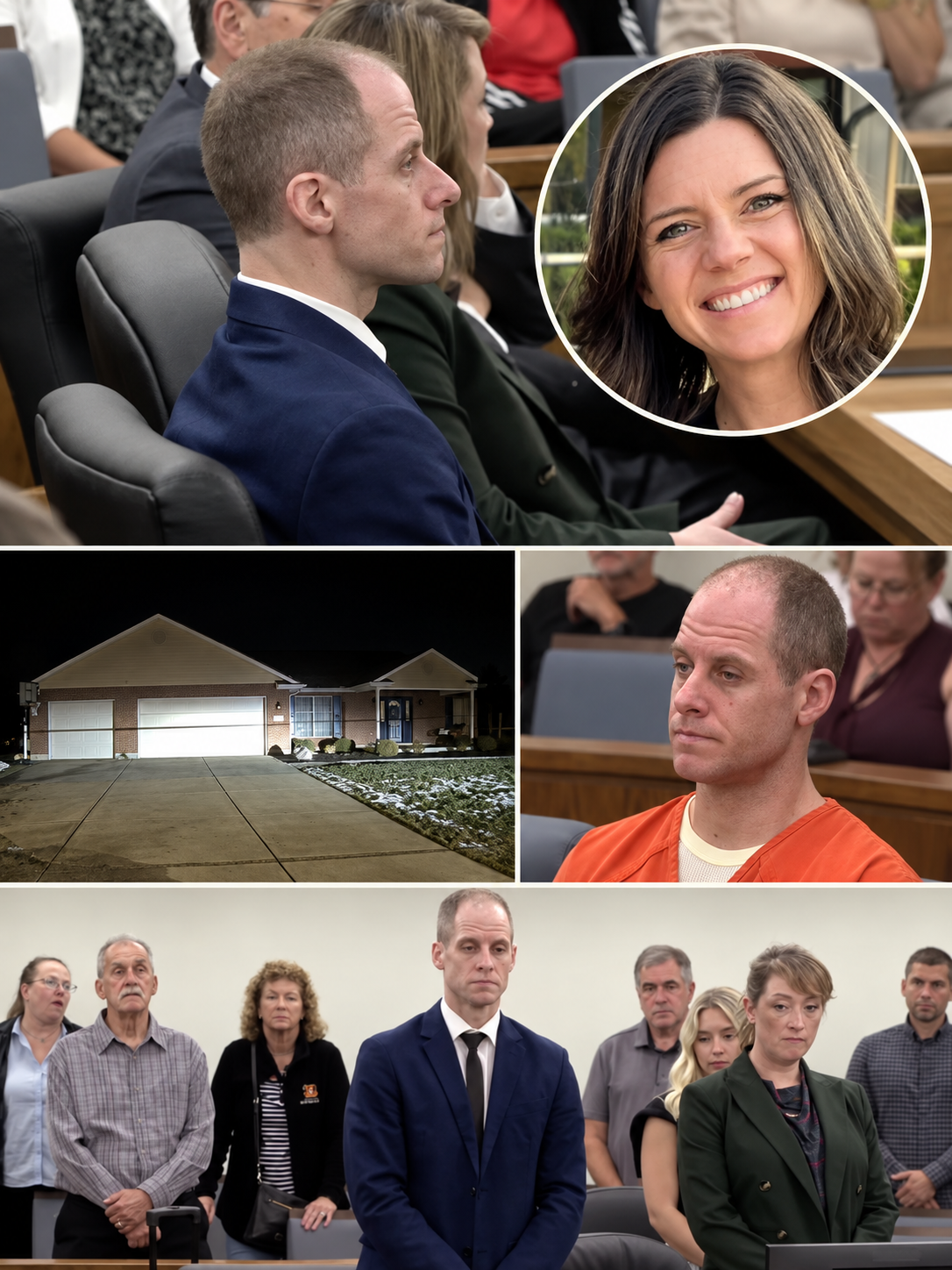
The murder trial of former American Idol contestant Caleb Flynn has entered a closely watched phase as prosecutors reveal an enormous collection of private messages they say exposes a hidden relationship, growing hostility toward his wife and statements about wanting her dead.
Flynn, a former worship pastor from Tipp City, Ohio, is accused of killing his 37-year-old wife, Ashley Flynn, inside their home during the early hours of February 16, 2026. Prosecutors allege that he then altered the scene to make the shooting appear to be the work of an unknown intruder.
Caleb has pleaded not guilty to all charges. His defense maintains that someone broke into the house and attacked Ashley, arguing that investigators focused on her husband too quickly.
At the center of the prosecution’s case are more than 100,000 messages exchanged between Caleb and another woman. That woman has not been charged with any crime, but prosecutors believe their conversations provide crucial evidence of Caleb’s alleged motive and state of mind before Ashley was killed.
The messages have created a disturbing contrast with police footage from the morning of Ashley’s death, which shows Caleb crying, collapsing and vomiting outside the family’s home.
A frantic call reporting an intruder
The case began with a 911 call placed by Caleb during the middle of the night.
He told the dispatcher that someone had entered the house and shot his wife. Police responding to the residence found Ashley suffering from fatal gunshot wounds. The couple’s two young daughters, then 10 and 12, had reportedly been sleeping nearby.
Body-camera footage recorded Caleb appearing overwhelmed as officers secured the property and began investigating. He repeatedly cried out, asked whether Ashley was gone and struggled to remain on his feet.
When Ashley’s mother arrived, Caleb stumbled and fell before getting up to embrace her. At another point, he became physically sick outside the house. The recordings captured what appeared to be a husband experiencing the immediate shock of losing his wife.
Prosecutors, however, are asking jurors to consider those scenes alongside the private messages Caleb allegedly sent before Ashley’s death.
Their argument is that his emotional behavior after the shooting did not necessarily reflect what had happened inside the home. Instead, they contend that it was part of an effort to support a fabricated story about a burglary.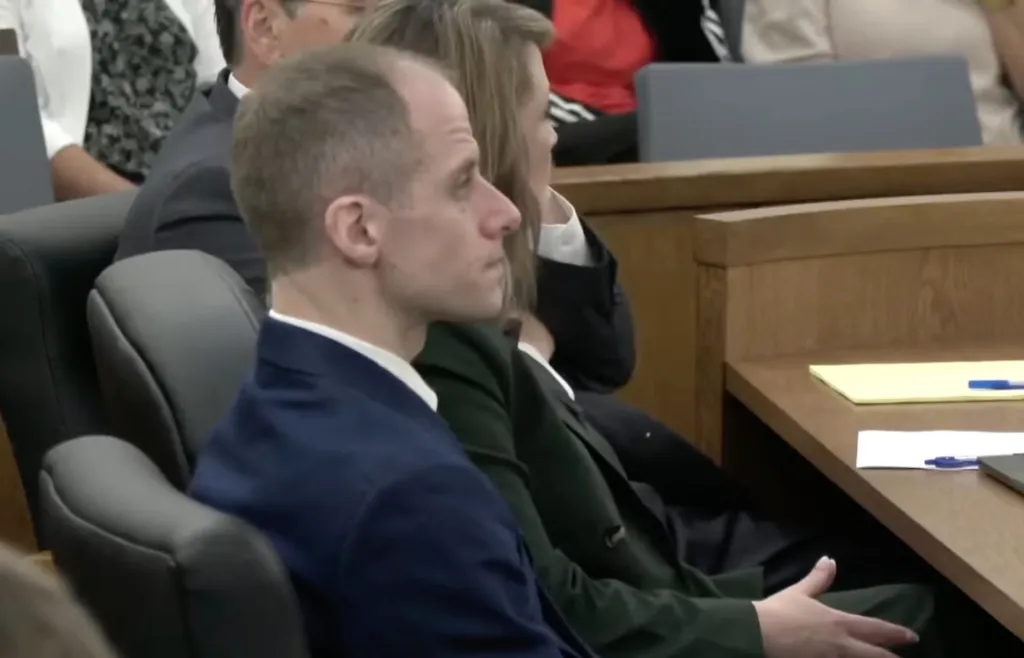
Messages prosecutors say reveal a plan
During opening statements, prosecutors described a vast digital record consisting of more than 100,000 messages between Caleb and a woman with whom he allegedly had a long-term affair.
Among the communications presented in court were messages in which Caleb allegedly expressed intense hatred toward Ashley and discussed wanting to kill her without being punished—either by the law or, given his religious beliefs, in the afterlife.
In one exchange, prosecutors said Caleb wrote that he had remained awake until approximately 4 a.m., crying and thinking about ways to kill Ashley without going to jail. In another, he allegedly said he would kill her immediately if he could do so without going to hell.
Perhaps the most chilling message was allegedly sent only hours before the shooting.
According to prosecutors, Caleb told the woman that he had chosen her, that he was free and that his actions would come the following day—February 16. He reportedly described it as a date he would never forget.
The timing of that message is expected to be heavily scrutinized throughout the trial. Prosecutors contend that it was not simply an angry or exaggerated statement made during a troubled marriage. They argue that it foreshadowed what happened inside the Flynn home only hours later.
The defense is expected to challenge the meaning of the conversations, their context and the prosecution’s interpretation of them. Messages expressing rage or violent thoughts do not, by themselves, prove that the sender committed a physical act. Prosecutors must connect the digital communications to the forensic and circumstantial evidence surrounding Ashley’s death.
Two sharply different versions of the night
The trial presents jurors with competing narratives.
According to Caleb’s account, an intruder entered the house and attacked Ashley while the rest of the family was home. His frantic 911 call and highly emotional response outside the residence are consistent, the defense may argue, with a man who unexpectedly discovered that his wife had been shot.
Prosecutors offer a dramatically different version.
They allege that Caleb killed Ashley, manipulated the scene to suggest an intrusion and then called authorities with a false account. The private messages, they contend, reveal the motive behind the killing and demonstrate that he had considered eliminating his wife before the crime occurred.
Investigators arrested Caleb several days after Ashley’s death. He was subsequently charged with aggravated murder, murder, felonious assault, tampering with evidence and witness intimidation.
He continues to deny the allegations and is presumed innocent unless the prosecution proves every charge beyond a reasonable doubt.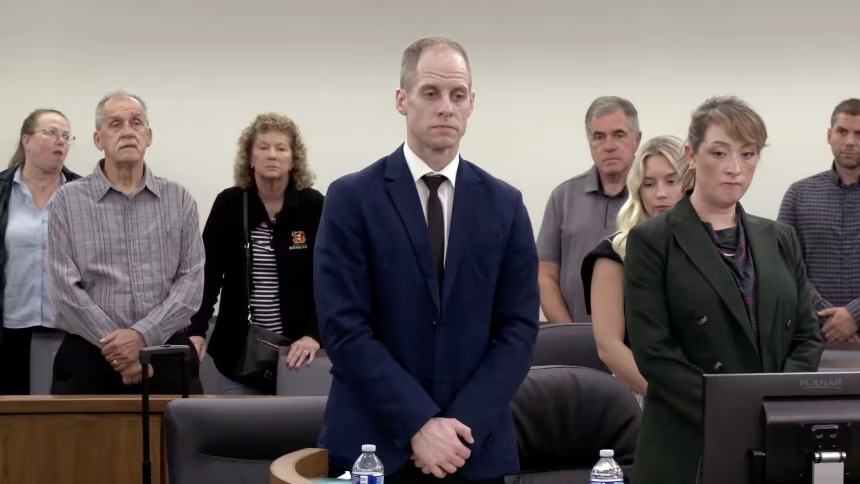
Jurors taken inside the family home
The physical layout of the Flynn residence has also become important to the case.
At the defense’s request, the judge approved a jury visit to the Tipp City home. Such visits are relatively unusual but may be permitted when photographs, diagrams and videos cannot adequately communicate distances, sightlines or the relationship between different areas of a crime scene.
Jurors may consider the location of Ashley’s body, possible entry and exit routes, the bedrooms where the children were sleeping and other physical details relevant to the intruder account.
The defense said there were strong reasons for the jury to see the property directly, although its full strategy was not disclosed before the visit.
Prosecutors are expected to use physical evidence from the house alongside the digital messages, emergency call and body-camera recordings to construct a timeline. The defense will attempt to identify gaps in that timeline and challenge the claim that the scene was staged.
A public image now under scrutiny
Caleb first became publicly known through his appearance on Season 12 of American Idol in 2013. During that period, he spoke warmly about Ashley and said he loved her more than anything.
He later served as a worship pastor and worked for Ashley’s family. That public image—husband, father, singer and church leader—now stands in stark contrast to the man described in the prosecution’s allegations.
Ashley was remembered as much more than the victim at the center of a criminal trial. She was a mother of two, a substitute teacher, a volleyball coach and a church mentor. Friends described her as energetic, generous and skilled at turning ordinary moments into meaningful memories.
Her death, only days before her 38th birthday, devastated relatives, students, athletes and other members of the Tipp City community. Supporters organized assistance for her daughters as the family tried to cope with both the loss and the criminal proceedings that followed.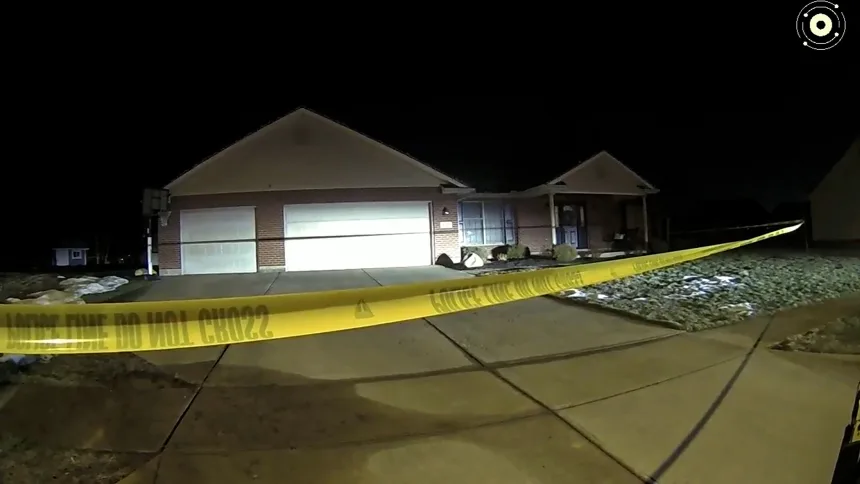
Emotional footage versus a digital record
The most powerful tension in the trial may ultimately come from two very different forms of evidence.
On one side is the police footage: Caleb sobbing, falling to the ground, embracing Ashley’s mother and becoming physically ill. Viewed alone, those images appear to show raw grief unfolding in real time.
On the other side are the messages prosecutors say he sent privately—conversations allegedly describing hatred, freedom and possible ways to kill his wife.
Jurors must decide whether the emotional behavior recorded outside the house represented authentic shock, a complicated response to an unfolding tragedy or an attempt to support a false narrative.
They must also determine whether the messages reveal an actual plan or merely disturbing words that prosecutors have placed into a criminal framework.
More than 100,000 communications may provide extensive insight into Caleb’s private life, but volume alone will not decide the case. The verdict will depend on how those messages connect with the physical evidence, witness testimony and events inside the home.
Until the jury reaches a decision, the allegations remain unproven. What is already clear, however, is that the private digital record has transformed the trial—placing the image of a grieving husband beside words prosecutors say tell a very different story.