SERIAL KI//ER OR POSSIBLE MISCARRIAGE OF JUSTICE? NEW QUESTIONS KEEP THE LUCY LETBY CASE IN THE SPOTLIGHT
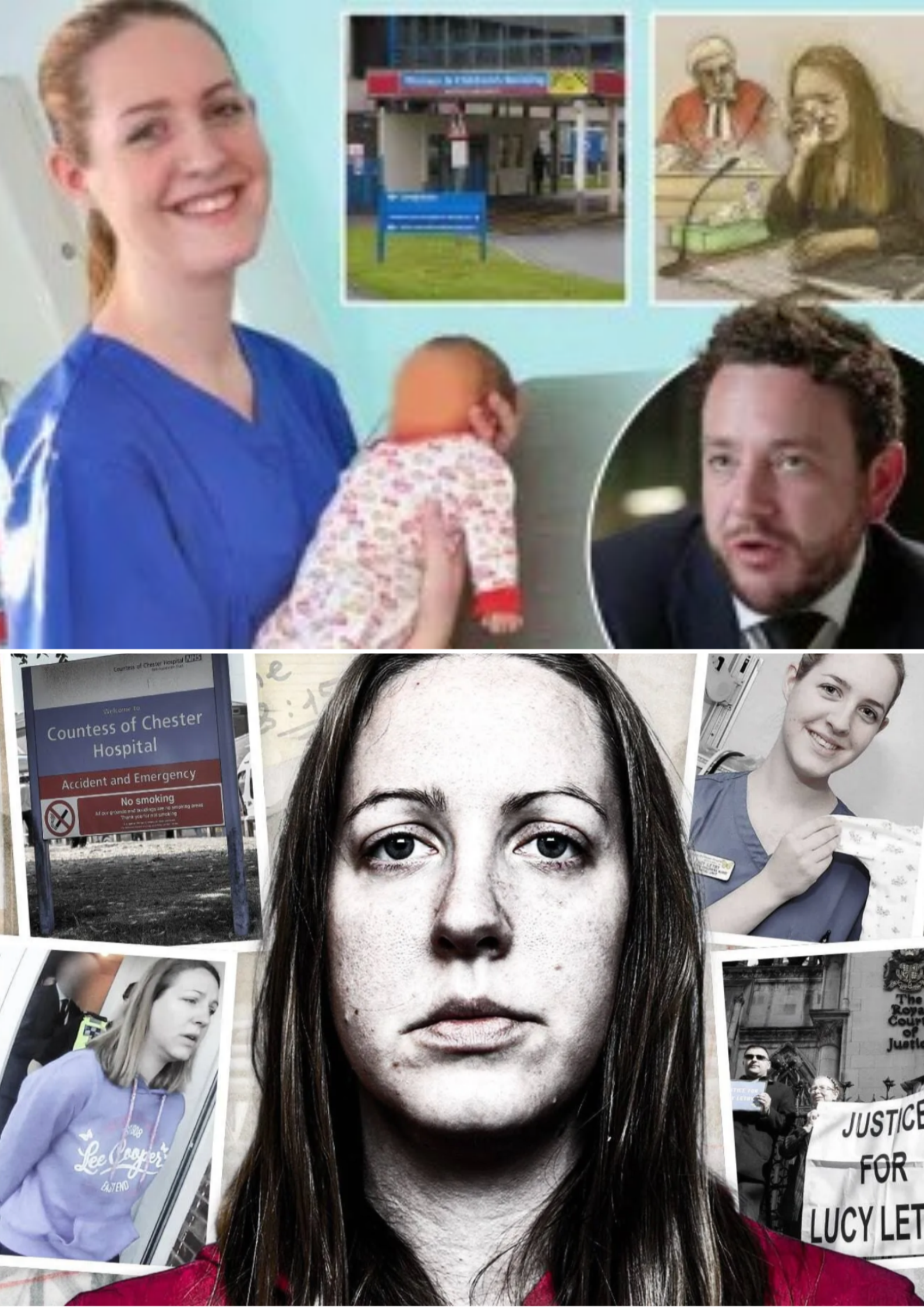
SERIAL KILLER OR POSSIBLE MISCARRIAGE OF JUSTICE? NEW QUESTIONS KEEP THE LUCY LETBY CASE IN THE SPOTLIGHT
LONDON — More than three years after Lucy Letby was convicted of murdering seven babies and attempting to murder seven others, Britain’s most controversial medical criminal case remains under intense scrutiny.
The former neonatal nurse is serving 15 whole-life sentences after two trials at Manchester Crown Court concerning events at the Countess of Chester Hospital between 2015 and 2016.
Letby continues to deny the charges.
Her convictions remain legally in force, and two attempts to obtain permission to appeal were rejected by the Court of Appeal in 2024.
But a separate review by the Criminal Cases Review Commission (CCRC) is now examining new evidence submitted on her behalf.
At the same time, fresh disputes over the scientific evidence have emerged, while the long-awaited Thirlwall Inquiry has exposed serious failures in the hospital’s management and safeguarding systems.
The developments have renewed a question that has divided experts, lawyers and the public:
Could new evidence eventually change the legal picture surrounding Lucy Letby?
 THE CCRC IS NOW REVIEWING THE CONVICTIONS
The CCRC, which investigates potential miscarriages of justice, confirmed in February 2026 that its review of Letby’s convictions is underway.
The commission received a preliminary application from her legal team in February 2025, followed by expert reports, legal submissions and defence material over the following year.
The CCRC has stressed that it does not decide whether Letby is innocent or guilty.
Its role is to determine whether new evidence or legal arguments create a real possibility that a conviction would not be upheld if the case were referred back to an appellate court.
No decision to refer Letby’s convictions back to the Court of Appeal has been announced.
That means that, for now, her convictions and whole-life sentences remain unchanged.
 THE INSULIN EVIDENCE IS AT THE CENTRE OF THE DISPUTE
One of the most important scientific disputes concerns two babies whom prosecutors said were deliberately poisoned with insulin.
At Letby’s trial, the prosecution argued that abnormal blood-test results provided evidence of deliberate insulin administration.
The two cases were particularly significant because the judge told jurors that if they were sure Letby had deliberately poisoned the babies, they could use that conclusion when considering other allegations against her.
Letby’s defence has since assembled evidence from specialists in insulin, endocrinology, laboratory medicine and other fields.
Some experts have questioned whether the medical evidence necessarily demonstrated deliberate poisoning.
But those arguments remain disputed.
The fact that experts disagree about the interpretation of medical evidence does not itself overturn a criminal conviction. Any new evidence would have to be assessed through the legal process.
TWO DEFENCE EXPERTS HAVE NOW WALKED AWAY
The controversy intensified in September 2026 when two prominent experts who had previously supported aspects of Letby’s defence withdrew from her legal team.
Chemical engineering expert Helen Shannon and bioengineering professor Geoff Chase said they continued to stand by their assessment that it was very unlikely that two of the babies had been poisoned with insulin.
However, they said they could not support some other arguments being advanced by the defence because they believed those claims were inconsistent with available evidence, established science and physiology.
The experts said they had ethical concerns about remaining associated with arguments they could not scientifically support.
Letby’s barrister, Mark McDonald, rejected the suggestion that their withdrawal undermined the wider defence case.
He said the legal challenge relied on evidence from experts across several disciplines and countries, arguing that the significance of the new material came from its breadth and convergence rather than from any individual expert.
The development has therefore added another layer of complexity to an already highly contested scientific debate.
THE THIRLWALL INQUIRY FOUND SERIOUS HOSPITAL FAILURES
Meanwhile, the publication of the Thirlwall Inquiry report on September 15, 2026, brought a separate set of findings about what happened inside the Countess of Chester Hospital.
The inquiry examined the hospital’s management, governance, safeguarding procedures and response to concerns about unexpected deaths and collapses on the neonatal unit.
Lady Justice Kathryn Thirlwall described dysfunctional management and governance, a serious divide between hospital leadership and clinicians, and a failure to understand fundamental safeguarding responsibilities.
She also found a failure at multiple levels to invoke safeguarding procedures when concerns arose that Letby might be deliberately harming babies.
The report has intensified scrutiny of the hospital and the way concerns were handled.
But it is important to distinguish those findings from the criminal convictions themselves.
THE INQUIRY DID NOT DECIDE WHETHER LETBY WAS GUILTY
Lady Justice Thirlwall explicitly stated that her inquiry was not an investigation into Letby’s criminal convictions or guilt.
She said the inquiry did not examine the detailed expert evidence presented during the criminal trials.
Instead, its focus was on what hospital staff and managers knew at the time, how they responded to the deaths and collapses, and what should have been done to protect babies.
She also said the inquiry should not interfere with the CCRC’s ongoing work.
That distinction is crucial.
Serious failures at a hospital do not automatically establish that a convicted individual was innocent.
Equally, those failures can become relevant when lawyers challenge how alternative medical explanations were investigated or whether evidence was properly assessed.
Those questions are now being considered through the appropriate legal channels.
WHY THE CASE REMAINS SO DIVISIVE
The Letby case has produced two very different interpretations of the evidence.
Prosecutors presented the deaths and collapses as a pattern of deliberate harm occurring while Letby was present.
The jury ultimately accepted that case and convicted her.
But Letby’s defence has argued that the medical evidence has been misunderstood and that some babies were already extremely vulnerable because of prematurity and serious underlying medical problems.
Several outside experts have publicly questioned aspects of the prosecution’s scientific interpretation, while other specialists continue to defend the conclusions reached during the original trials.
The result is an unusually intense dispute over how medical evidence should be interpreted in a criminal courtroom.
THE NEW REVIEW WILL NOT BE DECIDED BY PUBLIC OPINION
The continuing debate has generated strong views on both sides.
Some commentators and medical specialists have argued that the convictions deserve renewed scrutiny.
Others point to the jury verdicts, the evidence presented at trial and the findings of the courts that have already considered Letby’s appeals.
The CCRC has emphasized that its decision will be impartial and evidence-based, rather than influenced by public or political pressure.
If the commission concludes that the legal threshold has been met, it could refer one or more convictions to the Court of Appeal.
If it does not, the existing convictions will remain in place unless another legal route becomes available.
A CASE THAT IS FAR FROM OVER
For the families of the babies involved, the continuing controversy comes more than a decade after the deaths and collapses that changed their lives forever.
Lady Justice Thirlwall specifically warned that the families must not become “collateral damage” in the public argument over Letby’s guilt or innocence.
For Letby, the CCRC review represents another opportunity to have new evidence considered after her previous appeals failed.
For the wider public, the case has become a difficult examination of the limits of medical evidence, the reliability of expert testimony and the responsibilities of hospitals when unusual deaths occur.
But one fact remains unchanged as of September 2026:
Lucy Letby remains convicted of seven murders and seven attempted murders and remains imprisoned under 15 whole-life sentences.
The CCRC review is continuing.
The scientific arguments remain contested.
And whether the new evidence will ultimately change any of Letby’s convictions is a question that has yet to be decided.