BUILDER WHO WAS “TOO DRUNK TO STAND” JAILED FOR 10 YEARS AFTER KI//ING MOTORWAY WORKER
BUILDER WHO WAS “TOO DRUNK TO STAND” JAILED FOR 10 YEARS AFTER KILLING MOTORWAY WORKER
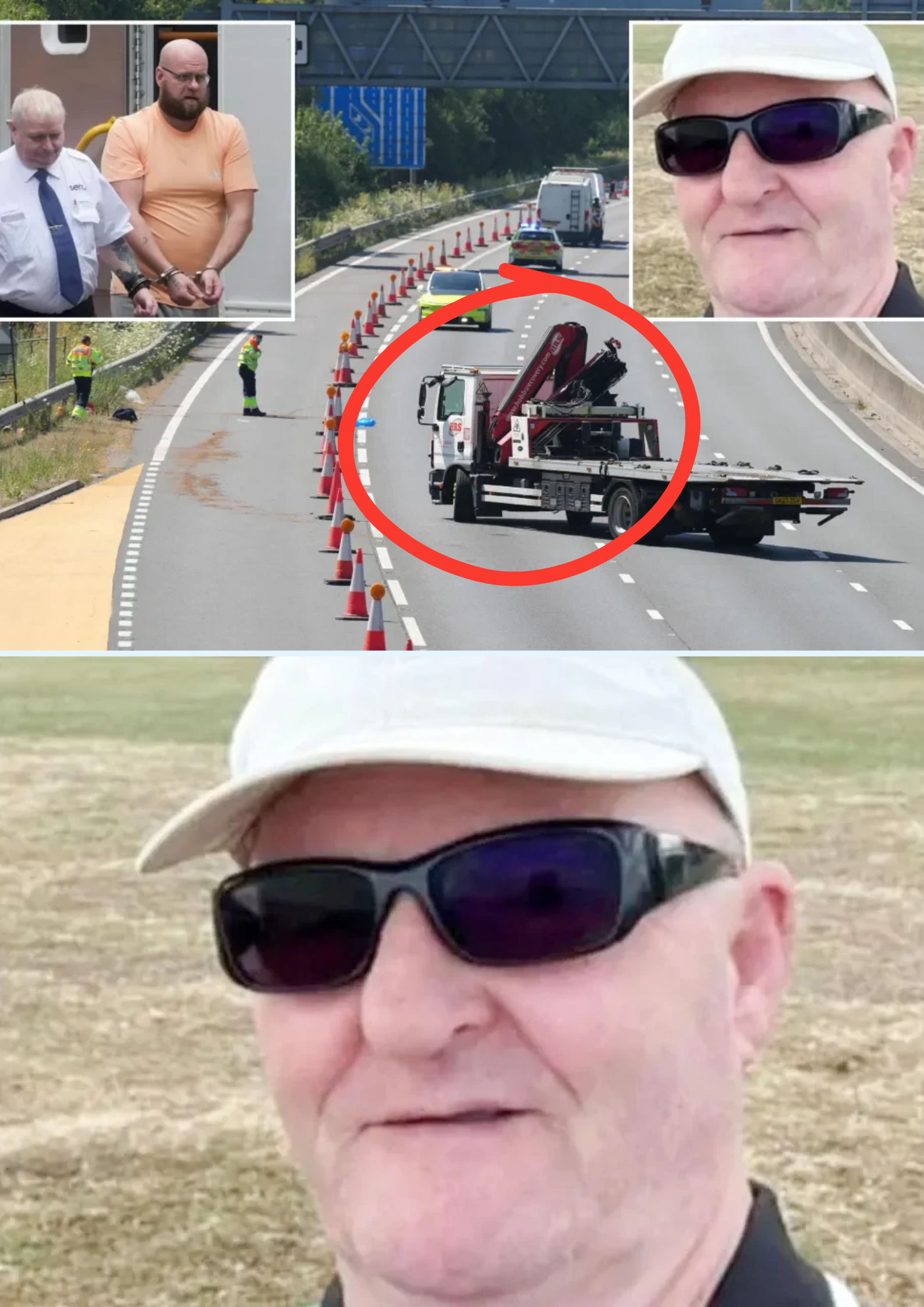
WEST SUSSEX, ENGLAND — A builder who was so intoxicated that he struggled to stand after a fatal crash has been sentenced to 10 years in prison for killing a 65-year-old highway worker on a British motorway.
Vilius Domarkas, 38, had been driving his Citroën Relay van on the M23 motorway near Gatwick in the early hours of July 8 when he veered into a coned-off area where road workers were carrying out work.
He struck Anthony “Tony” Howe, who had only stepped out of his work vehicle about seven seconds earlier.
Howe suffered catastrophic injuries and died at the scene.
Domarkas later pleaded guilty to causing death by dangerous driving and was sentenced at Lewes Crown Court on September 28. He was also banned from driving for 16 years and eight months, and his van was ordered to be forfeited.
 HE DIDN’T REALIZE HE HAD HIT A PERSON
The court heard that Domarkas had been driving erratically and drifting between lanes shortly before the crash.
His van eventually stopped about 500 meters away after an automatic fuel-cutoff system was triggered by damage from the collision.
But instead of realizing he had struck a person, Domarkas called emergency services and reported that his windscreen was broken.
Prosecutor Naomi Edwards told the court that Domarkas said he did not know how the damage had occurred.
When police arrived, officers found him with slurred speech and struggling to remain on his feet. He eventually fell over while speaking with officers.
A blood sample taken around four hours after the crash showed 221 micrograms of alcohol per 100 milliliters of blood.
The legal limit in England is 80 micrograms.
The court heard that calculations indicated Domarkas may have been between three and four times over the legal limit at the time of the collision.
 THE VICTIM HAD ONLY BEEN OUT OF HIS VAN FOR SECONDS
Anthony Howe was working on the M23 when Domarkas’s van entered the coned-off area.
The court heard that Howe had been outside his vehicle for just seven seconds before he was struck.
Judge Martin Huseyin described Howe as being in an exceptionally vulnerable position because his work required him to operate on the motorway.
“You were so drunk that you didn’t realise that you had hit a person,” the judge told Domarkas during sentencing.
The judge also said it was “truly shocking” that Domarkas had considered himself fit to drive on a motorway despite being unable to stand properly.
Howe died from catastrophic injuries. The judge said he died instantly.
“TONY WAS A GENTLE GIANT”
For Howe’s partner, Lilian Bonney, the crash destroyed the future they had planned together.
In a victim-impact statement read to the court, Bonney described Tony as a loving and caring partner and said she had been left struggling to sleep and frequently crying since his death.
She called him a “gentle giant” who could make people laugh with his personality.
“He was my best friend,” she said, according to evidence reported from the sentencing hearing.
Bonney said Tony had been looking forward to retirement and had wanted to provide for the two of them.
She told the court that the defendant’s decision to drive after drinking had taken away the future they had expected to share.
DOMARKAS HAD RECENTLY BEEN IN ALCOHOL REHAB
The court heard that Domarkas had recently returned to Britain after spending time in rehabilitation for alcohol problems in Lithuania.
He had flown into Stansted Airport shortly before the fatal crash.
His defense lawyer, Andrew Bullivant, said Domarkas was going through a breakup with his wife and had two children.
The defense described him as genuinely remorseful and said he intended to return to Lithuania after completing his sentence.
Bullivant said Domarkas had made a “fatal decision” to drink, possibly in connection with the breakdown of his marriage.
A DECISION THAT ENDED TWO LIVES IN DIFFERENT WAYS
Domarkas survived the crash and will now spend years in prison.
Anthony Howe never made it home.
The case has highlighted the extraordinary risks faced by road workers who must operate just feet from high-speed traffic, even when their work area has been clearly marked and separated by cones.
For Howe’s loved ones, the court proceedings have brought a sentence — but not a return to the life they had before July 8.
Tony was 65.
His family remembers him not for the circumstances of his death, but as a hardworking man, a loving partner and a “gentle giant” whose future was taken away in a matter of seconds.