Born With a Rare Condition Angel Travels From the Philippines to Australia for Life-Changing Surgery and a Brighter Future
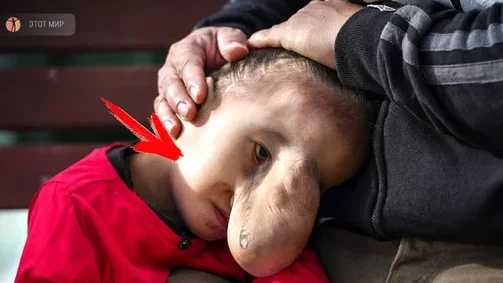
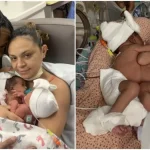
When Angel was born, her mother Cypres Salon, from the Philippines, was concerned when she didn’t hear her daughter cry.
But it wasn’t until she saw her baby for the first time five days later, that she realised the severity of the situation.
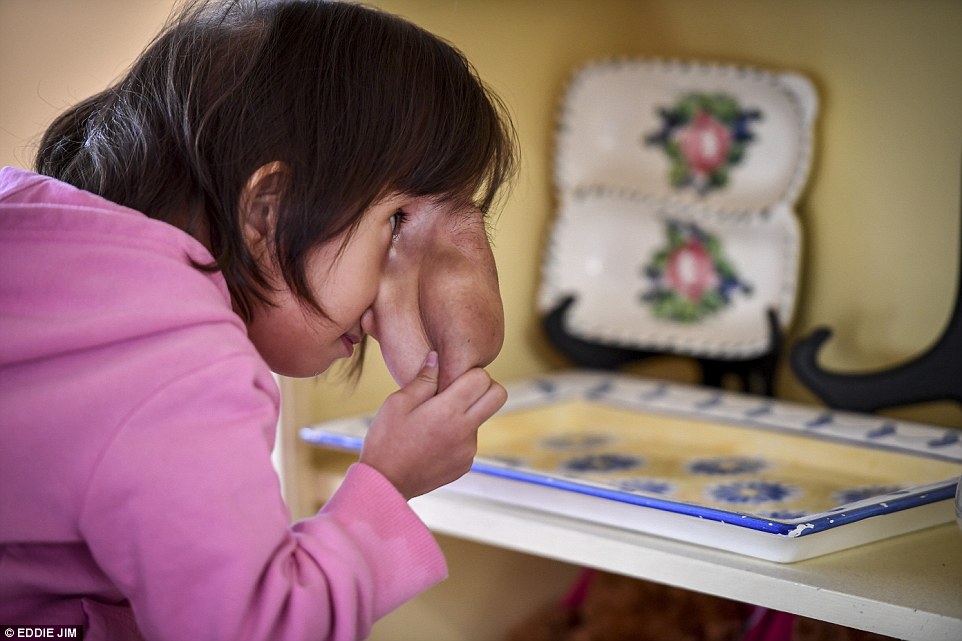
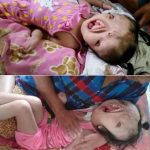
Little Angel had been rushed to another hospital for treatment after being born with encephalocele, a rare brain hernia.
The hernia, which is more common in children from South-East Asia than elsewhere, is caused when the skull and tissue surrounding the brain doesn’t completely close up in the womb.
‘When I saw her for the first time, I cried a lot,’ Ms Salon told The Age. ‘I cried every moment I looked at her and I blamed myself for her condition.’
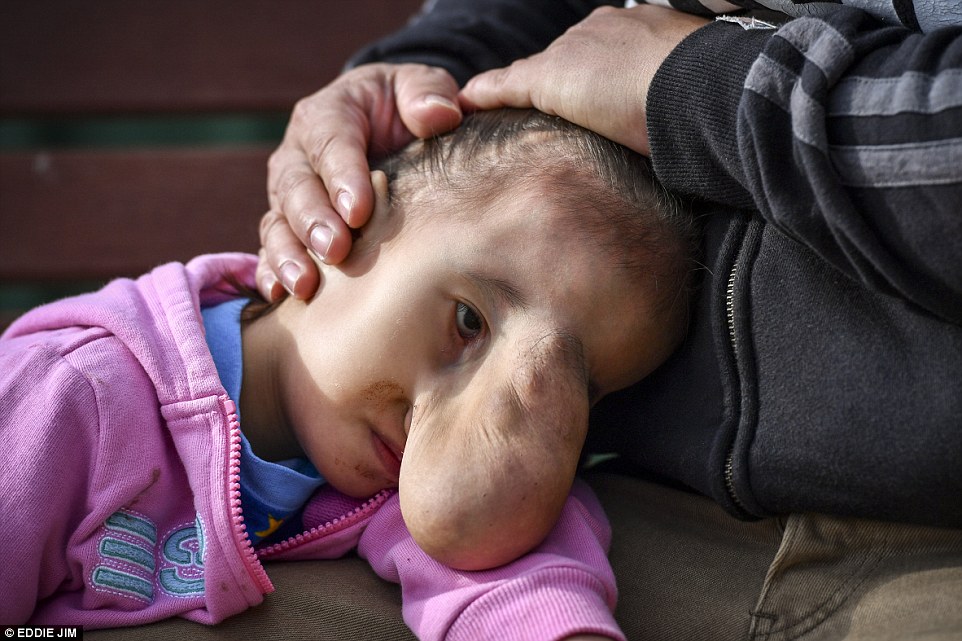
Angel had surgery at just four months after her parents raised $5,500 for surgery in the Philippines, but despite it helping to stop her ‘brain spilling into the hernia,’ it was still covering most of her left eye.
The hernia made it hard for Angel to live a regular life and prevented her from being able to sleep, breathe and play like other kids her age – Angel often having to lift the lump up or move it so she could see.
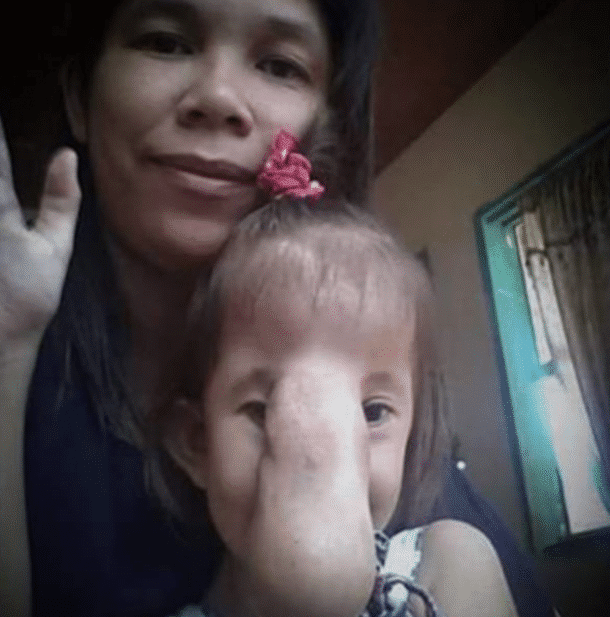
Angel was also labelled a ‘monster’ by her peers but when a four-year-old boy approached her and said it to her face, the optimistic little girl simply ‘patted him on the shoulder and said “Hi”.’
‘I was so amazed by her response,’ Ms Salon told The Age, adding that Angel knew children were scared of her.
‘I was so proud of her.’
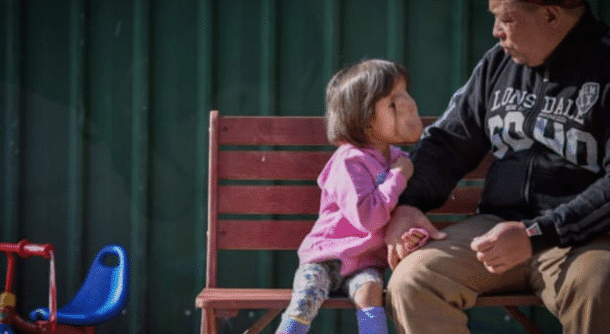
After struggling to raise another $8,000 for Angel’s hernia to be removed completely, Ms Salon and her husband Dale were referred to the Children First Foundation – a non-profit that aims to ‘transform the lives of children by giving hope, exceptional care and pathways to a brighter future.’
Ms Salon was referred to the foundation by Interplast, a group of Australian and New Zealand volunteer surgeons, nurses and allied therapists who provide free surgical treatment and medical training to people in developing countries in the Asia Pacific region.
‘Her [Angel’s] parents first contacted us in 2014, and she was seen by an Interplast team later that year,’ the organisation wrote on Facebook.
‘They recommended that she be brought to Australia for more complex surgery, and we referred her to our friends at Children First.
The Children First Foundation flew Angel and her father to Australia for surgery and the craniofacial unit at the Adelaide Women’s and Children’s Hospital performed the procedure in September.
The four hour surgery, performed by surgeon Walter Flapper, involved cutting the 200 gram lesion off Angel’s face before using bone taken from her hip to seal the hole in her forehead.
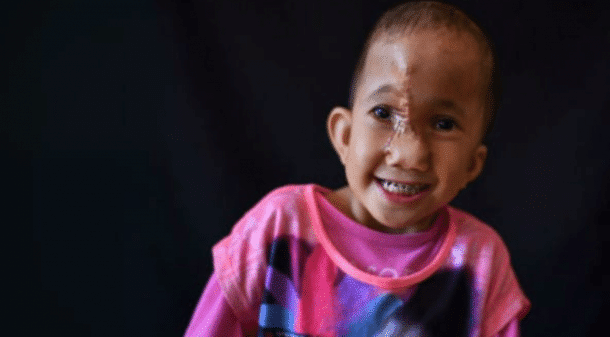
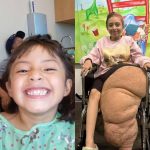
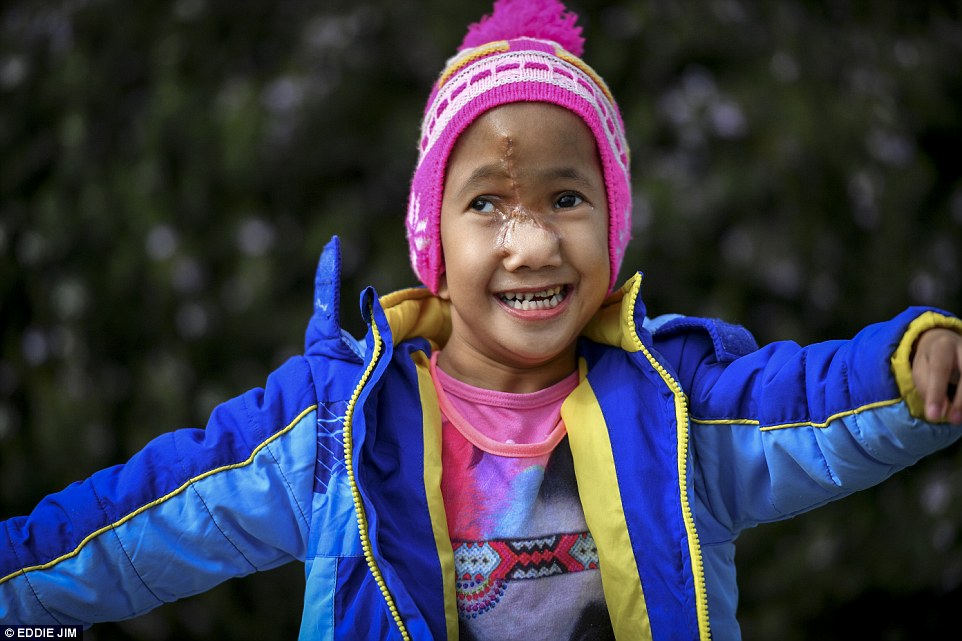
The surgery was a success and Angel was later able to see clearly for the first time.
She will also undergo surgery to shape her nose (it was pushed to one side due to the weight of the hernia) in the coming months and will be flown back to Australia to do so.
When Angel’s family saw her for the first time, they were overjoyed and celebrated with a birthday party on November 5th.
‘We celebrated it with children in our neighborhood and other relatives,’ Ms Salon said. ‘She was so happy.’
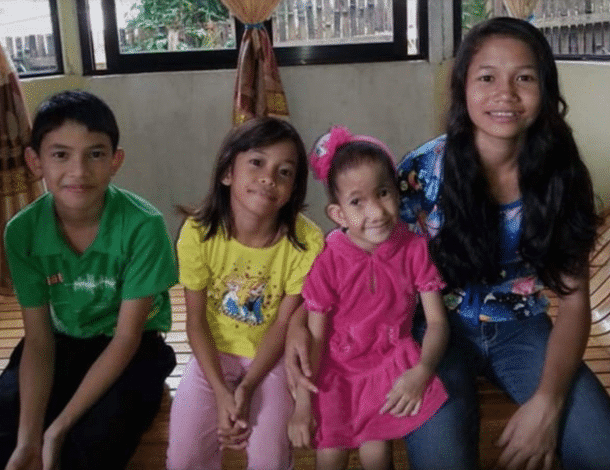
Since sharing their story, Angel and her family have been flooded with supportive comments from people touched by their story.
‘I have so much wonderment at how this family has soooooo much courage and love. So pleased the out come has been sooooo successful,’ one woman wrote on Facebook.
‘This brings tears to my eyes. I love the humanitarian work by all involved. Bless you,’ another wrote.