Christa Pike’s Scheduled Execution Ends in Failed Lethal Injection as Tennessee Launches Investigation
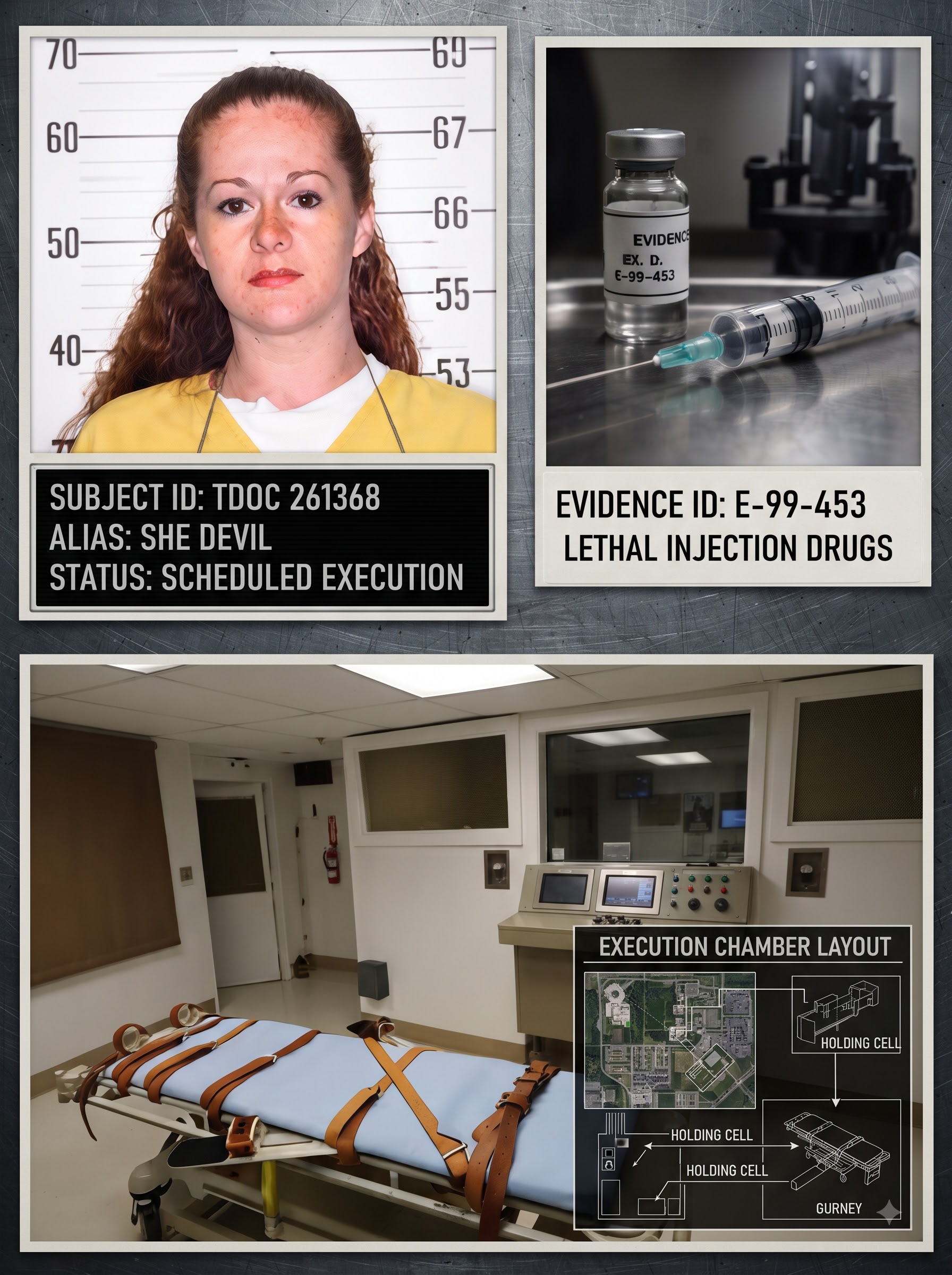
Christa Pike’s Scheduled Execution Ends in Failed Lethal Injection as Tennessee Launches Investigation
Christa Pike was scheduled to be executed in Tennessee on September 30, 2026, more than three decades after she was convicted of killing 19-year-old Colleen Slemmer.
Instead, the execution ended without Pike’s death.
The 50-year-old death-row prisoner survived after Tennessee officials administered two doses of pentobarbital during the lethal-injection procedure at Riverbend Maximum Security Institution in Nashville. She was later transported to a hospital for emergency medical treatment.
The failed execution has prompted Tennessee Gov. Bill Lee to suspend scheduled executions for the remainder of 2026 and order an independent investigation into what happened.
Pike Was Scheduled to Become the First Woman Executed by Tennessee in More Than Two Centuries
Pike’s execution had been scheduled for 10 a.m. on September 30 at Riverbend Maximum Security Institution.
The Tennessee Supreme Court had set the execution date in September 2025 after determining that there was no legal reason preventing the sentence from being carried out at that time.
The case drew national attention in part because Pike would have been the first woman executed by Tennessee since 1820.
She was 18 years old when she participated in the 1995 killing of Slemmer, a fellow student at a Job Corps training facility in Knoxville.
The 1995 Murder of Colleen Slemmer
Slemmer was 19 when she was killed on January 12, 1995.
According to evidence presented at trial, Pike and her boyfriend, Tadaryl Shipp, lured Slemmer into a wooded area before attacking her.
Pike was convicted of first-degree murder and sentenced to death in 1996.
Shipp was 17 at the time of the killing and therefore was not eligible for the death penalty. He received a life sentence.
The case became particularly notorious because of the brutality of the killing and evidence involving a pentagram carved into Slemmer’s body. The details also emerged during a period when fears surrounding alleged Satanic activity were receiving significant attention in the United States.
AP reported that Pike did not deny committing the killing, while her supporters argued that her age, mental-health history and severe childhood abuse should have been given greater consideration.
Pike’s Childhood Was Central to Her Final Appeals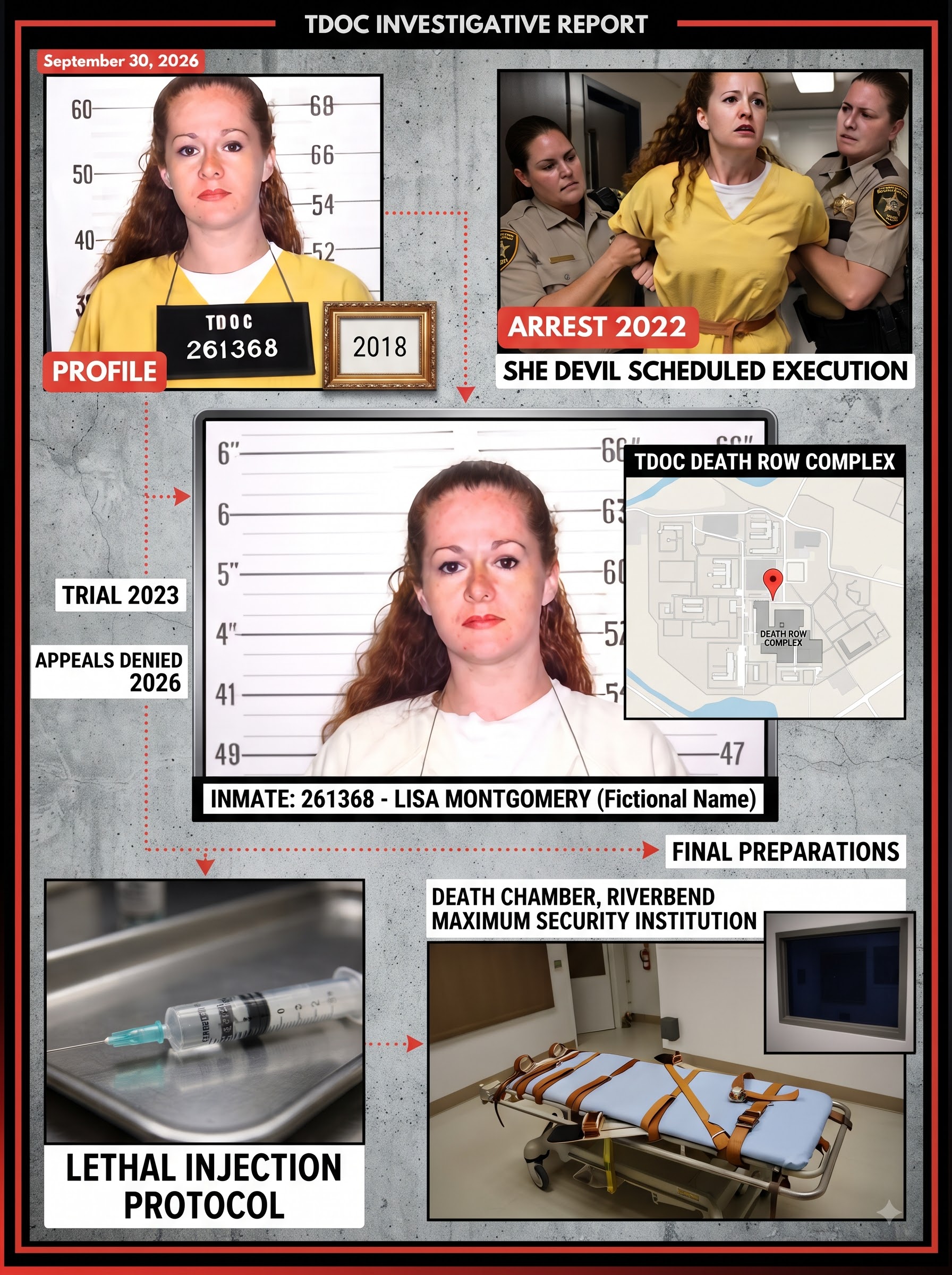
In the months leading up to the scheduled execution, Pike’s attorneys emphasized her childhood history.
Her legal team argued that she experienced severe abuse and neglect and that those circumstances had not been adequately considered when she was sentenced to death.
The arguments became part of a final series of legal challenges seeking to stop or delay the execution.
On September 30, a federal appeals court temporarily blocked the execution while considering claims raised by Pike’s attorneys. The U.S. Supreme Court later allowed Tennessee to proceed.
Three justices — Sonia Sotomayor, Elena Kagan and Ketanji Brown Jackson — dissented from the Supreme Court’s decision to allow the execution to move forward.
The Execution Was Delayed for Hours
The scheduled execution became a daylong legal and procedural drama.
Witnesses were initially expecting the execution to take place in the morning. Instead, the federal court’s temporary stay delayed the process while Pike’s legal challenges were considered.
After the Supreme Court cleared the way for Tennessee to proceed, officials moved forward later that evening.
Media witnesses entered the viewing area at approximately 6:41 p.m., according to Tennessee Lookout’s account of the proceedings.
The execution would ultimately last far longer than expected.
Two Doses of Pentobarbital Were Administered
Tennessee’s execution team administered two doses of pentobarbital.
But Pike did not die.
According to her attorneys and witnesses, she continued breathing and making sounds well after the procedure began. After the execution was halted, emergency medical personnel arrived at the prison and Pike was taken by ambulance to a hospital.
The circumstances surrounding the intravenous lines have since become a major issue.
Pike’s attorneys allege that the IV lines were improperly positioned and that the drugs entered tissue rather than being delivered correctly into her bloodstream. They say Pike suffered severe swelling, burns and blistering in her arms.
Those claims are allegations made by her legal team and are now part of the investigation into the failed procedure. Tennessee officials have maintained that the Department of Correction followed its execution protocol.
Pike Remains Hospitalized
As of October 2, Pike’s attorneys said she remained unconscious and on a ventilator in a Nashville-area hospital.
They reported that she had arrived at the hospital with severe injuries to both arms following the execution attempt.
The exact extent of her long-term medical condition has not been publicly established.
The state has ordered an investigation intended to determine what happened during the procedure.
Tennessee Suspends Further Executions
The failed execution has had consequences beyond Pike’s individual case.
Gov. Bill Lee announced that Tennessee would halt scheduled executions for the remainder of 2026 and conduct a comprehensive third-party review.
The decision came only months after another Tennessee execution was halted when officials encountered problems establishing intravenous access for death-row prisoner Tony Von Carruthers.
The two incidents have prompted renewed scrutiny of Tennessee’s lethal-injection procedures and execution protocols.
Colleen Slemmer’s Family Was Waiting for the Execution
While Pike’s attorneys focused on stopping the execution, Slemmer’s family had spent decades waiting for the sentence to be carried out.
Slemmer’s mother, May Martinez, traveled to Nashville to witness the execution.
Instead, she watched as the procedure failed.
Before the execution, Martinez spoke about her daughter as a compassionate and caring young woman whose life extended far beyond the circumstances of her death.
Family members have continued to emphasize Slemmer’s personality and the life she might have lived, rather than allowing the details of the 1995 murder to define her entirely.
What Happens Next?
The failed execution does not automatically overturn Pike’s conviction or erase her death sentence.
Instead, it has created a new set of legal, medical and procedural questions.
Pike’s attorneys are seeking preservation of evidence from the execution and challenging aspects of the procedure. Meanwhile, Tennessee officials are investigating how the lethal-injection attempt unfolded and why it failed.
The state has not announced a new execution date.
For now, the case has entered a new phase.
More than 30 years after the murder of Colleen Slemmer, the legal battle surrounding Christa Pike remains unresolved — and the circumstances of Tennessee’s failed attempt to carry out her death sentence are now under investigation.