Christa Pike Survived Two Doses of Pentobarbital in Tennessee’s Failed Execution

Christa Pike Survived Two Doses of Pentobarbital in Tennessee’s Failed Execution
NASHVILLE, Tenn. — Tennessee’s attempt to execute death-row inmate Christa Pike ended in an extraordinary failure on September 30, 2026, after the state administered two doses of pentobarbital but Pike remained alive.
Pike, 50, was strapped to a gurney at Riverbend Maximum Security Institution in Nashville as officials began the lethal-injection procedure shortly after 7:30 p.m.
But instead of dying, she continued breathing.
Witnesses heard Pike talking and later making snoring sounds after the injections. Her attorneys subsequently reported that she still had a heartbeat after both doses of pentobarbital had been administered. She was eventually removed from the prison by ambulance and taken to a hospital.
Two Doses — But Pike Was Still Alive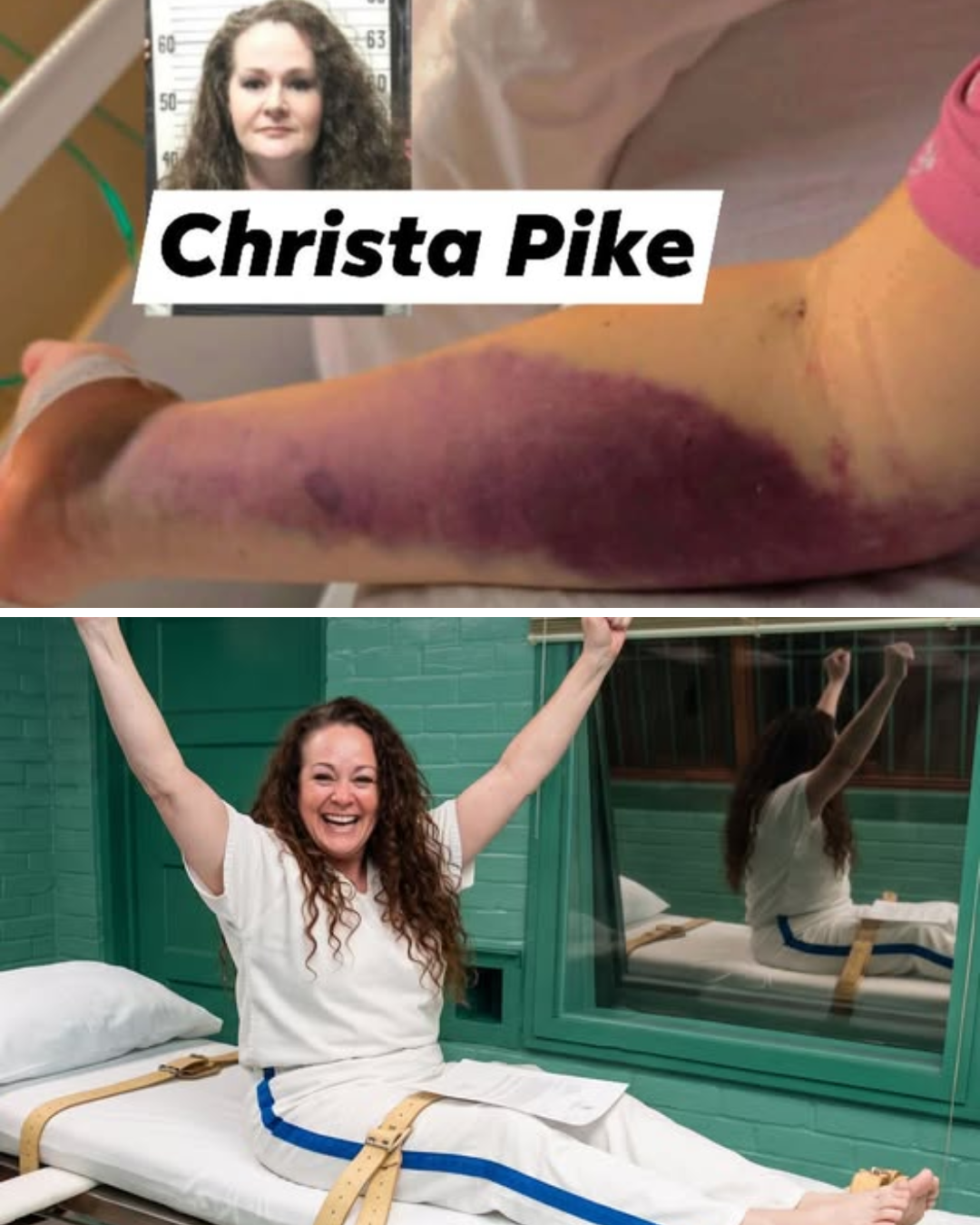
Tennessee uses pentobarbital as its single-drug lethal-injection protocol.
The drug is intended to rapidly induce unconsciousness and suppress the brain functions responsible for breathing and heartbeat. In Pike’s case, however, two doses failed to produce the intended result.
The execution became increasingly unusual as witnesses heard Pike breathing and snoring behind the curtain.
At one point during the procedure, Pike reportedly complained that her arm was hurting.
More than an hour after the execution attempt began, she was still alive.
What Went Wrong?
That remains one of the central questions now facing Tennessee.
Pike’s attorneys have alleged that problems with establishing intravenous access caused the execution drugs to enter tissue rather than being delivered properly into her bloodstream.
Her legal team had warned before the execution that Pike could present difficulties because of problems involving her veins.
Those claims have not yet been established as the final explanation for the failed execution.
Tennessee officials have maintained that the execution team followed the state’s established protocol.
Tennessee Halts Executions
The failure immediately triggered a broader review.
Gov. Bill Lee announced that Tennessee would pause its remaining executions for the rest of 2026 while an independent investigation examines what happened.
The Pike case was also the second failed execution attempt in Tennessee this year. In May, officials halted the execution of Tony K. Carruthers after they were unable to establish an IV line.
The latest failure has intensified scrutiny of Tennessee’s execution procedures and the reliability of lethal injection.
Pike’s Condition Remains Uncertain
The failed execution did not mean Pike simply returned to prison.
She was hospitalized in critical condition following the procedure.
As of October 4, her attorney Stephen Ferrell said Pike remained unconscious and on a ventilator. Her lawyers said doctors were still treating her and that her long-term prognosis might not be known for days.
That creates another extraordinary legal question.
Pike entered the execution chamber as a death-row inmate.
She left in an ambulance — alive, but critically ill.
What Happens Next?
The independent investigation will likely focus on exactly how the execution drugs were administered, whether the IV lines functioned as intended and whether Tennessee’s procedures were properly followed.
Meanwhile, Pike’s attorneys are seeking answers about her medical condition and what legal options remain after the failed execution.
For now, one fact is beyond dispute:
Tennessee administered two doses of pentobarbital in an attempt to execute Christa Pike — and she survived.
What happened inside the execution chamber, why the procedure failed and what comes next for Pike are questions Tennessee officials must now confront.