LUCY LETBY CASE ROCKED BY NEW SCIENTIFIC QUESTIONS — BUT HER CONVICTIONS HAVE NOT BEEN OVERTURNED
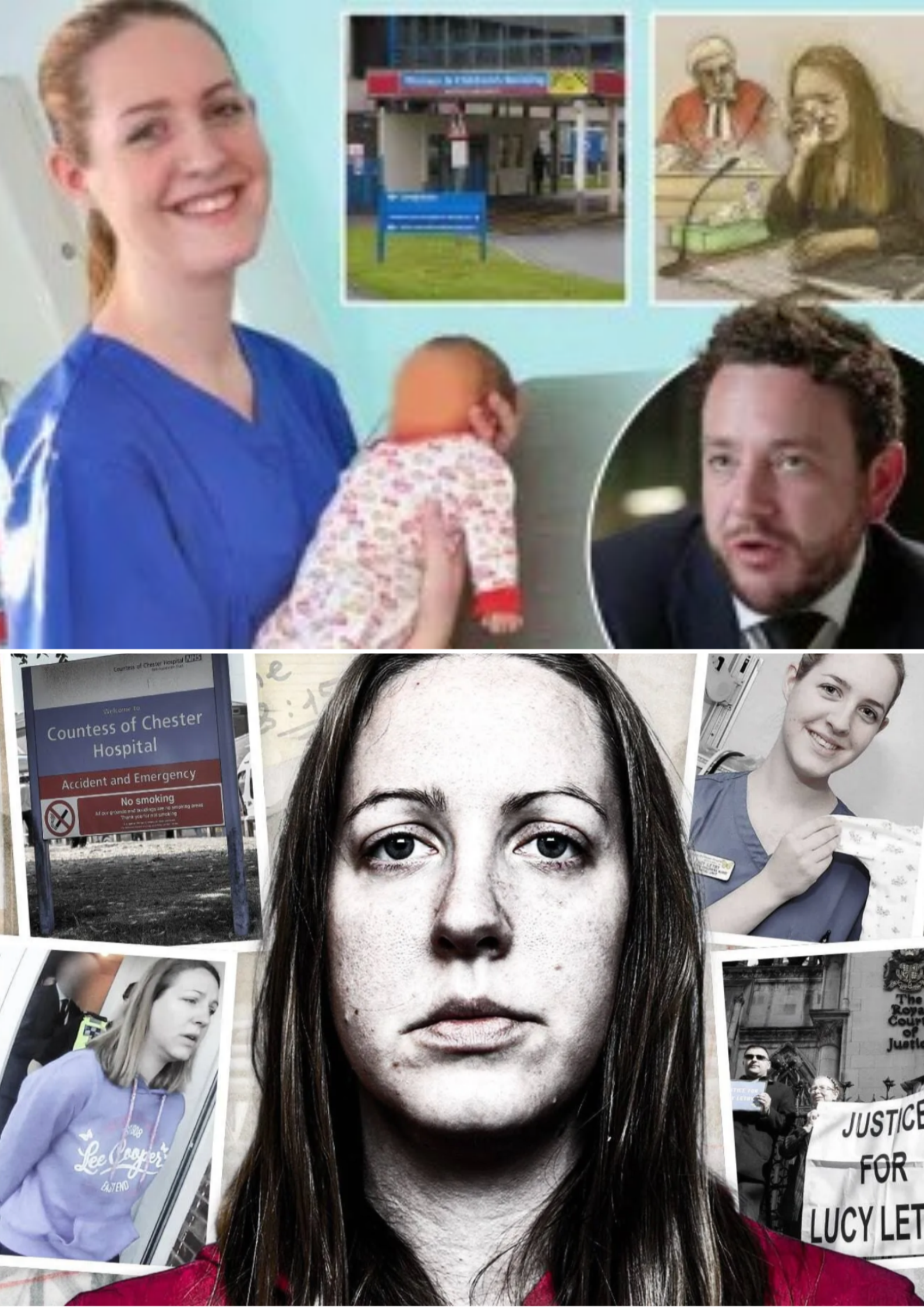
LUCY LETBY CASE ROCKED BY NEW SCIENTIFIC QUESTIONS — BUT HER CONVICTIONS HAVE NOT BEEN OVERTURNED
FRESH EXPERT EVIDENCE IS CHALLENGING PARTS OF THE PROSECUTION CASE AS BRITAIN’S MOST CONTROVERSIAL MEDICAL CRIMINAL CASE FACES FURTHER SCRUTINY
The Lucy Letby case has entered another extraordinary chapter.
The former neonatal nurse remains in prison after being convicted of murdering seven babies and attempting to murder seven others at the Countess of Chester Hospital.
But while her convictions remain in place, a growing body of medical and scientific analysis is challenging parts of the evidence used against her.
Her legal team is now asking the Criminal Cases Review Commission to examine that new material — raising the possibility of another legal battle over one of Britain’s most closely watched criminal cases.
 NEW EXPERTS HAVE CHALLENGED THE MEDICAL EVIDENCE
Among the most significant developments is the work of an international panel led by Canadian neonatologist Dr Shoo Lee.
The panel brought together 14 specialists from several countries to examine medical evidence connected with the babies in the case.
Dr Lee has publicly argued that the evidence did not establish that the babies were deliberately harmed and that some deaths or collapses could have resulted from natural causes or medical complications.
Those conclusions have been strongly disputed, and they have not overturned Letby’s convictions.
The material is instead being considered as part of her legal team’s application to the CCRC.
 THE INSULIN CASES HAVE BECOME A MAJOR FOCUS
Two of Letby’s convictions involved allegations that newborn boys were deliberately poisoned with insulin.
The prosecution relied heavily on blood-test results and expert interpretation to argue that the babies had suffered deliberate insulin poisoning.
But subsequent experts have questioned aspects of the laboratory evidence and the interpretation of the babies’ insulin and C-peptide results.
In 2025, Letby’s legal team submitted an 86-page report from seven specialists in areas including immunoassay testing, insulin, C-peptide testing and paediatric endocrinology.
The team argued that the scientific evidence used in the two cases was unreliable and that the new analysis created serious doubt about the convictions.
EVEN SUPPORTERS OF THE CHALLENGE ARE DIVIDED
The latest developments have also revealed disagreement among experts involved in the attempt to challenge Letby’s convictions.
In September 2026, chemical engineering expert Helen Shannon and bioengineering professor Geoff Chase withdrew from Letby’s defence team.
They said they continued to stand by their assessment that it was very unlikely that two babies had been poisoned with insulin.
However, they said they could not support other arguments being advanced by the defence because they believed some were inconsistent with available evidence, science and established physiology.
That disagreement is significant because it shows that the current debate is not simply a matter of experts unanimously declaring Letby innocent.
Instead, different specialists continue to disagree over how particular pieces of medical evidence should be interpreted.
QUESTIONS HAVE ALSO BEEN RAISED ABOUT HOSPITAL DATA
Statistical evidence has also become part of the wider controversy.
Critics of the prosecution have questioned the significance of the apparent clustering of collapses and deaths on the neonatal unit and whether staff-roster patterns can reliably establish a connection between Letby and the incidents.
Some statisticians have argued that the interpretation of the data may have been problematic.
However, statistical criticism remains one part of a much larger evidential picture, and it has not resulted in Letby’s convictions being quashed.
MATERIAL WAS ALSO NOT DISCLOSED TO THE DEFENCE
Another major development came in July 2026, when BBC reporting revealed that maternity records belonging to babies involved in Letby’s case had been seized by Cheshire Police but were apparently not reviewed by the prosecution’s chief medical expert or disclosed to Letby’s defence before trial.
The records contained information about the mothers’ pregnancies, labour and births.
The discovery has added another layer to the continuing debate about whether all potentially relevant medical evidence was properly examined and disclosed.
THE CCRC IS NOW EXAMINING THE CASE
Letby’s application is being considered by Britain’s Criminal Cases Review Commission.
The CCRC confirmed in February 2026 that it had received multiple rounds of expert reports and submissions from her legal team.
The commission stressed that its role is not to decide whether Letby is innocent or guilty.
Instead, it must determine whether new evidence or legal arguments create a real possibility that the convictions would not be upheld by an appeal court.
That process remains ongoing.
BUT THE CONVICTIONS HAVE NOT BEEN OVERTURNED
Despite the increasingly intense debate surrounding the case, one fact remains unchanged:
Lucy Letby remains convicted.
She was found guilty by juries at two separate trials and is serving 15 whole-life orders.
The Court of Appeal has previously rejected challenges to her convictions.
The new expert material therefore represents a legal challenge to existing convictions — not a judicial finding that those convictions were unsafe.
THE WIDER INQUIRY HAS ADDED ANOTHER LAYER
The controversy has also unfolded alongside the Thirlwall Inquiry into the Countess of Chester Hospital.
Its final report in September 2026 identified serious failures by hospital management and concluded that opportunities to intervene were missed.
But the inquiry did not determine whether Letby was innocent or guilty.
Indeed, the inquiry chair specifically warned that the families affected by the deaths and injuries should not become “collateral damage” in the continuing public argument over Letby’s convictions.
A CASE THAT REMAINS FAR FROM OVER
Lucy Letby’s case now sits at the intersection of criminal law, neonatal medicine, statistics and questions about how complex scientific evidence is presented to juries.
Her supporters point to international experts, disputed medical evidence and material that they say was not properly considered at trial.
Those who reject the challenge point to the original jury verdicts and the broader body of evidence presented across two lengthy trials.
For now, neither side has received the definitive legal outcome it is seeking.
The CCRC review continues.
And until an appeal court rules otherwise, Lucy Letby’s convictions remain in force.
The scientific debate is still unfolding — but the verdict has not yet been overturned.