SHE ENTERED TENNESSEE’S DE@TH CHAMBER ALIVE — AND LEFT IT ALIVE
SHE ENTERED TENNESSEE’S DEATH CHAMBER ALIVE — AND LEFT IT ALIVE
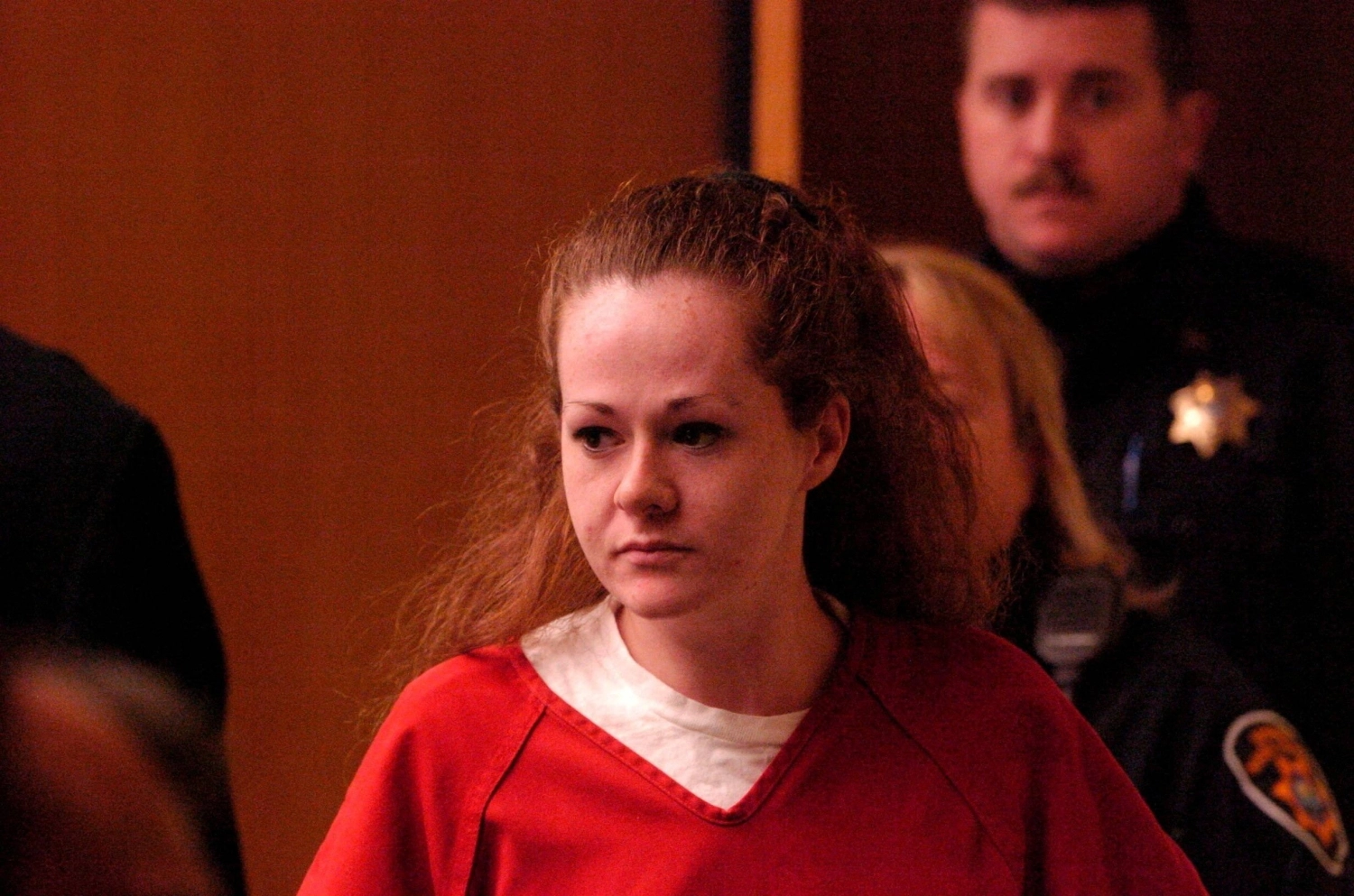
Christa Gail Pike was supposed to become the first woman executed by Tennessee in more than 200 years. Instead, she survived two doses of the state’s lethal-injection drug and is now speaking from a hospital bed.
Christa Gail Pike entered Tennessee’s execution chamber on September 30 expecting to leave it dead.
Nearly a week later, she was alive, conscious and speaking.
The extraordinary turn of events has raised questions about what happened behind the closed curtains of Tennessee’s execution chamber — and whether the state could ever attempt to carry out Pike’s sentence again.
Pike, now 50, had spent decades on Tennessee’s death row after being convicted for the 1995 killing of 19-year-old Colleen Slemmer.
Her execution would have made her the first woman put to death by Tennessee in more than two centuries.
Instead, it became an unprecedented medical and legal case.
 “I’M READY TO BE FREE”
Pike was strapped to a gurney inside the execution chamber at Riverbend Maximum Security Institution in Nashville.
Before the procedure began, she delivered what were expected to be her final words.
She told witnesses she was at peace and ready to be free, describing the day as a “happy day.”
But after the first dose of pentobarbital was administered, something went wrong.
Pike remained conscious.
At one point, she complained that her arm felt as though it was burning or about to burst.
The curtain was closed.
Then it reopened.
And Pike was still alive.
According to court filings and witness accounts, officials proceeded with a second dose of pentobarbital.
Yet even after the second injection, Pike continued breathing. Witnesses reported hearing snoring sounds behind the curtain, and her attorneys later said she still had a heartbeat and had not been fully rendered unconscious.
 THE CURTAINS CLOSED — THEN THE WITNESSES WERE REMOVED
The execution became increasingly difficult to follow from outside the chamber.
After the second dose, the curtains closed again.
At approximately 8:53 p.m., media witnesses were ordered to leave the witness area.
Pike’s attorneys were simultaneously fighting to halt the procedure, arguing that she remained alive and that continuing would subject her to unconstitutional suffering.
An ambulance eventually arrived.
Pike was taken from the prison to a Nashville-area hospital, still alive.
She was unconscious and critically ill, with serious injuries to her arms.
She had survived not one, but two doses of the drug Tennessee uses for lethal injection.
WHAT WENT WRONG?
That remains one of the biggest unanswered questions.
Pike’s attorneys had warned before the execution that she had medical issues that could complicate intravenous access.
Dr. Joel Zivot, an anesthesiologist who has served as an expert for Pike’s legal team, has suggested that problems with the IV lines could have played a role.
One needle reportedly became bent during the procedure, while Pike’s lawyers say multiple attempts were required to establish intravenous access.
But these are still allegations and medical interpretations from the defense side.
Tennessee has not publicly established a final explanation for why the execution failed.
A Tennessee court has now ordered officials to preserve evidence from the execution, including syringes, drug packaging, IV lines, catheters, restraints and other materials.
The order could help investigators determine exactly what happened inside the chamber.
THEN CAME ANOTHER SHOCK
For several days after the failed execution, Pike remained unconscious and critically ill.
Her lawyers did not know whether she would survive.
Then, on October 5, they were reportedly told that Pike was considered brain-dead and that life support was expected to be withdrawn.
The following day, however, everything changed.
Pike woke up.
Her attorneys said she was conscious and speaking.
She reportedly asked questions including, “Where am I?” and “Who are you?”
Her lawyers described the development as medically unprecedented.
But waking up does not mean Pike has recovered.
She remains seriously ill, with pneumonia, severe swelling in her arms and hands and difficulty swallowing. Her lawyers say she cannot properly move her arms and that her long-term prognosis remains uncertain.
She also reportedly has periods of confusion.
Yet she knows what happened.
According to her attorney Randy Spivey, Pike understands that the state attempted to carry out her sentence.
COULD TENNESSEE TRY AGAIN?
That may now be one of the most complicated questions surrounding the case.
There is currently no announced plan for another execution attempt.
In fact, Tennessee Gov. Bill Lee suspended executions for the remainder of 2026 and ordered an independent review after Pike’s failed execution.
The state had already experienced another troubled execution earlier in the year, adding further scrutiny to its procedures.
Pike’s attorneys are now asking Tennessee to commute her death sentence to life imprisonment and never attempt to execute her again.
They argue that Pike has already survived what they describe as a completed execution attempt and that trying again would raise profound constitutional and legal questions.
Whether Tennessee could legally attempt another execution remains unresolved.
A CASE THAT HAS CHANGED EVERYTHING
Pike’s case is now being examined far beyond the question of her individual sentence.
It has raised questions about the reliability of lethal-injection procedures, the secrecy surrounding execution protocols and what should happen when an execution does not go as planned.
Her lawyers are seeking access to evidence from the chamber, including the equipment and drugs used during the procedure.
A judge has ordered Tennessee to preserve that evidence while the legal battle continues.
For now, Pike remains hospitalized under guard.
She entered the execution chamber alive.
She received two doses of the state’s lethal-injection drug.
The curtains closed.
The witnesses were sent away.
An ambulance took her to the hospital.
And days later, against expectations, she opened her eyes and began talking.
What happened behind those closed curtains may take months to fully understand.
But one thing is already clear:
Christa Pike survived an execution that was supposed to end her life — and her story is far from over.