LUCY LETBY CASE BACK UNDER INTENSE SCRUTINY: UNDISCLOSED MATERNITY RECORDS AND NEW EXPERT DISPUTES RAISE FRESH QUESTIONS
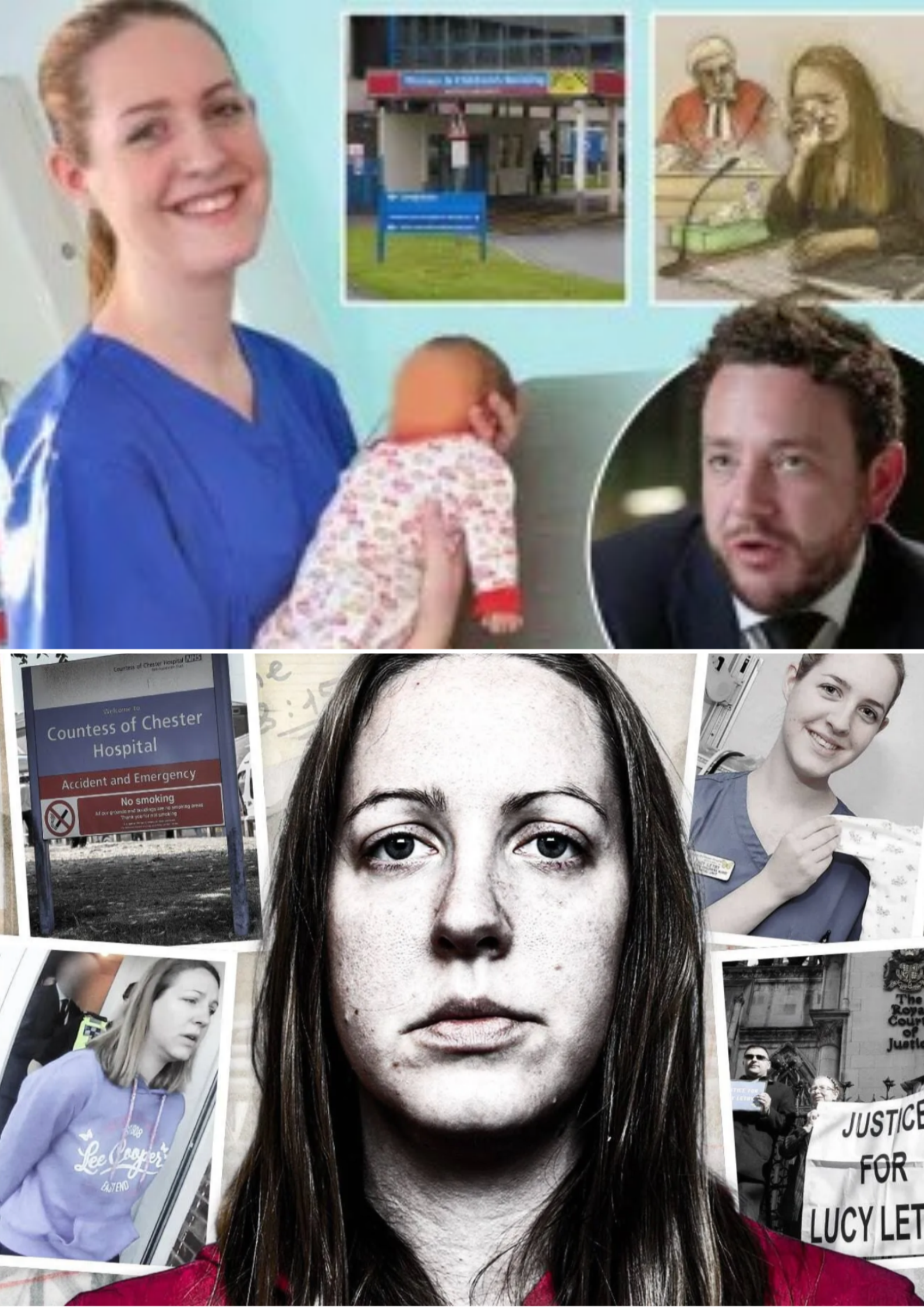
LUCY LETBY CASE BACK UNDER INTENSE SCRUTINY: UNDISCLOSED MATERNITY RECORDS AND NEW EXPERT DISPUTES RAISE FRESH QUESTIONS
The former neonatal nurse remains in prison serving 15 whole-life sentences as the Criminal Cases Review Commission examines new material challenging aspects of the prosecution case. But the review has become more complicated, with two experts withdrawing from her defence team over concerns about the scientific credibility of some arguments.
CHESTER, ENGLAND — The case of former neonatal nurse Lucy Letby has returned to the center of public debate following new reporting about previously undisclosed maternity records, renewed challenges to medical evidence and a widening dispute among experts examining her convictions.
Letby, 36, was convicted of murdering seven babies and attempting to murder seven others while working at the Countess of Chester Hospital in northwestern England between 2015 and 2016. She is serving 15 whole-life sentences and continues to deny the allegations.
Her legal team has submitted new evidence to the Criminal Cases Review Commission (CCRC), the independent body responsible for investigating potential miscarriages of justice. The commission is examining whether there is a real possibility that the convictions could be overturned if the case were referred back to an appeal court.
However, the review has not resulted in any convictions being overturned, and the CCRC has not announced a decision to refer Letby’s case to the Court of Appeal.
 MATERNITY RECORDS THAT WERE NOT DISCLOSED TO THE DEFENCE
One significant development emerged in July 2026, when BBC reporting revealed that maternity notes relating to babies in Letby’s case had been seized by Cheshire Police but were not reviewed by the prosecution’s principal medical expert or disclosed to the defence before trial.
The records reportedly contained information about the mothers’ pregnancies, labour and births — details that could be relevant when assessing the medical circumstances surrounding the babies’ collapses or deaths.
The revelation has prompted questions about how evidence was collected, examined and disclosed during the original investigation.
However, the existence of previously undisclosed records does not automatically establish that the convictions were unsafe. Their significance depends on what the records contain, whether the information is genuinely new and whether it could have materially affected the evidence presented to the juries.
Those questions will need to be assessed through the appropriate legal process rather than settled through public speculation.
 INTERNATIONAL EXPERTS CHALLENGE PARTS OF THE PROSECUTION CASE
Letby’s defence has also relied on opinions from medical and scientific specialists who argue that some of the babies’ collapses and deaths may have had natural causes or resulted from inadequate medical care.
Among the most prominent critics is Canadian neonatologist Dr Shoo Lee, whose earlier research on air embolism featured in discussions surrounding the prosecution’s case. Lee has argued that aspects of his research were misinterpreted and has questioned whether the medical evidence adequately supports the conclusions reached at trial.
A group of experts has also raised questions about the two insulin-related convictions. The prosecution case involved allegations that Letby deliberately poisoned two newborn boys by introducing insulin into their feeding bags.
Helen Shannon, a chemical engineering specialist, and Geoff Chase, a bioengineering professor, previously produced a report challenging aspects of the scientific evidence concerning those cases.
Their work has been cited by Letby’s legal team as part of its broader argument that the convictions warrant further scrutiny.
But the expert debate has not produced a unified position on every aspect of the defence case.
TWO EXPERTS WITHDRAW FROM LETBY’S DEFENCE TEAM
In September 2026, Shannon and Chase withdrew from Letby’s defence team, citing concerns about the scientific credibility of some arguments being advanced on her behalf.
In a letter reported by The Guardian, they said they continued to stand by their assessment that it was very unlikely two of the babies had been poisoned with insulin. However, they said other arguments being put forward raised serious problems that they could not support.
Their withdrawal introduced a new complication into an already contentious legal review.
Letby’s barrister, Mark McDonald, rejected the suggestion that the development undermined the overall defence. He argued that the case relied on evidence from multiple experts across different disciplines and that the concerns raised about the insulin evidence remained significant.
The disagreement illustrates an important distinction: an expert can challenge one part of a prosecution case while declining to endorse other arguments made by the same legal team.
Neither the withdrawal nor the continuing disagreement determines whether Letby’s convictions are safe. That question remains for the relevant legal authorities and, if the case is referred, the appeal courts.
WHAT IS THE CRIMINAL CASES REVIEW COMMISSION EXAMINING?
The CCRC received a preliminary application on Letby’s behalf in February 2025. Further submissions, expert reports and defence material were provided over the following months.
In a statement published on February 13, 2026, the commission explained that it had received additional material throughout the review process and was continuing to examine the application.
The CCRC does not decide whether a person is guilty or innocent. Its role is to investigate potential miscarriages of justice and refer cases to an appeal court when it considers that the legal threshold has been met.
A referral would not itself overturn Letby’s convictions. It would allow the Court of Appeal to consider the case again.
As of the latest reports cited here, the commission had not announced a final decision on whether to refer the convictions.
Claims that sealed review files contain explosive revelations or that the commission has already uncovered decisive proof should therefore be treated cautiously unless supported by verified documents or official statements.
THE THIRLWALL INQUIRY FOUND SERIOUS FAILURES AT THE HOSPITAL
The debate over Letby’s convictions has unfolded alongside a separate public inquiry into how the hospital responded to concerns about the deaths and collapses of babies on its neonatal unit.
The Thirlwall Inquiry, led by Lady Justice Kathryn Thirlwall, published its findings in September 2026. It identified profound failures in hospital leadership, communication and safeguarding.
The inquiry found that senior staff did not respond appropriately to concerns raised by doctors and that opportunities to intervene were missed. It also criticised the way the hospital treated clinicians who raised alarms and the failure to inform parents adequately about the concerns surrounding their babies.
The report concluded that the hospital’s systems and leadership had failed to protect vulnerable infants effectively.
However, the inquiry was not an appeal against Letby’s convictions. Its purpose was to examine institutional conduct, safeguarding failures and lessons for the future — not to determine whether the criminal verdicts should stand.
The inquiry’s findings and the CCRC’s review therefore address different questions, even though both concern the same hospital and events.
THE CONVICTIONS REMAIN IN FORCE
Despite the new reporting, Letby’s convictions remain legally valid.
She was convicted across two trials of murdering seven babies and attempting to murder seven others. Her previous attempts to challenge the convictions through the ordinary appeals process were unsuccessful.
The CCRC review provides a separate route for examining new evidence or arguments that may not have been fully considered by the courts. It is not a guarantee that a case will be referred or that a conviction will be overturned.
The distinction is particularly important in a case that has attracted intense public attention and sharply divided opinions among some commentators and experts.
The families of the babies involved continue to be affected by the case, while Letby’s legal team maintains that new evidence warrants a fresh examination.
WHAT HAPPENS NEXT?
The next major development will depend on the CCRC’s assessment of the submissions and evidence provided by Letby’s representatives.
If the commission concludes that the required legal threshold has been met, it may refer some or all of the convictions to the Court of Appeal. If it does not, the convictions will remain in place unless another lawful route to challenge them becomes available.
For now, the maternity records, disputed scientific interpretations and disagreement among experts have raised questions that require careful examination — but they have not resolved the central issue.
Lucy Letby’s case remains under review, her convictions have not been overturned, and no final CCRC decision has been publicly announced in the sources cited here. The outcome will depend on the evidence and the legal standards applied, not on speculation about what the review files might contain.