CHRISTa PIKE’S FAILED EXECUTION: NEW DETAILS REVEAL DELAYS AS LAWYERS FOUGHT TO GET HER MEDICAL CARE
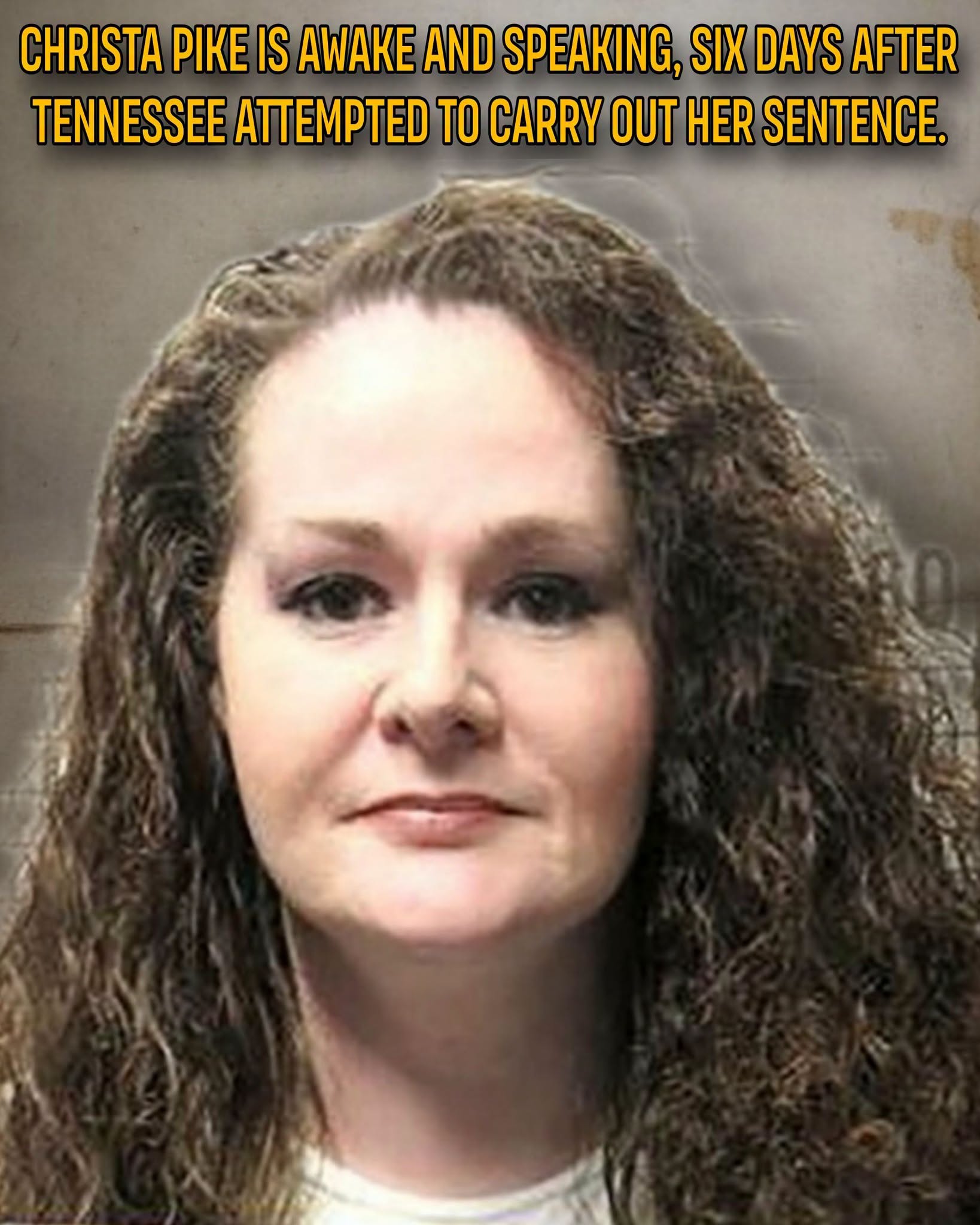
CHRISTa PIKE’S FAILED EXECUTION: NEW DETAILS REVEAL DELAYS AS LAWYERS FOUGHT TO GET HER MEDICAL CARE
Nearly two weeks after Christa Pike survived a failed execution in Tennessee, newly reported details are raising questions about communication, emergency procedures and the response inside the prison.
NASHVILLE, TENNESSEE — New details have emerged about the frantic efforts to secure emergency medical care for Christa Pike after she remained alive following two doses of an execution drug on September 30, 2026.
According to a report by PEOPLE, which cited reporting by The Tennessean and information from Pike’s legal team, her attorneys encountered a series of obstacles as they tried to reach officials and obtain urgent treatment for their client.
Pike, 50, was scheduled to be executed at Riverbend Maximum Security Institution in Nashville. After the procedure failed to end her life, emergency responders were eventually called, and she was taken to a nearby hospital. She has since been discharged and returned to the Debra K. Johnson Rehabilitation Center, where she remains in custody.
 A DISTURBING DISCOVERY INSIDE THE EXECUTION CHAMBER
Pike’s attorney Randy Spivey reportedly realised that she was still breathing after the second dose of pentobarbital had been administered.
He needed to alert the rest of her legal team, but he was required to pass through six locked doors to reach the witness room where he could make calls. According to the account published by PEOPLE, the process took several minutes.
Once the lawyers were in contact, they began trying to reach people who could intervene and ensure Pike received medical treatment.
Their efforts would soon become the subject of serious questions about how the situation was handled. <Cite refs={[“turn874102news8″,”turn874102search3”]}/>
 CALLS TO OFFICIALS WENT UNANSWERED
Pike’s attorneys said an emergency number provided by the Tennessee Supreme Court directed them to voicemail. They also attempted to contact two people in the office of Governor Bill Lee, but those calls reportedly went unanswered.
Attorney Stephen A. Ferrell then prepared an emergency court motion requesting that the Tennessee Department of Correction immediately provide lifesaving measures.
The motion was submitted at 8:36 p.m. and acknowledged by the court clerk at 8:47 p.m., according to the timeline reported by PEOPLE.
A hearing began at approximately 8:50 p.m. and concluded shortly after 9 p.m. The legal team said it did not know that ambulances were already on their way when the hearing took place. >
911 RECORDINGS ADD ANOTHER LAYER TO THE TIMELINE
Separately, emergency dispatch recordings released on October 12 provided more information about the confusion surrounding the request for help.
According to the Associated Press and CBS News, the first emergency call came at approximately 8:40 p.m. on September 30. The caller told dispatchers that an execution had taken place but that Pike was not yet deceased, and requested an ambulance.
The recordings also show that dispatchers struggled to verify the situation with prison officials. Emergency responders needed assistance gaining entry to the facility, adding to the questions about coordination between the prison and outside agencies. <Cite refs={[“turn874102search2″,”turn874102search3”]}/>
The recordings do not, by themselves, establish responsibility for every delay. However, they have added urgency to calls for a detailed examination of the events.
STATE OFFICIALS CALL FOR AN INVESTIGATION
Pike’s lawyers have raised concerns about the information shared with them while they were seeking emergency treatment. They also said they later learned that a representative of the Attorney General’s office in the execution chamber had a mobile phone but had not provided them with updates about the ambulance.
The Attorney General’s office said an investigation had been called for to determine what happened. A spokesperson for the court said the emergency motion had been addressed in a timely manner, while the Tennessee Department of Correction did not provide a substantive comment to PEOPLE at the time of its report. <Cite refs={[“turn874102news8″,”turn874102search3”]}/>
The findings of any investigation will be important in establishing the sequence of events and determining whether procedures were followed appropriately.
PIKE’S RECOVERY CONTINUES
Pike’s survival has been followed by an unexpected recovery. Her lawyers previously reported that she regained consciousness, began speaking and later took limited steps with assistance while receiving hospital care.
On October 10, her attorneys confirmed that she had been discharged from hospital and returned to the Debra K. Johnson Rehabilitation Center. They said she would continue to receive medical care in custody.
Her medical recovery does not resolve the questions surrounding the execution attempt itself. The timeline, emergency response and communication between officials are now central to the wider debate over what happened that night.
QUESTIONS REMAIN AFTER AN UNPRECEDENTED EVENT
The failed execution has brought renewed scrutiny to Tennessee’s execution procedures and the safeguards in place when something goes wrong.
For Pike’s legal team, the immediate priority was obtaining treatment after she survived the injections. For state officials, the next task is to establish exactly how the response unfolded and whether changes are needed to prevent similar confusion in the future.
As investigators examine the circumstances, the newly released timeline offers a clearer picture of the difficulties faced by those seeking help. But important questions remain unanswered, and the full findings of the investigation have yet to be established.
Sources
- PEOPLE — Christa Pike Timeline: Lawyers Detail Frantic Rush and Unexpected Obstacles
- CBS News — Emergency help delayed by confusion after failed execution, 911 calls reveal
- CBS News — Christa Pike released from hospital and returned to prison
- Associated Press — Emergency response after failed execution