Parents Choose to Carry Baby to Term After Fatal Diagnosis, Saying They Wanted the Chance to Meet Their Daughter
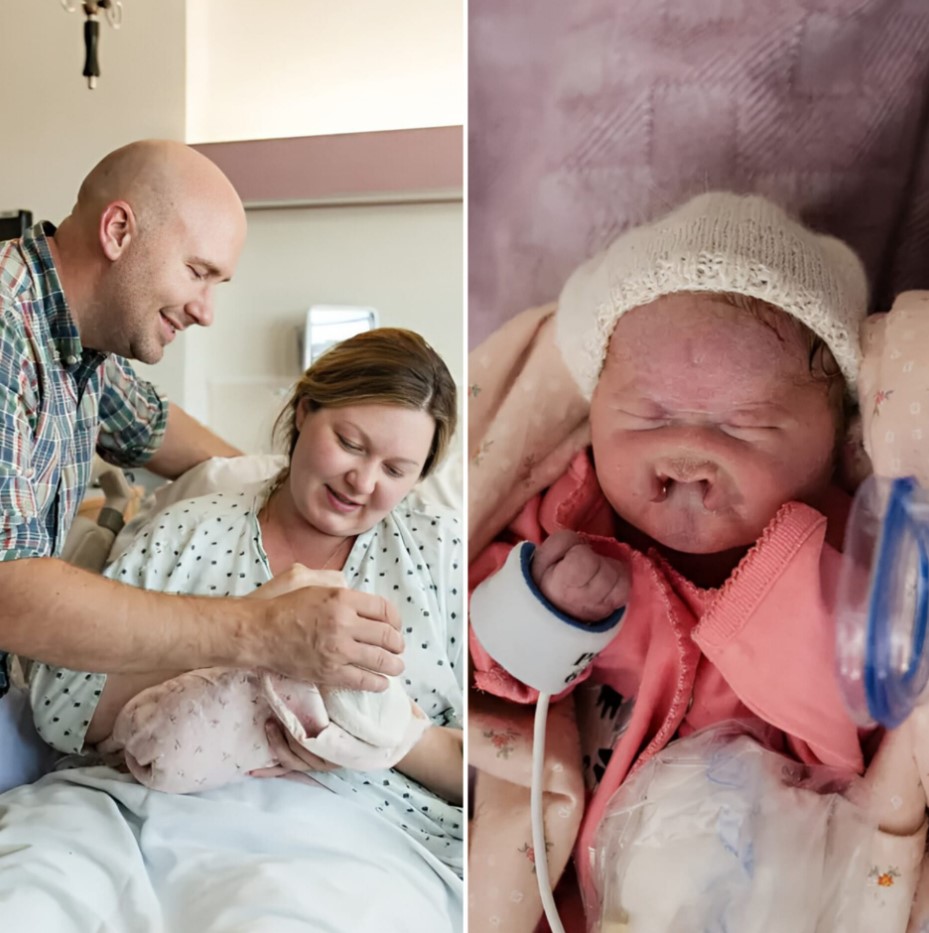
WHEN this mum met her baby daughter for the first time, she knew her time with her would be tragically short-lived.
Now Stefanie Wahl has explained why she made the heartbreaking decision to see her pregnancy through to full term – despite knowing daughter Samantha Rose might only live for a matter of minutes.
“Simply, we were not going to be the cause of our daughter’s death,” the 27-year-old told, of her decision not to have an abortion.
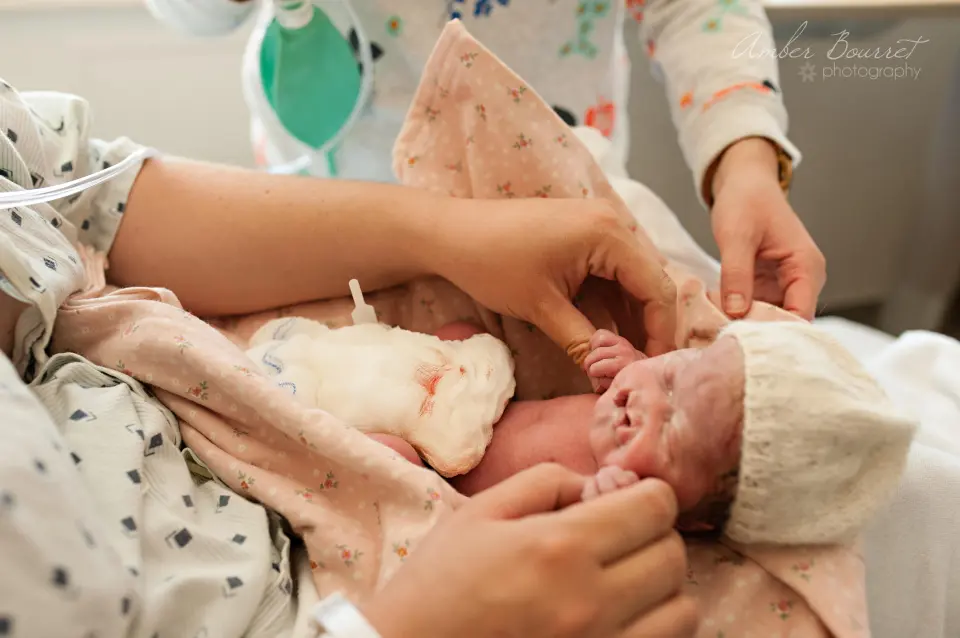
“I was happy to hang onto my little girl for as long as she was happy to be with us. It’s the least I could do, as her mother.”
Samantha was born with the rare Patau’s syndrome, a genetic disorder and chromosomal abnormality.
Her parents were overjoyed to meet their “lovely” daughter, but the day was also tinged with sadness.
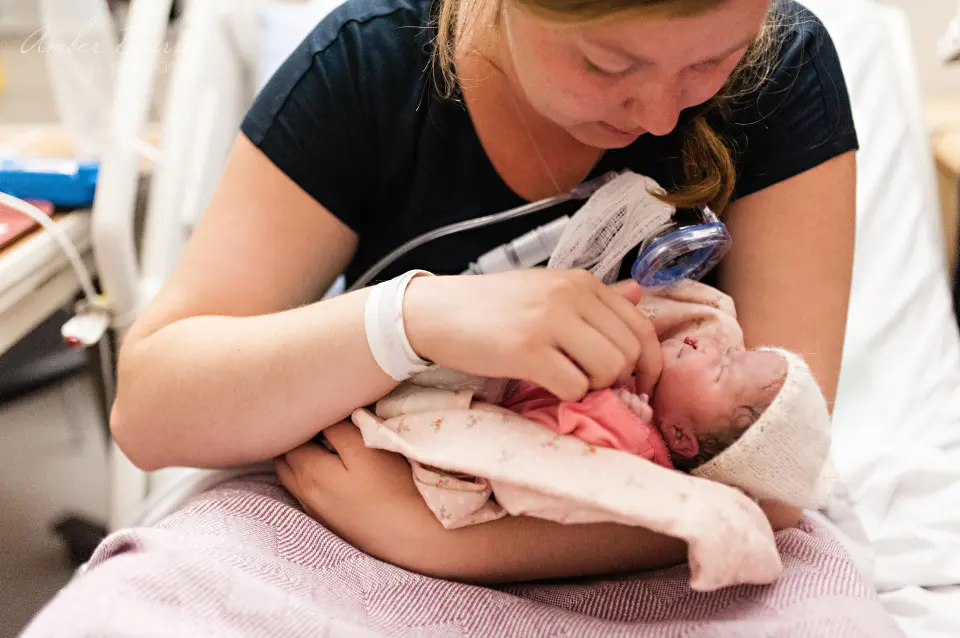
Patau’s can cause facial defects, abnormalities such as extra fingers and toes and, in the worst cases, result in organs growing outside of the body.
Nine out of 10 children born with Patau’s, which is also known as Trisomy 13, die within their first year.
While parents Stefanie and Adam, from Alberta, Canada, were told not to expect Samantha to ever take her first breath.
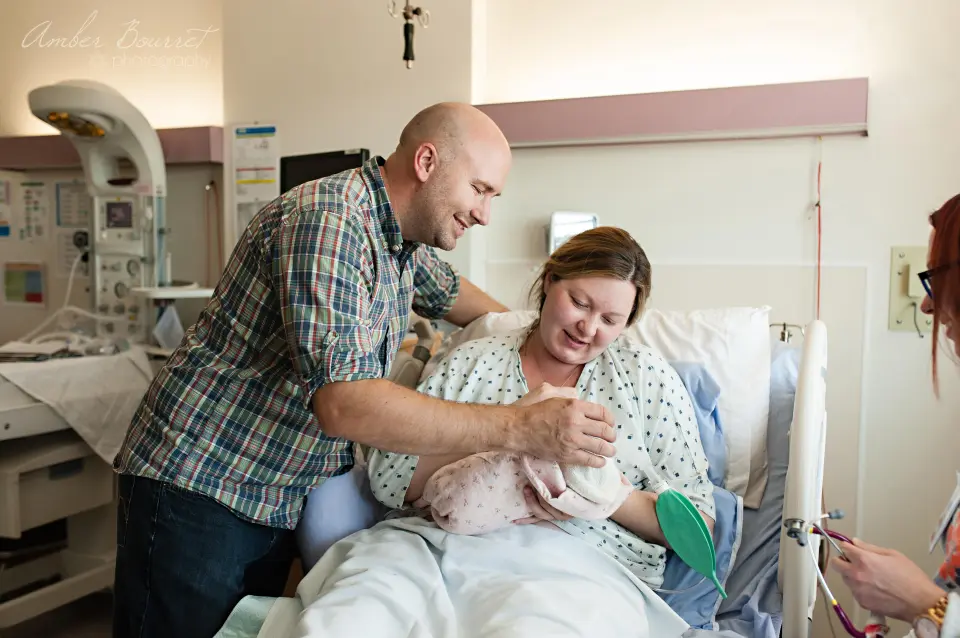
The couple, who are also parents to Leontine, two, first found out about Samantha’s condition at their 20-week scan.
“When we found out it was likely trisomy 13,” Stefanie said, “I was floored. That was worse than worst case scenario for me.”
They were offered a termination, but never considered it, and named their baby immediately after finding out they were expecting a little girl at their second ultrasound scan.
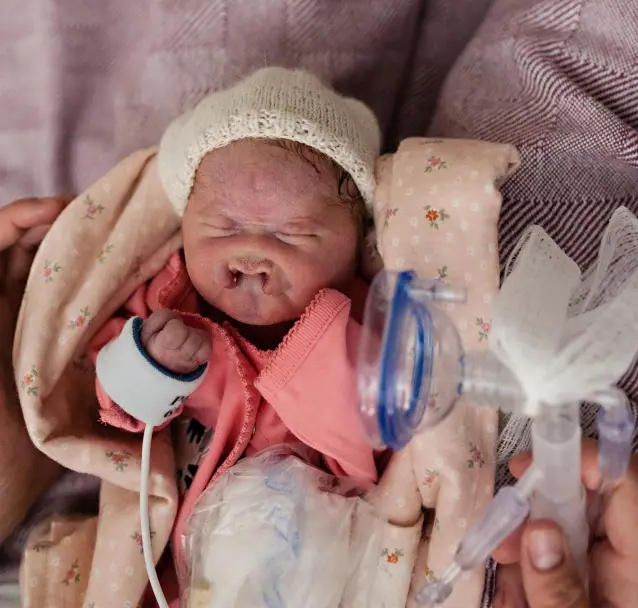
Although some babies with Patau’s syndrome have their lives prolonged with heart surgery, the couple were told early on that Samantha would not be operated on – because she only had “half a heart”.
Later scans revealed Samantha had alobar holoprosencephaly (when the forebrain doesn’t develop into two hemispheres), and was missing most of her cerebrum.
A sac of her organs had grown outside of her body. Samantha also had a wide cleft, and missing nose.
Stefanie added: “She had extra toes, and her eyes looked to be missing or not formed correctly. She would either very likely be stillborn, or at most live a few days after birth.”
The couple had monthly ultrasounds right up until Stefanie was induced at the 36-week mark.
The mum described the early birth as “heartbreaking”, because the parents thought they had at least another month with Samantha.
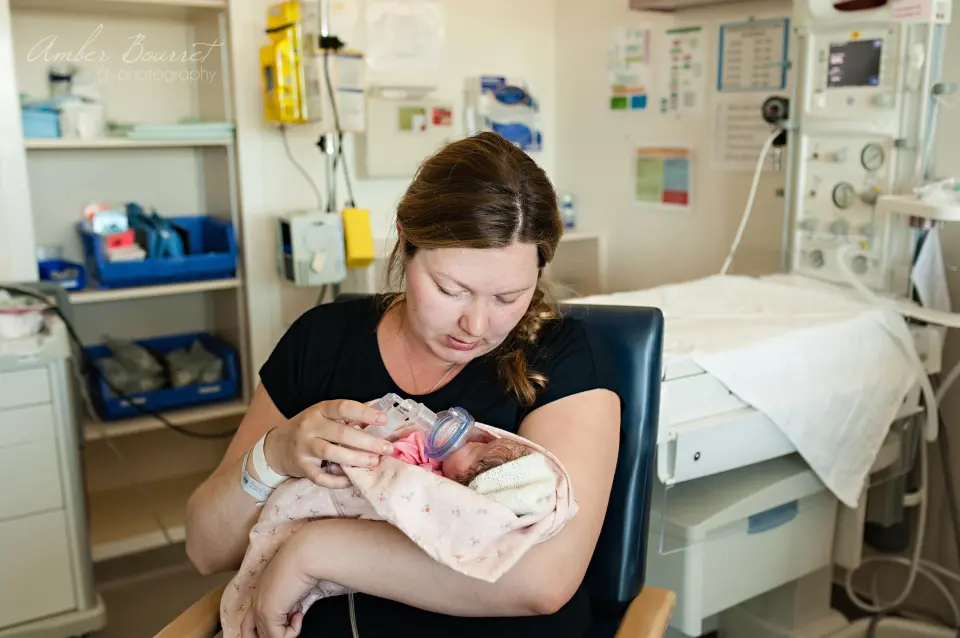
After a five-hour labour, the tot was delivered. Adam and Stefanie had braced themselves to have just minutes with their daughter but, in the end, they had a full three days.
Stefanie described it as: “The three most stressful and difficult days of our lives, but the sweetest as well. I would do those three days over again a hundred times.
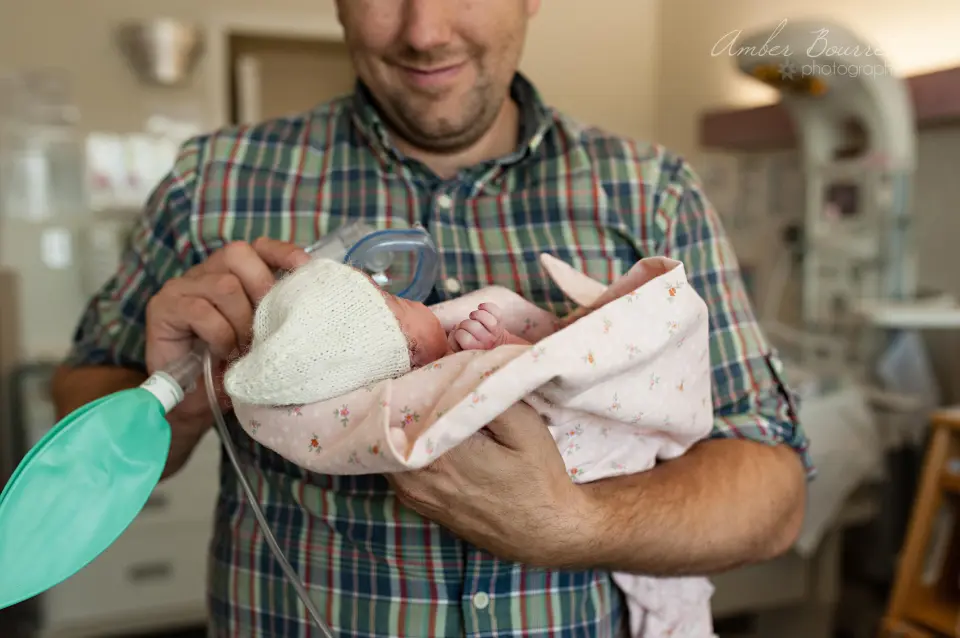
“We so cherished our time with her, I would give a limb to go back and hold her for just a few more minutes, smell her, kiss her soft cheeks one more time.”
“Every life is significant, no matter how difficult or short,” she added.
“She was very much our daughter, and though we didn’t get to keep her very long, she’s left a hole in our family.”
Samantha has left a physical legacy on her mother. Stefanie still feels phantom kicks, and donated her breast milk to a friend whose baby was born the day before Samantha.
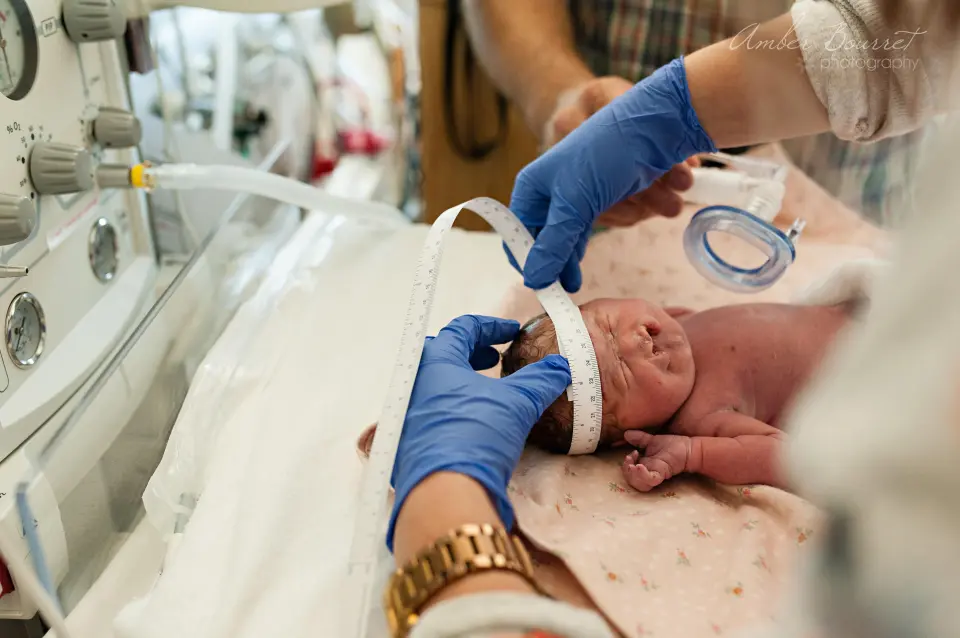
But her mum insists meeting Samantha was worth the “heartache”, while opportunities to talk about her experiences help to keep her memory fresh.
Stefanie told Sun Online: “We are of course very humbled that our story is being shared, but I have learned of so many families through our journey that have made the same choice with regards to a fatal prenatal diagnosis.
“I want to make sure that they are honoured as well.”