AFTER 27 YEARS, DIY SOS FACES AN UNCERTAIN FUTURE — IS THIS REALLY THE END OF AN ERA?
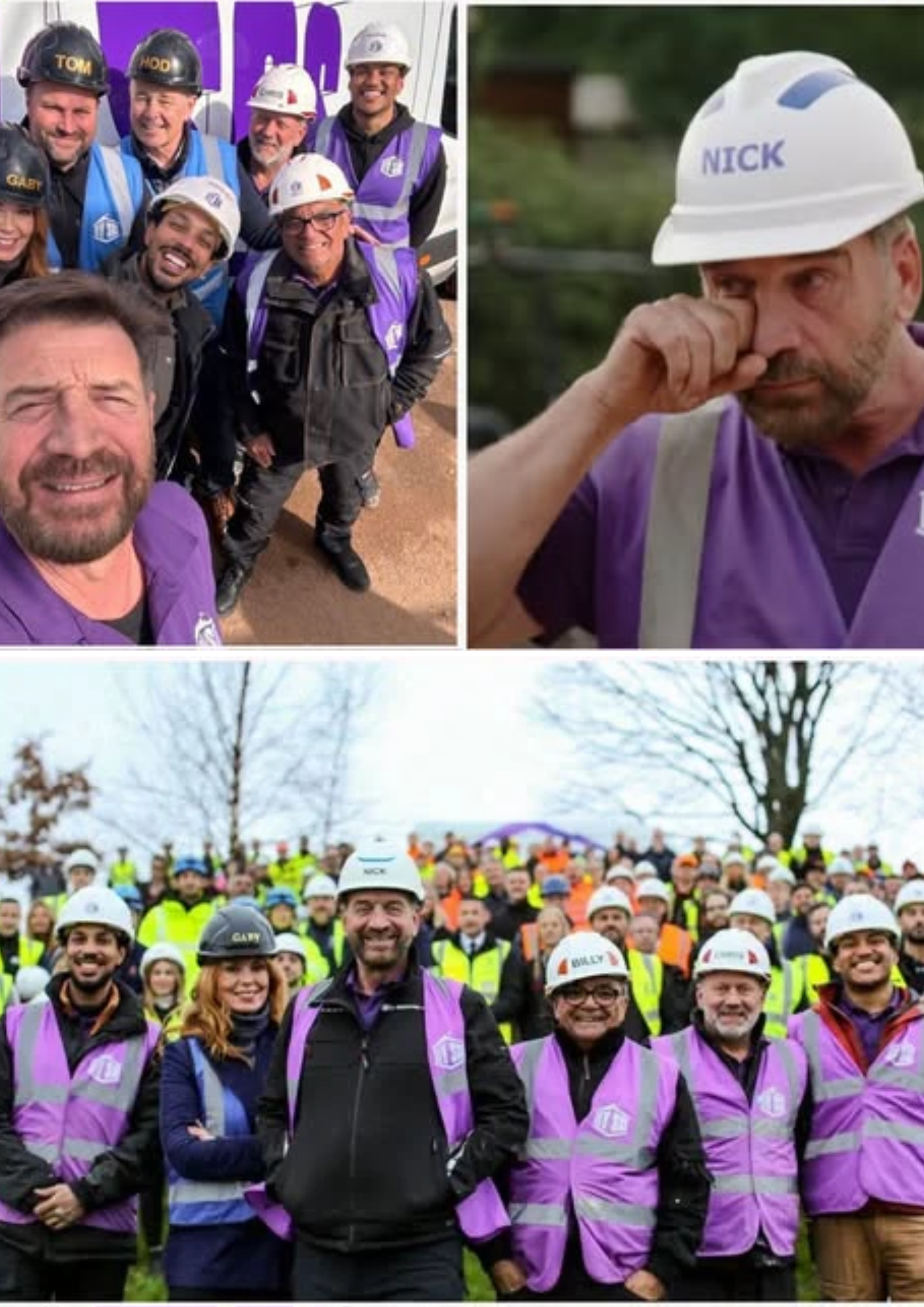
AFTER 27 YEARS, DIY SOS FACES AN UNCERTAIN FUTURE — BBC’S DECISION LEAVES FANS HEARTBROKEN
The beloved home renovation series is set to be “rested” in 2027 amid the BBC’s cost-saving drive. Host Nick Knowles has spoken of his disappointment, while a new spin-off will revisit some of the programme’s most memorable transformations.
After 27 years of bringing hope to families across Britain, DIY SOS is facing one of the biggest turning points in its history. The BBC has confirmed that the long-running renovation programme will be rested in 2027, leaving viewers, volunteers and longtime contributors questioning what the future holds for a show that has become synonymous with generosity, compassion and community spirit.
For millions of viewers, DIY SOS has never been just another television programme about home improvements. Since its debut in 1999, it has told the stories of families facing extraordinary challenges, showing how an army of volunteers, skilled tradespeople and local communities can come together to transform lives.
Now, as the BBC seeks to reduce spending, the familiar format is set to make way for a more cost-effective spin-off. Although the broadcaster describes the decision as a pause rather than a permanent cancellation, the announcement has sparked disappointment among those who believe the original series represents something special in British television.
A SHOW THAT TURNED HOME RENOVATIONS INTO LIFE-CHANGING MOMENTS
When DIY SOS first appeared on television, it focused on helping homeowners repair botched do-it-yourself projects. Over time, the programme evolved into DIY SOS: The Big Build, with its focus shifting towards ambitious renovations for families dealing with severe illness, disability, bereavement and devastating building problems.
Presented by Nick Knowles, the show became known for its extraordinary deadlines and the remarkable people who volunteered their time, skills and, in many cases, materials to make each project possible.
The results were often much more than beautiful new kitchens, accessible bathrooms or redesigned living spaces. For families who had spent years struggling with difficult circumstances, the renovations could provide greater independence, a safer home and the opportunity to spend more precious time together.
The emotional heart of the programme came from the people involved. Builders worked alongside volunteers from the surrounding community, businesses donated supplies, and strangers came together for families they had never met.
That spirit of collective kindness helped distinguish DIY SOS from other renovation programmes. Viewers were not simply watching a house being rebuilt. They were witnessing what could happen when an entire community decided that one family should not have to face its challenges alone.
 NICK KNOWLES REACTS TO THE END OF THE FAMILIAR FORMAT
For Nick Knowles, who has presented the programme since its early years, the announcement marks a deeply disappointing moment after more than two decades of working with the team.
Following the news, Knowles expressed his disappointment at not filming the programme in 2027 or continuing in the familiar format audiences have come to know and love. He also acknowledged the financial pressures facing the BBC, while thanking viewers for their messages of support.
His response reflected the complicated feelings surrounding the decision. After so many years, DIY SOS has become closely associated with Knowles himself, whose emotional reactions and commitment to the families have been a defining part of the show’s identity.
The presenter has repeatedly highlighted the contribution of tradespeople, volunteers and ordinary people who give their time to help others. Their work has allowed the programme to deliver projects that would be difficult for many families to achieve on their own.
For the team and its supporters, the concern is not simply that a familiar television show will disappear from the schedule. It is also about whether the same scale of practical help and community participation will continue without the original format.
 WHY IS THE BBC PUTTING THE SHOW ON HOLD?
The BBC says the decision is part of its wider financial challenges. The broadcaster is pursuing a savings target of £500 million over three years, with a number of established programmes affected by its efforts to reduce costs.
In its announcement, the BBC said it had decided to rest DIY SOS in 2027 and commission a spin-off from production company South Shore instead.
The planned programme, provisionally titled DIY SOS Rebuilt My Life, will revisit successful projects from the original series and expand the brand in a more cost-effective way.
The distinction matters: the BBC has announced that the familiar series will be rested, but it has not confirmed that the brand will disappear permanently. Nevertheless, the absence of a clear return date for the original format has left fans uncertain about whether the Big Builds will ever resume in the same way.
The decision also affects the programme’s annual Children in Need Big Build, which the BBC has confirmed will not take place in 2026.
For viewers who have followed the series for years, the move raises a difficult question: can a programme built around new projects, real-life families and hundreds of volunteers preserve its original spirit through a format that revisits past stories?
THE BIG BUILDS THAT MADE THE SHOW UNFORGETTABLE
Throughout its long run, DIY SOS has taken on projects that extended far beyond individual homes.
In 2015, Knowles and the team worked with hundreds of volunteers, alongside Prince William and Prince Harry, to transform a derelict street in Manchester into housing for military veterans. The project demonstrated how the programme could bring together people from different backgrounds to support those in need.
In 2018, Prince William returned for a special focused on survivors and the community affected by the Grenfell Tower fire. The team helped create a new community centre and restore the Dale Youth Boxing Club, which had been destroyed in the disaster.
These projects illustrated the show’s wider purpose. Rather than concentrating solely on private renovations, DIY SOS could help rebuild shared spaces and provide practical support to entire communities recovering from difficult experiences.
Another memorable project involved creating a specialist children’s cancer care unit in Northwich, Cheshire. The team and its volunteers completed the £1 million project in just 12 days, demonstrating the scale of what could be achieved when expertise, donations and determination came together.
For supporters, these are the kinds of achievements that make the programme difficult to replace. They represent not only ambitious construction work, but also a public celebration of people who choose to help others without expecting anything in return.
A RECENT EPISODE REMINDS VIEWERS WHAT IS AT STAKE
The announcement has come as the current series continues to show the emotional impact of the team’s work.
One recent episode followed the renovation of a family home to accommodate Dan, a teenager with complex disabilities following life-saving treatment for a brain tumour. His prolonged hospital stay had kept him away from home for years, and the project aimed to make it possible for him to receive care and spend more time with his family in a suitable environment.
The transformation was an especially emotional reminder of why the programme has endured. For families in such circumstances, a home adapted to their needs can mean far more than a change of scenery. It can make everyday care more manageable and help loved ones share moments that might otherwise be difficult to experience together.
The episode also highlighted the extraordinary commitment of the volunteers, whose work helped make the family’s hopes possible.
Stories like Dan’s explain why news of the show’s uncertain future has struck such a chord with audiences. The renovations are impressive, but the lasting impact on the people who live in those homes is what gives the programme its emotional power.
CAN A SPIN-OFF REPLACE THE MAGIC OF DIY SOS?
The BBC’s proposed DIY SOS Rebuilt My Life will revisit successful projects from the programme’s history. This could give audiences an opportunity to see how families and communities have fared since their renovations, while introducing the show’s legacy to a new generation.
Revisiting past projects may also provide meaningful updates on the people whose lives were transformed. Yet it is not quite the same as watching a new family receive help, seeing volunteers arrive at a building site, or following a community as it works against the clock to complete an ambitious project.
Much of the original programme’s appeal comes from its unpredictability. Every family has a different story, every renovation presents new challenges, and every Big Build depends on people choosing to contribute their time and effort.
A retrospective programme can celebrate those achievements, but it cannot automatically reproduce the excitement and emotional impact of a new transformation unfolding in real time.
That is why the announcement has prompted questions about whether the spin-off will be enough to satisfy loyal viewers or whether audiences will continue to hope for the return of the original format.
AFTER 27 YEARS, A LEGACY THAT GOES BEYOND TELEVISION
Since 1999, DIY SOS has built a legacy around the idea that communities can achieve extraordinary things when they work together. Its most memorable moments have celebrated skilled workers, generous businesses, dedicated volunteers and families who have shown remarkable resilience through difficult circumstances.
The programme has also offered viewers a different perspective on what home improvement can mean. Sometimes, a renovation is not about luxury or appearance. It is about accessibility, dignity, safety and giving a family the chance to live more comfortably together.
For now, the BBC’s decision means the familiar DIY SOS format will be absent in 2027, while the proposed spin-off will carry some of its stories forward. Whether the original Big Build returns in the years that follow remains unclear.
After nearly three decades, fans are left reflecting on a programme that made generosity its greatest achievement and proved that some of television’s most powerful moments happen when people come together to help a stranger.
The question now is whether DIY SOS is simply taking a break — or whether British television is preparing to say goodbye to one of its most heartfelt programmes. Can any new format truly replace the magic of the Big Build?