WHAT NATHALIA FILGUEIRAS’S 1,300 FLIGHT HOURS AND LEARJET 60 TRAINING REVEAL ABOUT HER PILOT QUALIFICATIONS
WHAT NATHALIA FILGUEIRAS’S 1,300 FLIGHT HOURS AND LEARJET 60 TRAINING REVEAL ABOUT HER PILOT QUALIFICATIONS
Her credentials are drawing renewed attention as investigators examine the deadly November 1 Learjet 60 crash in Florida.
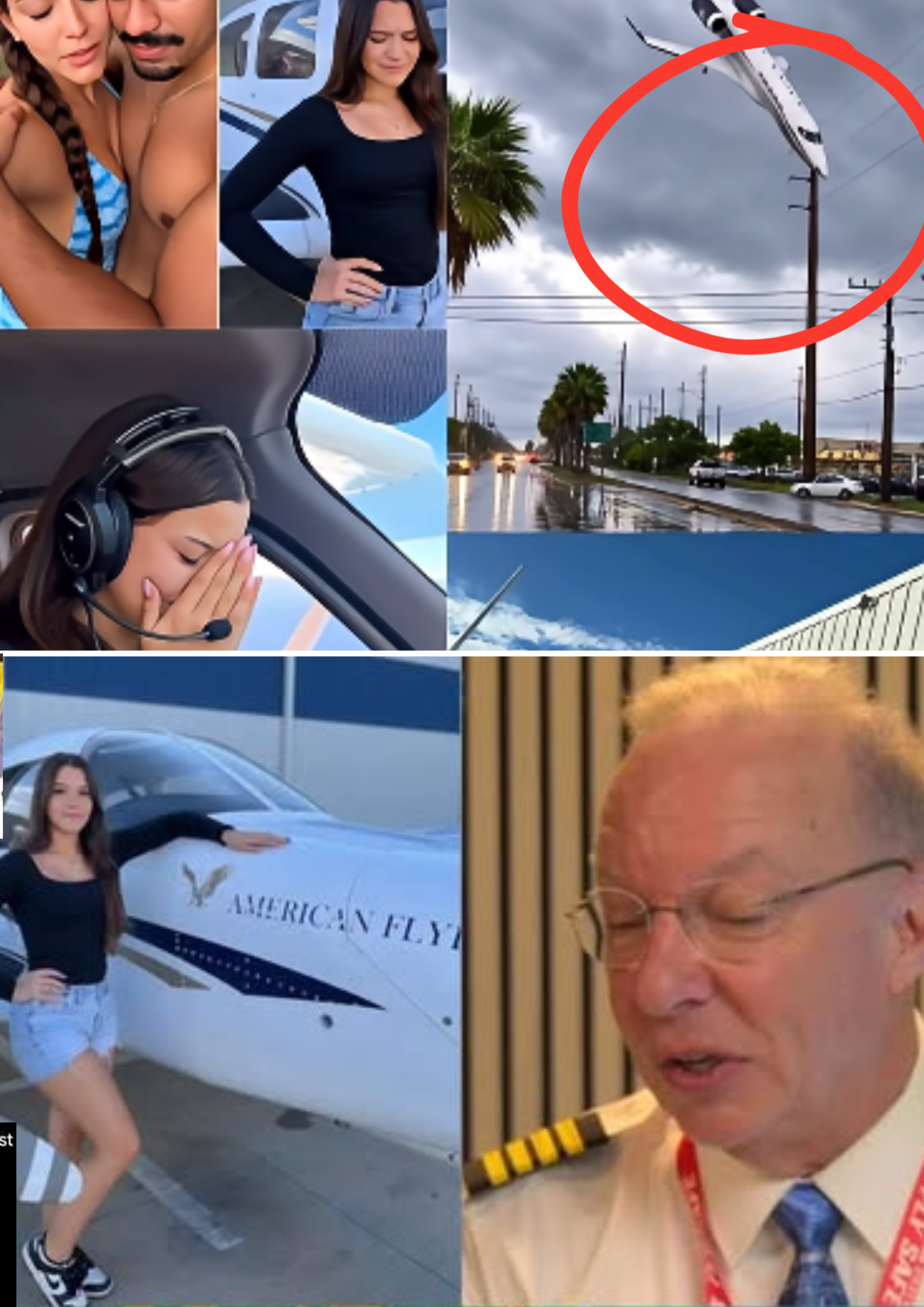
The aviation credentials of 20-year-old First Officer Nathalia Gadelha Filgueiras have become an important part of the public discussion surrounding the November 1, 2026, Learjet 60 crash near Greenacres, Florida.
According to information circulating about her professional background, Filgueiras had accumulated more than 1,300 total flight hours, held Certified Flight Instructor (CFI) credentials and completed a Learjet 60 type-rating check ride in March 2026.
Those reported qualifications have prompted renewed discussion about whether she met the Federal Aviation Administration’s requirements to serve as a Second-in-Command (SIC) on a charter aircraft operating under Part 135 regulations.
The distinction matters because early public reactions to the crash raised questions about her age, experience and eligibility to occupy the right-hand seat of a high-performance business jet.
However, a pilot’s age or the number of hours in their logbook alone does not establish whether they are qualified or unqualified. Federal aviation regulations set specific requirements involving certificates, ratings, training and aircraft-specific qualifications.
Understanding FAA Part 135 Second-in-Command Requirements
Under 14 CFR § 135.245, a Second-in-Command generally must hold at least a commercial pilot certificate with the appropriate aircraft category and class ratings, along with an instrument rating.
Additional requirements apply depending on the operation, including instrument experience and the applicable training and checking requirements.
For pilots operating sophisticated business jets, aircraft-specific training and competency checks are also critical.
These requirements are intended to ensure that both pilots understand the aircraft’s systems, operating limitations, emergency procedures and responsibilities in the cockpit.
A Learjet 60 is a twin-engine business jet designed for high-speed, high-altitude operations. Serving as its second-in-command requires specialized knowledge and preparation beyond simply holding a basic commercial pilot certificate.
Importantly, the exact qualifications required depend on the operation and applicable FAA provisions. Section 135.245 itself does not establish a universal requirement for every SIC to hold a separate multi-engine rating or a full aircraft type rating.
 The Significance of Her Reported 1,300 Flight Hours
If confirmed by official records, more than 1,300 flight hours would represent substantial flying experience for a 20-year-old pilot.
Flight hours, however, are only one measure of professional readiness.
The nature of those hours also matters. Experience accumulated as a flight instructor, for example, can involve developing aircraft-handling skills, teaching emergency procedures and demonstrating a strong understanding of aviation fundamentals.
Filgueiras was reportedly a Certified Flight Instructor, a credential that requires additional FAA qualifications and demonstrates the ability to provide flight instruction within the privileges of the certificate.
Her reported experience therefore raises a more detailed question than simply how young she was: what training had she completed, what aircraft had she operated, and what responsibilities had she been authorized to perform?
 Her Reported Learjet 60 Training in March 2026
Another important detail is the reported completion of a Learjet 60 type-rating check ride in March 2026.
A type rating is an aircraft-specific qualification required for pilots acting as pilot in command of aircraft that fall within the FAA’s type-rating requirements.
For second-in-command pilots, the applicable requirements can differ. An SIC-specific type rating under 14 CFR § 61.55 is not necessarily the same as a full PIC type rating.
The reported March check ride, if supported by FAA documentation, would provide additional information about her aircraft-specific training and qualifications.
It is important, however, not to treat the completion of a check ride as automatic proof that every regulatory requirement for a particular charter assignment was satisfied. The relevant certificates, training records, operator records and authorizations must be considered together.
What Happened During the November 1 Learjet 60 Crash?
The Learjet 60 was operated by Aurora Aviation, doing business as Upper Jet, on a charter flight traveling from Austin-Bergstrom International Airport in Texas to North Eleuthera Airport in the Bahamas.
The aircraft crashed near Greenacres, Florida, killing all nine people aboard.
According to information released by the National Transportation Safety Board, the crew encountered adverse weather conditions during the flight.
The cockpit crew reported light clear-air icing and moderate turbulence, along with significant altitude deviations.
Less than 30 seconds after requesting permission to climb to 37,000 feet, the aircraft entered a rapid descent and the crew declared an emergency.
Investigators subsequently recovered portions of the aircraft, including components from both wings, the engines, flight deck and tail assembly.
One particularly significant discovery involved the left elevator, which was recovered in three separate pieces scattered as far as approximately 3.8 miles from the main impact site.
The discovery indicates that the aircraft broke apart before ground impact, although investigators have not established whether the elevator’s separation caused the loss of control or occurred as a result of the aircraft’s extreme descent and structural forces.
The NTSB’s Investigation Continues
On November 9, the NTSB confirmed that investigators had recovered the aircraft’s cockpit voice recorder (CVR).
The recording device was transported to the agency’s Vehicle Recorders Laboratory in Washington, D.C., for examination.
Investigators are expected to use the recording alongside recovered aircraft components, radar information, weather data and communications with air traffic control to reconstruct the final moments of the flight.
The investigation is examining several critical questions, including the role of atmospheric icing, turbulence, aircraft control and the structural separation of the left elevator.
At this stage, no final probable cause has been established.
Why Pilot Qualifications Matter — But Do Not Determine the Cause
The discussion surrounding Filgueiras’s reported qualifications highlights an important distinction in aviation investigations.
Whether a pilot met the applicable certification and training requirements is a regulatory question. Why an aircraft crashed is a separate investigative question.
Even a fully qualified and properly trained flight crew can encounter an emergency involving rapidly changing weather, mechanical damage or structural failure.
Likewise, having extensive flight experience does not automatically establish that a pilot made every correct decision during an emergency.
The NTSB must evaluate the evidence before drawing conclusions about the crew’s actions or the aircraft’s mechanical condition.
For now, Filgueiras’s reported flight hours, instructor credentials and Learjet 60 training offer context about her aviation background. They do not, by themselves, establish the cause of the tragedy.
As investigators continue examining the recovered wreckage and analyzing the cockpit voice recorder, the central question remains what happened during the aircraft’s final minutes — and why the Learjet 60 could not remain airborne.
The answers will ultimately depend on the evidence, not assumptions about a pilot’s age or experience.