ÁLVARO CERVERA HITS BACK AT GERARD PIQUÉ OVER JESÚS OWONO’S 12-MATCH BAN: “IT WAS PREVENTABLE”
ÁLVARO CERVERA HITS BACK AT GERARD PIQUÉ OVER JESÚS OWONO’S 12-MATCH BAN: “IT WAS PREVENTABLE”
A tragic collision that claimed the life of Spanish footballer Jesús de Miguel has sparked a heated debate over responsibility, punishment and the fine line between a sporting accident and dangerous play.
Tenerife head coach Álvaro Cervera has challenged Gerard Piqué’s criticism of the 12-match suspension handed to FC Andorra goalkeeper Jesús Owono, insisting that the collision that preceded De Miguel’s death could have been avoided.
The controversy comes after 30-year-old Tenerife forward Jesús de Miguel died on November 3, one day after suffering a cardiac arrest following an on-field collision with Owono during a Spanish second-division match.
The Spanish Football Federation subsequently imposed a 12-game suspension on the goalkeeper — the maximum penalty under the disciplinary provision applied to the incident.
But Piqué, FC Andorra’s majority owner, believes the punishment raises serious questions about whether Owono was being penalized for the challenge itself or for its tragic consequences.
Cervera strongly disagrees.
 THE COLLISION THAT SHOCKED SPANISH FOOTBALL
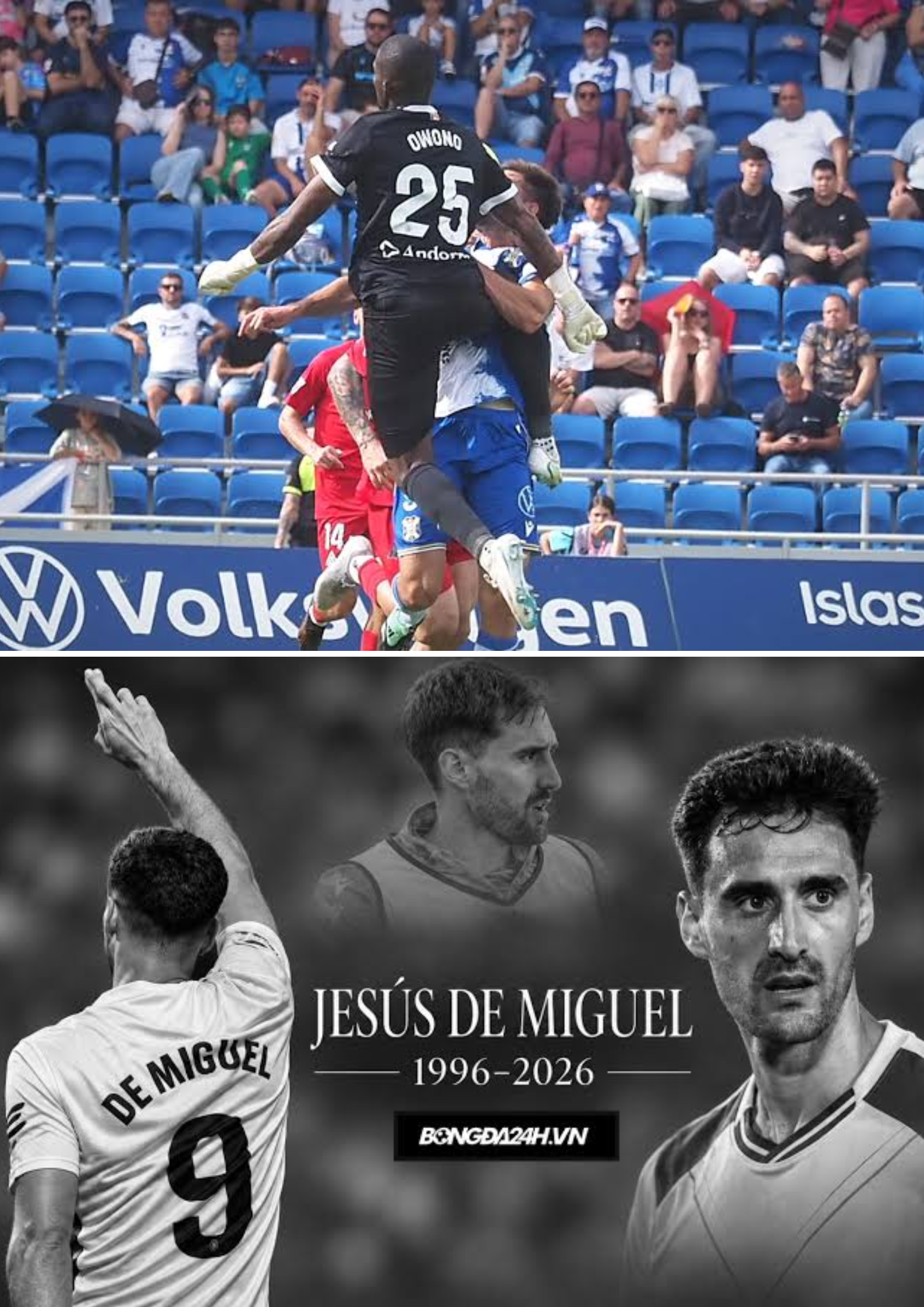
The incident happened on November 2 during the Segunda División match between CD Tenerife and FC Andorra.
Late in the game, Owono rushed out from his goal toward midfield in an attempt to clear an aerial ball.
De Miguel was also challenging for the ball when the two players collided. Owono’s raised leg struck the Tenerife forward in the chest, leaving him seriously injured.
Medical personnel immediately rushed to assist De Miguel on the pitch. He was eventually carried away on a stretcher and taken to hospital.
The match was suspended, with the score standing at 2-2.
Despite emergency treatment, De Miguel suffered a cardiac arrest and died on November 3, aged just 30.
His death sent shockwaves through Tenerife, FC Andorra and the wider Spanish football community.
WHY OWONO RECEIVED A 12-MATCH SUSPENSION
On November 13, the disciplinary committee of the Royal Spanish Football Federation (RFEF) announced its decision.
Owono was suspended for 12 matches under Article 102 of the federation’s disciplinary code, which covers violent conduct during play resulting in serious harmful or injurious consequences.
The committee based its assessment on the referee’s report, which described Owono’s action as a forceful impact with his leg raised and the use of excessive force while the ball was being contested.
The ruling also noted that De Miguel had required immediate medical attention and had subsequently died.
The committee concluded that the seriousness of the conduct justified the maximum 12-match suspension available under the provision.
The decision was a sporting disciplinary ruling. It should not be confused with a criminal conviction or a finding of criminal responsibility.
 GERARD PIQUÉ QUESTIONS WHETHER THE PUNISHMENT WAS FAIR
Piqué publicly defended Owono, arguing that the disciplinary decision appeared to place too much weight on the tragic outcome rather than the nature of the challenge itself.
The former Barcelona and Spain defender said he believed the collision was an accident and that Owono did not deserve the maximum suspension.
He also pointed to another incident in which a player had received a shorter ban after accidentally kicking an opponent in the head, questioning the consistency of the disciplinary approach.
Piqué argued that no suspension could bring De Miguel back and that Owono was already facing an enormous emotional burden following the tragedy.
FC Andorra general manager Jaume Nogués also criticized the ruling. The club ultimately decided not to appeal, with Owono himself reportedly opposed to doing so.
For Piqué, the central question was whether the goalkeeper was being punished for the action or because of the devastating consequences that followed.
CERVERA: “I THINK IT COULD HAVE BEEN AVOIDED”
Tenerife manager Álvaro Cervera offered a different perspective.
Responding to Piqué’s comments, Cervera acknowledged that the Andorra owner had a responsibility to defend his club and its player.
However, he argued that the discussion should focus more closely on the actual challenge.
Cervera said:
“I think he should look at the action itself. I think it could have been avoided; I don’t think it’s the sort of thing we see every day, as he seems to suggest.”
His comments suggested that, regardless of the heartbreaking outcome, the nature of the challenge deserved serious scrutiny.
Cervera did not present the incident as an ordinary collision that should simply be dismissed as part of football.
The disagreement highlights two very different perspectives: Piqué is concerned that the tragic consequences influenced the punishment too heavily, while Cervera believes the challenge itself was avoidable and should not be minimized.
OWONO SPEAKS OF HIS PAIN AFTER DE MIGUEL’S DEATH
The tragedy has also deeply affected Owono.
In a statement released after De Miguel’s death, the Equatorial Guinea international described the period as the hardest days of his life.
He expressed immense pain over the loss of De Miguel and said his thoughts were with the player’s family, friends and everyone who loved him.
The 25-year-old goalkeeper also withdrew from Equatorial Guinea’s Africa Cup of Nations qualifying matches following the incident.
Piqué has indicated that returning to football immediately after serving the suspension may be difficult for Owono, given the emotional impact of what happened.
A DEBATE WITH NO EASY ANSWERS
The case has raised difficult questions for football.
How should disciplinary authorities judge a challenge when its consequences are devastating? Should the punishment be based primarily on the action itself, or should the outcome also carry significant weight?
The federation’s decision reflects its assessment of the referee’s report and the circumstances of the incident.
Piqué believes the maximum ban was unfair to Owono. Cervera believes the challenge could have been prevented.
But beyond the disciplinary debate, one fact remains impossible to change: Jesús de Miguel lost his life at just 30 years old.
His family, teammates and supporters are left grieving a life cut short, while Owono must continue to deal with the consequences of an incident that has changed the lives of everyone involved.
What do you think: should disciplinary action focus primarily on the challenge itself, as Piqué argues, or should the nature and avoidability of the action receive greater weight, as Cervera believes?
#JesusDeMiguel #JesusOwono #GerardPique #AlvaroCervera #SpanishFootball