From Uncertainty to Unbreakable Love A Mother’s Journey Standing Strong for Her Son
The second pregnancy of nurse Pamela Pereira Gonçalves de Castro, 34, from Patrocínio, Minas Gerais, was planned. Actually, it was her firstborn’s insistence, as he really wanted a sibling. “Before I suspected I might be pregnant, Gabriel, my oldest son, slept all week with an old shoe of his. He said he was going to give it to his brother who was coming. That’s when I decided to take a pregnancy test and found out I was already pregnant,” she recalls.
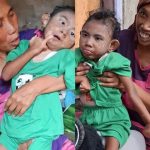
At the 12-week ultrasound, the family learned that Gustavo would be exactly as he is. “We discovered Gustavo’s characteristics very early on, we just couldn’t figure out the name of the syndrome. Because of that, we were apprehensive throughout the pregnancy and very scared. However, we faced it with love and hoped for a miracle,” she remembers. The diagnosis was only confirmed on the second day after birth. “The doctor called my husband and said that, based on the characteristics, he fit the criteria for Cornelia de Lange syndrome,” she says.
“During the pregnancy, we had a microarray done [an exam that evaluates all human chromosomes with high resolution, detecting alterations], but it came back normal. We only found out after doing the specific test for the syndrome, and it came back positive. It was very difficult and desperate not knowing what was going to happen. We searched endlessly on the internet for other children who had this syndrome, all to try to get an idea of what awaited us in the future,” she says.
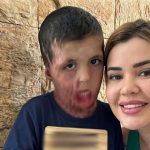
“Today, Gustavo is 1 year and 3 months old, however, his development is compatible with that of a 6-month-old baby,” explains the mother, who manages a profile on social media (@gustavogoncalvesdecastrosantos), where she shares a little of her son’s routine. In an interview with CRESCER, Pamela recalled what the first meeting with her son was like and how he has developed since then.
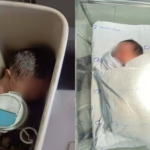
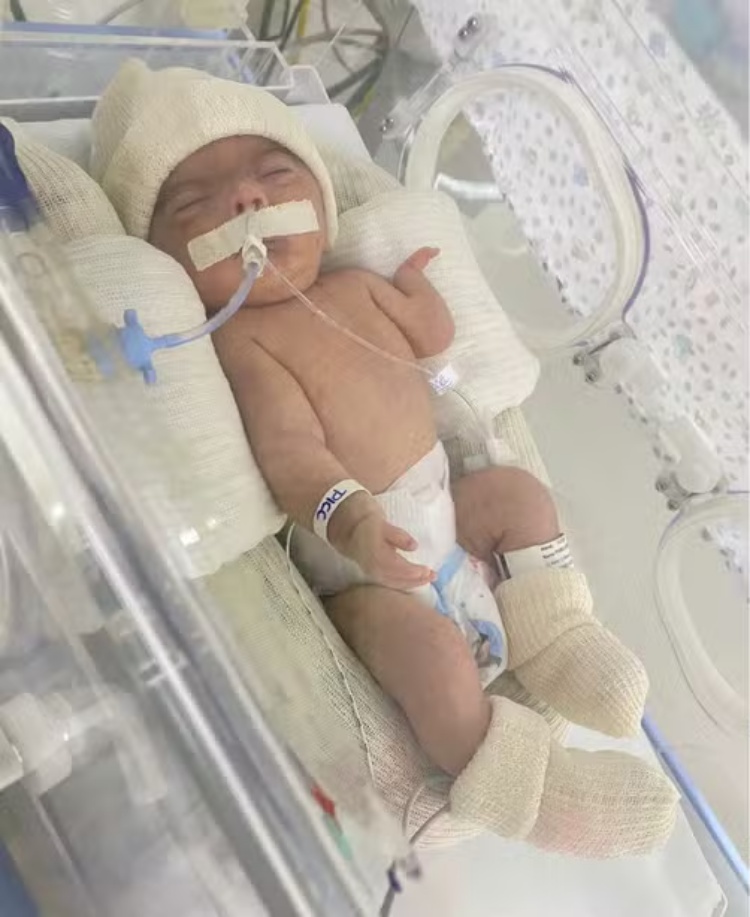
“It was a very difficult birth in every sense. Gustavo was very ‘high up,’ they had difficulty getting him out, and as soon as he was born, he needed to be intubated. At the time, a very large and experienced team was needed to achieve ventilatory access. That was already our first miracle, because we could have lost him at that moment if the team hadn’t been so experienced and prepared to intubate him successfully. Childbirth is usually a very significant event for any woman, but for a mother who spent her entire pregnancy not knowing what to expect, and then, in the very first moment, sees her son being intubated, without any respiratory movement, it’s very difficult.
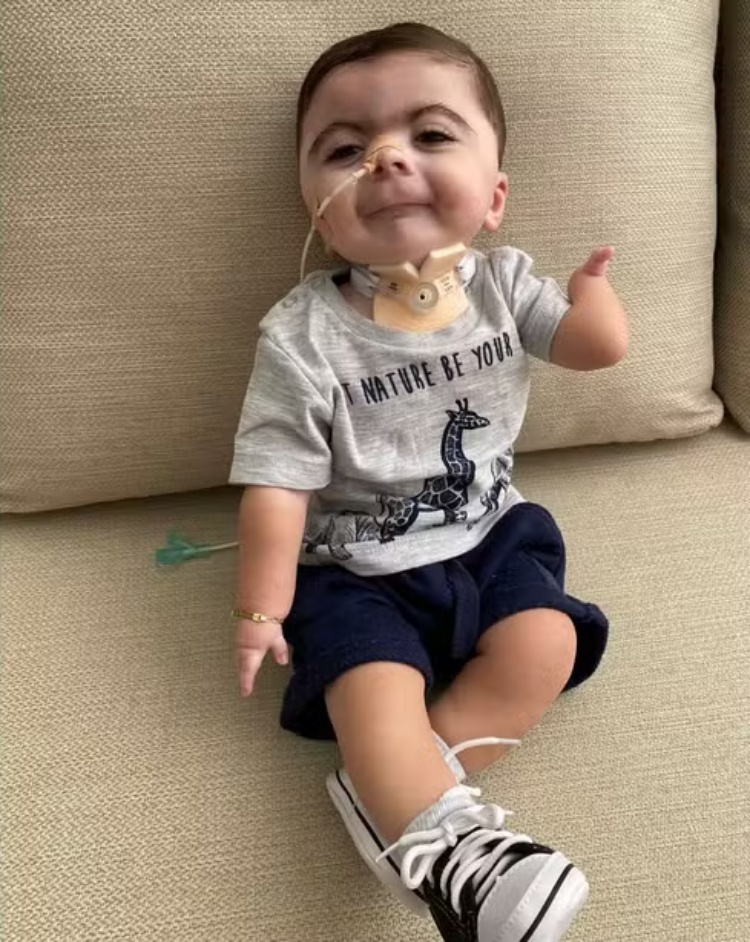
Even knowing the characteristics, no one imagines what it’s like to see him in person for the first time. I went to the room without my baby and only received incomplete news, because, at the time, even the doctors didn’t have the answers I wanted. The first time I saw him in the nursery was a mix of feelings—I was faced with that tiny boy with so many complications, fighting so hard for his life.
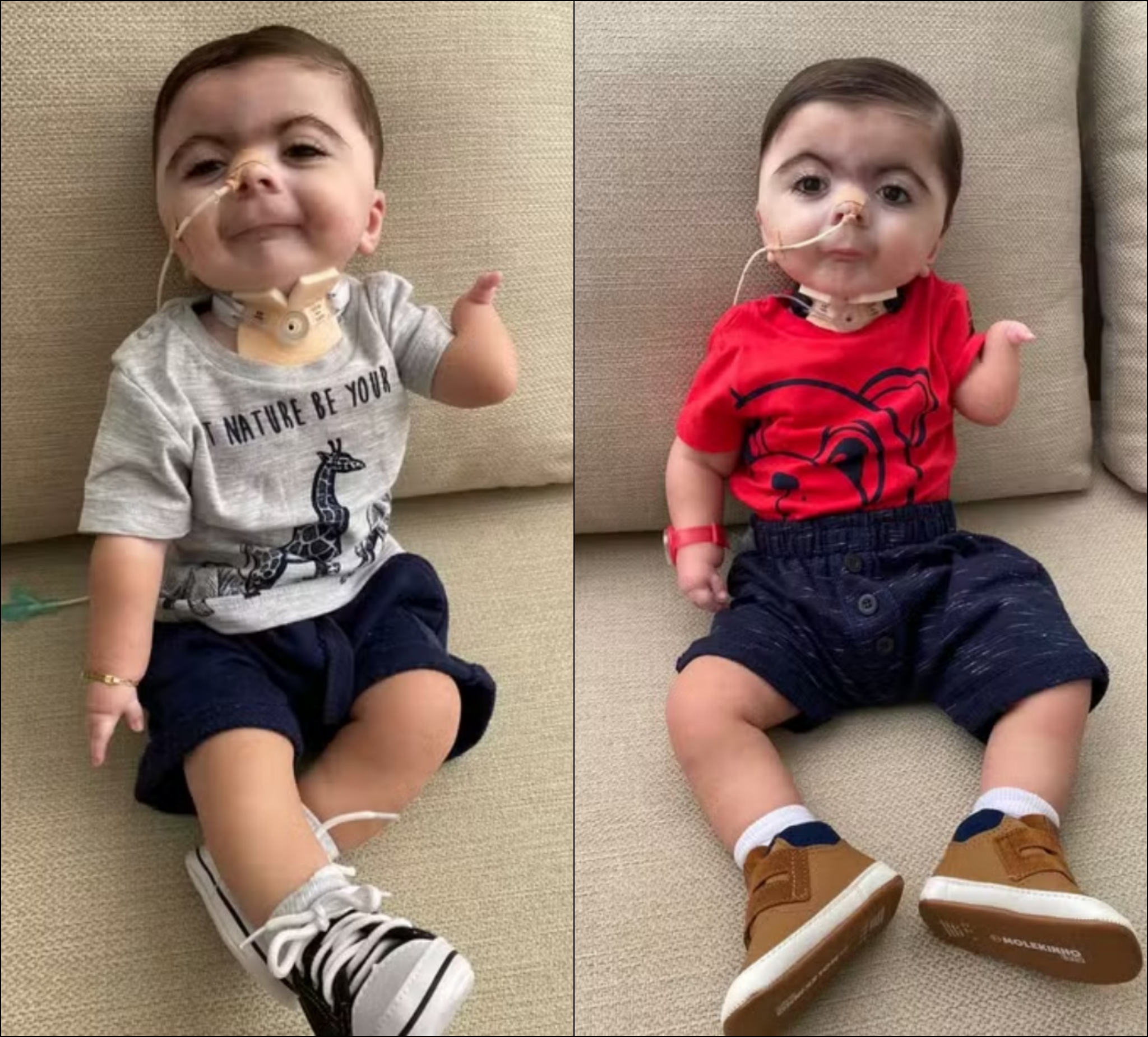
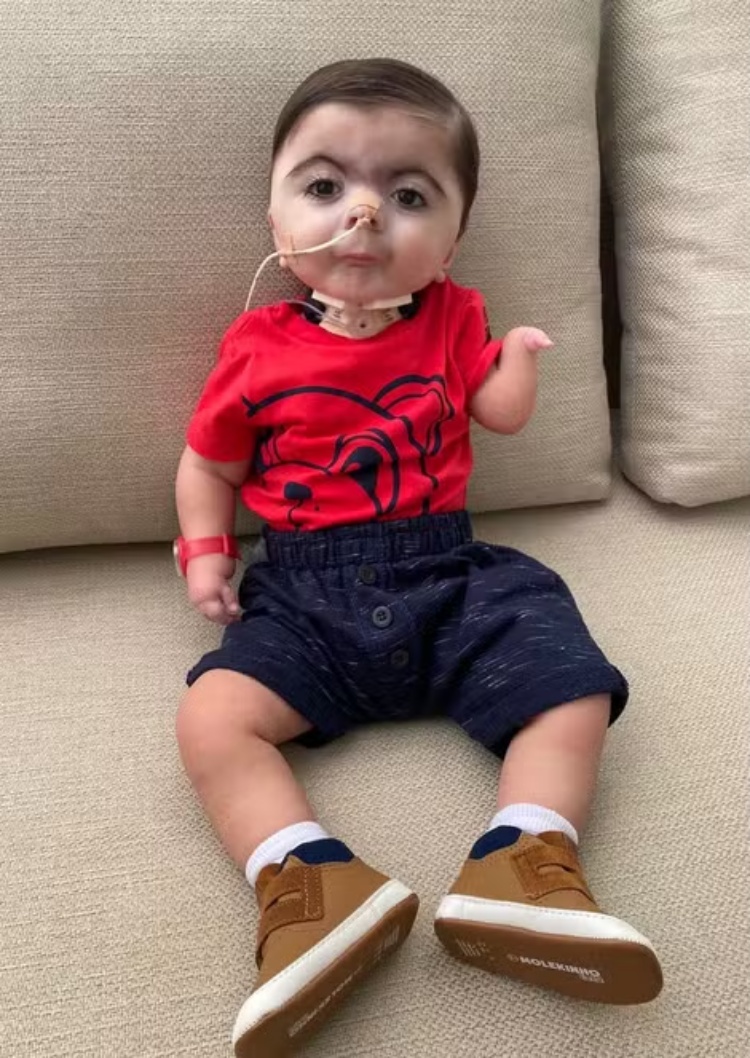
Gustavo has joined and arched eyebrows, long eyelashes and…” He has voluminous features, excessive hair, low-set ears, hand and arm malformations, a cleft palate, a receding jaw, a small nose due to the absence of a nasal bone, developmental delay, is nonverbal, has difficulty swallowing, has a slightly smaller brain area, and a gastrointestinal disorder. He faces many limitations: the physical deficiency in his arms, which makes it very difficult to balance, play, crawl, and support himself to stand up.
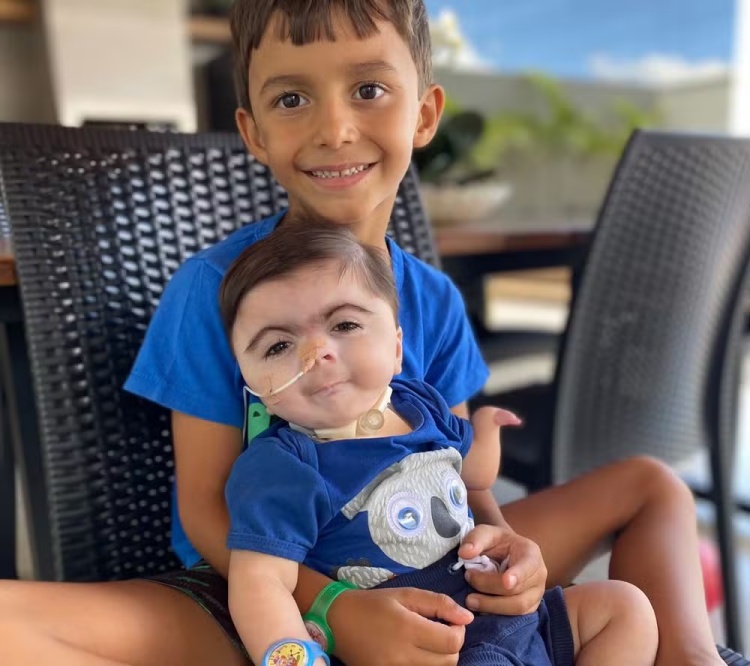
The first months of his life in the ICU were very challenging—many tests, doubts, and uncertainties. The absence of spontaneous breathing led to the need for a tracheostomy at only 29 days old. During the tracheostomy procedure, Gustavo suffered cardiac arrest, and the doctors spent 23 minutes trying to resuscitate him. At that moment, our warrior fought bravely for his life. It was the second time we almost lost him, but, as always, we had a sensational team of doctors who never gave up on him for a minute.
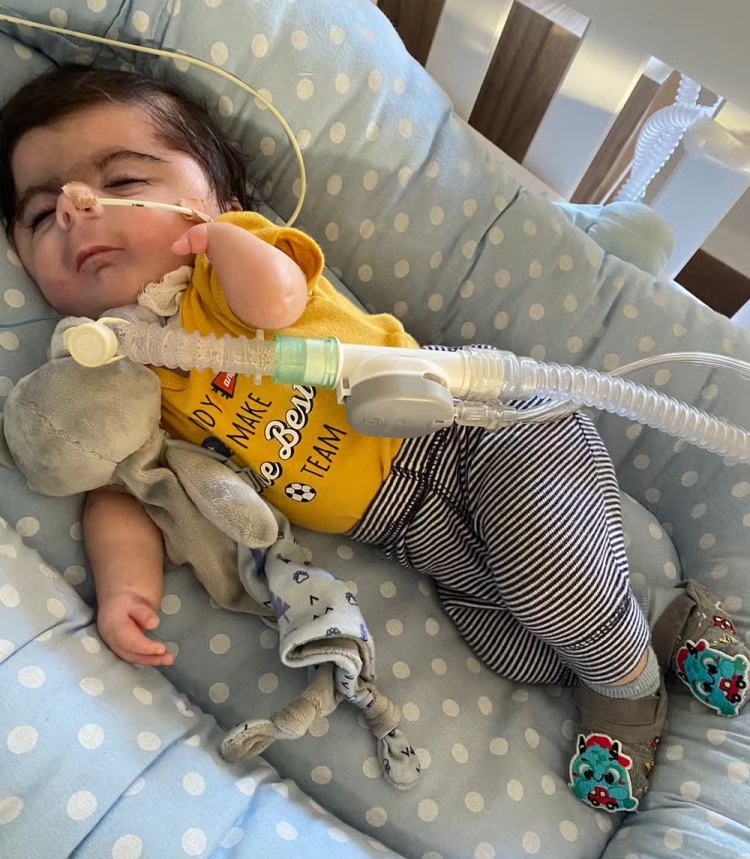
After that period, the race began to get him home. Because he has a tracheostomy, he needs constant suctioning—which is a relative emergency. Because of this, he always needs to be in a place with access to electricity and with a specialist to perform the procedure, which is sterile. He doesn’t eat orally, only through a feeding tube with an infusion pump, which must be administered every 3 hours, constantly, and by a professional. Each feeding takes about an hour, and during that time, he needs to be in his crib and as still as possible. So, in addition to his physical limitations, he also doesn’t usually leave the house because his care is intensive, including the need for oxygen and ventilatory support.
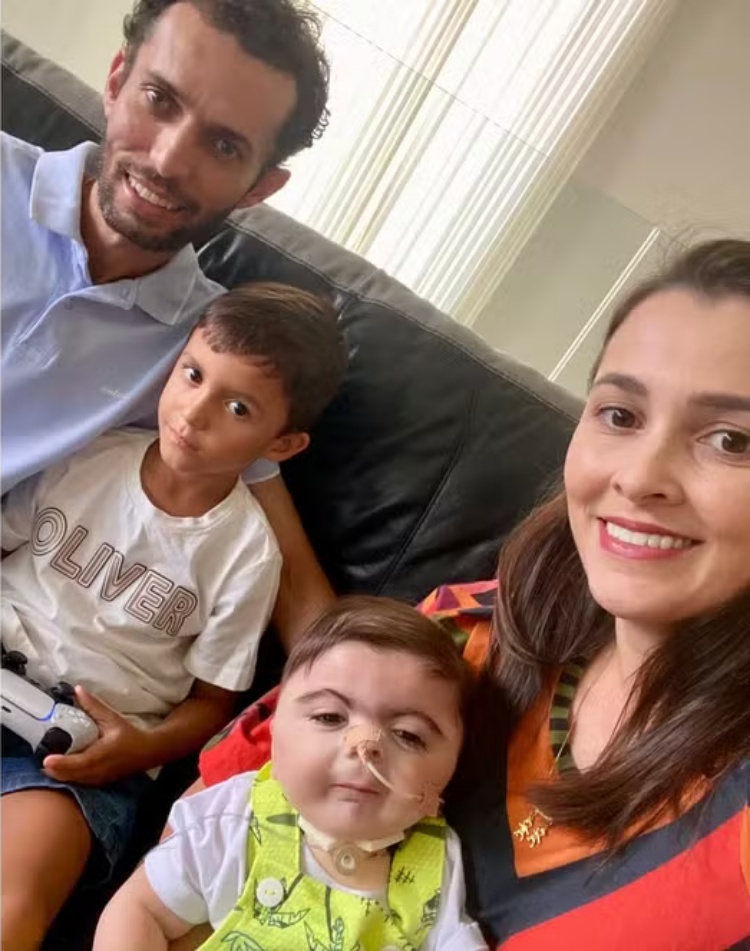
Taking him home wasn’t an easy task. Getting him out of the ICU with ventilatory support was quite frightening and challenging—the uncertainties and fears were enormous. We had doubts about whether we would really be able to cope in the face of a possible emergency. Even more so when you live 150 km from the referral hospital with a pediatric ICU. But with God’s grace and a fantastic multidisciplinary home care team, we managed to adapt well. Gustavo has an intense routine of care and therapies.
In addition to diets and suctioning, there’s bathing, tracheostomy dressing changes, speech therapy sessions five times a week, medications, physiotherapy sessions every day—not to mention other specific care. We always worry about giving him quality of life, providing family moments and playtime. He’s never alone for a minute, as he’s at risk of apnea, suffocation, and aspiration. So, he’s constantly monitored.
The main challenge is the bureaucracy and the difficult access to our child’s needs—the lack of public policies that guarantee his rights. When we actually seek these rights, almost all are denied; there’s no law to protect us. Everything is difficult. We always face a ‘no,’ followed by a lack of empathy and a lack of willingness to help. The biggest strain of atypical motherhood isn’t the child, it’s the system.
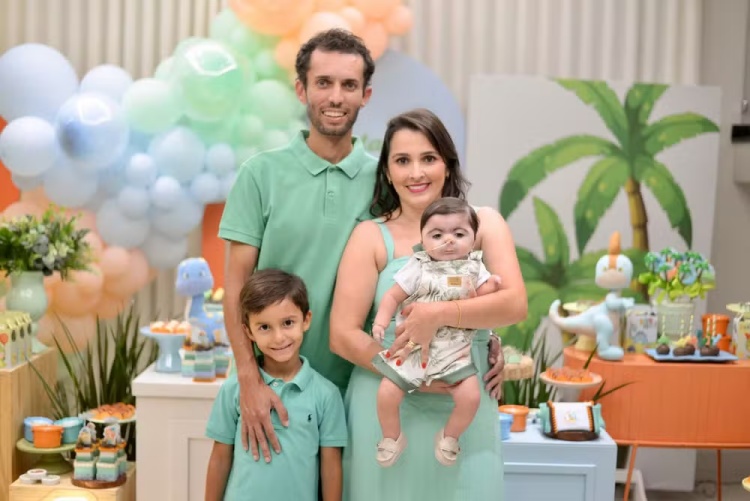
But, despite all the difficulties, Gustavo arrived changing everything—from our routine to our way of facing life. There was a family before Gustavo, and there’s another one now. Everything has been adapted and readjusted in our home and in our personal lives. Everything here revolves around him. I can’t say it’s easy, because it isn’t, but the love for him is greater than the difficulties.