When the Ice Disappeared and Only the Story Remained
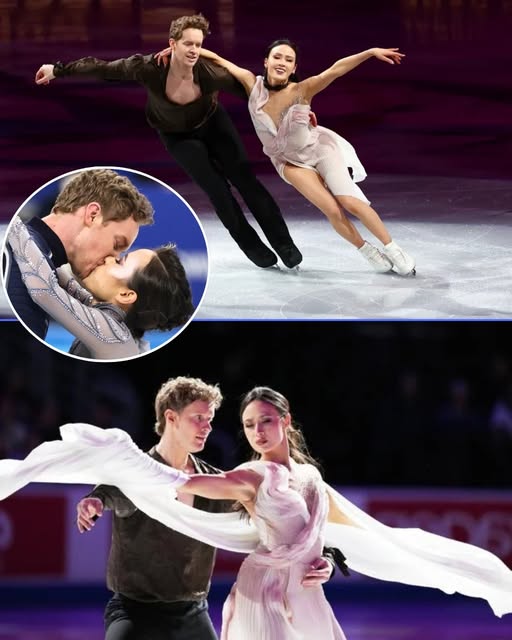
No scores. No panels. No protocol sheets waiting to flash on a screen.
Just music — and two skaters who no longer needed to prove anything.
At Gold on Ice in Virginia, Olympic champions Madison Chock and Evan Bates stepped onto the rink not as competitors, but as storytellers. Skating to Once I Was Loved, they delivered an exhibition performance that many in the crowd later described with the same word: cinematic.
Without the pressure of judges, something shifted. The edges felt softer, yet deeper. The transitions flowed without visible effort. Every glide carried intention, but nothing appeared forced. It wasn’t about levels or key points — it was about atmosphere.
From the first movement, the rink seemed to quiet.
Chock’s carriage was delicate but assured, her lines stretching into the music as if it were pulling her forward. Bates matched her with grounded calm, each step supportive without ever overpowering. Their lifts unfolded with such ease that the mechanics disappeared entirely. What remained was the illusion of weightlessness.
And that illusion is what left audiences spellbound.
Online viewers echoed the same sentiment within hours.
“How do they make it look so effortless?”
“It felt less like choreography and more like a real conversation.”
“I forgot I was watching skating.”
That’s the rare magic of experienced ice dancers at the height of trust. Years of partnership create a language invisible to outsiders — a subtle glance before a transition, a shift of weight that signals a lift, a shared breath that aligns timing perfectly. What audiences see as ease is built on thousands of hours of repetition, refinement, and instinct.
But on this night, the technical mastery stayed hidden beneath emotion.
Without competition tension, their chemistry felt unguarded. The storytelling breathed. Pauses lingered just long enough to ache. Their closeness wasn’t dramatic — it was natural, almost private — as though the audience had stumbled into something intimate.

That’s why it felt like cinema.
Not because of grand gestures, but because of restraint. Because of nuance. Because two Olympic champions, free from scores, chose vulnerability over spectacle.

By the final note, the applause rose slowly — not explosive at first, but reverent. The kind of response reserved for performances that don’t just impress, but move.
In a sport defined by precision and judgment, Chock and Bates reminded everyone of something simple:
Sometimes the most powerful skating happens when nobody’s keeping score.