Claims Swirl Over Mark Zuckerberg and California’s Proposed Wealth Tax as Political Tensions Rise
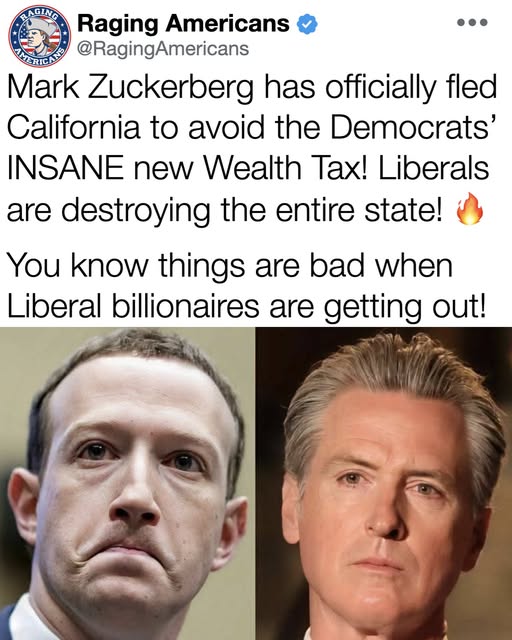
Online political debate has intensified in California after claims circulated that Meta chief executive Mark Zuckerberg is shifting more of his personal and business presence away from the state, with critics linking the move to proposals for higher taxes on wealthy residents and corporations.
Supporters of Governor Gavin Newsom reject the narrative that high-profile departures are being driven solely by tax policy, arguing that decisions by technology executives are often influenced by business strategy, family considerations and long-term investment planning. No official statement has confirmed that Zuckerberg is relocating specifically because of California’s proposed wealth tax.
The controversy comes as California prepares for a highly charged election cycle, with candidates from across the political spectrum clashing over taxes, public safety, homelessness and the state’s economic future. Analysts say the debate reflects a broader national argument about whether higher taxes on the ultra-wealthy help stabilize public finances—or risk pushing investment and talent elsewhere.