LATEST NEWS: Comedy’s Most Influential Voices Unite to Challenge Silence and Redefine What “News” Means
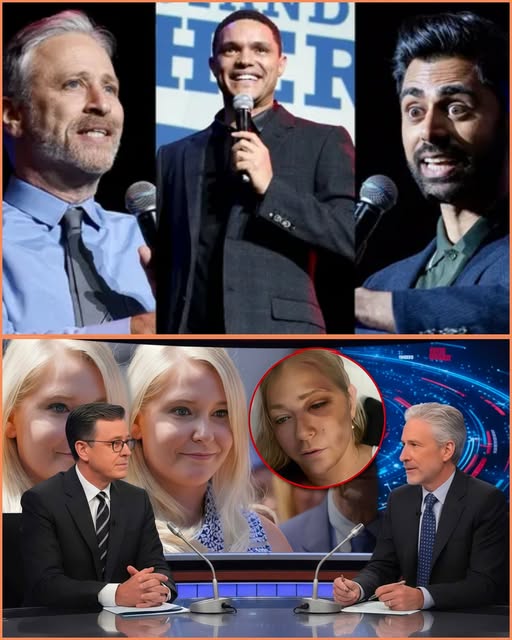
In a rare and unprecedented move, Jon Stewart, Trevor Noah, Stephen Colbert and Jimmy Kimmel have come together in a joint public initiative that is rapidly reshaping the conversation around media, free expression and public trust.
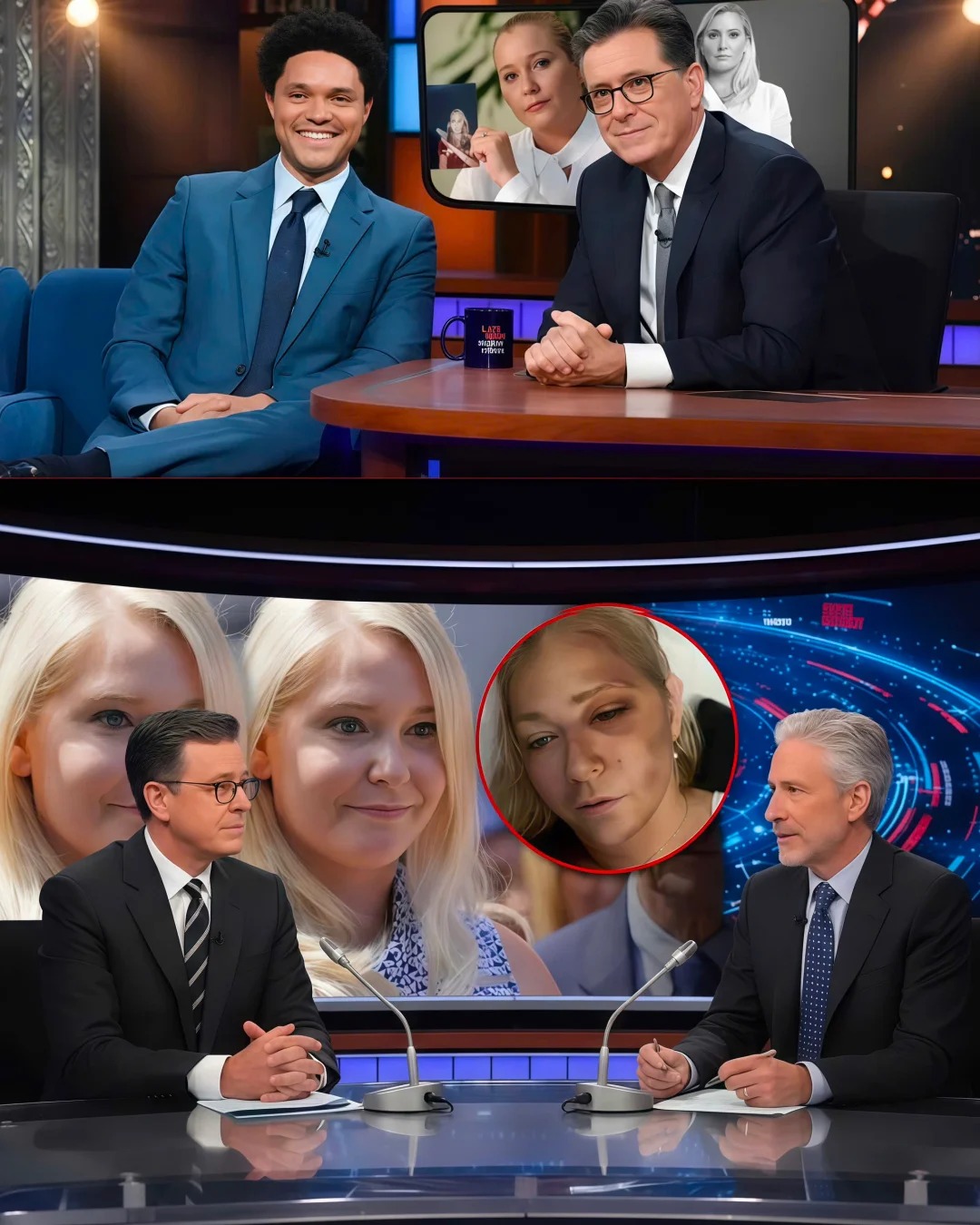
Within hours of its launch, the event connected to the project reportedly generated more than 1.3 billion views worldwide, instantly placing the collaboration among the most watched media moments of the year.
What first appeared to be a routine suspension tied to the departure of a high-profile figure has now evolved into something far larger. According to the four hosts, their collaboration was driven by a shared effort to examine what they describe as unresolved questions and missing context surrounding her exit — issues they believe were never fully addressed by mainstream coverage.
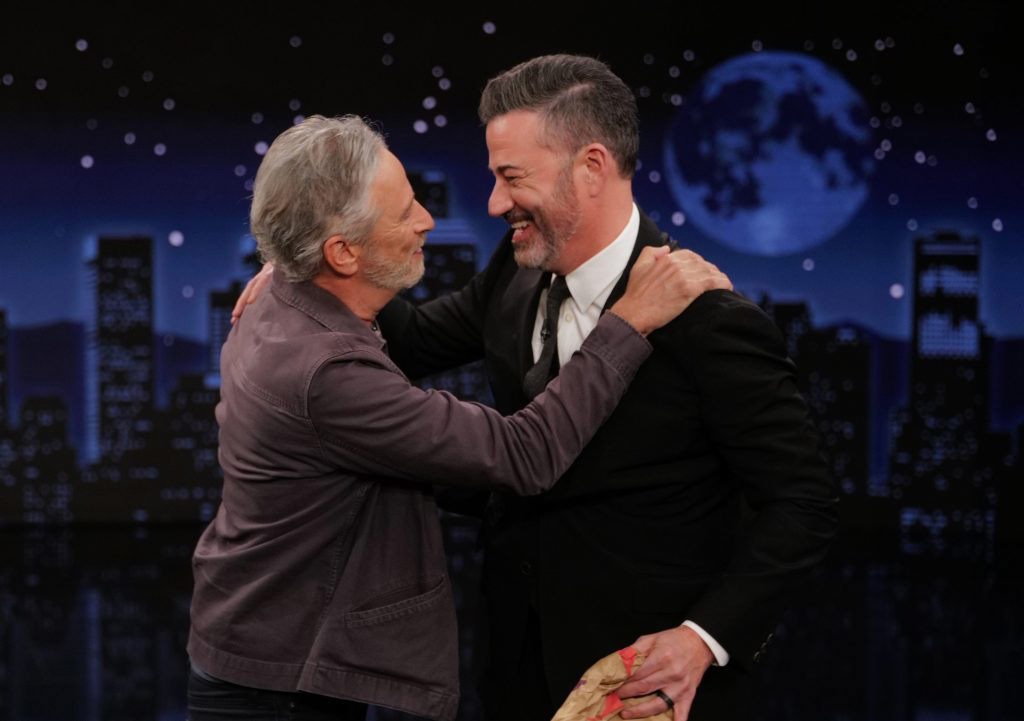
For the first time in their careers, the four late-night icons have stepped beyond the traditional boundaries of satire and entertainment. Setting aside network rivalries and personal brands, they have united behind an independently produced program focused on investigation, verification and public accountability.
Importantly, the project is not backed by a major broadcast network and does not carry traditional commercial sponsorship. Organizers say the production was developed quietly and without promotional buildup, with the intention of avoiding outside influence and maintaining full editorial control.
During the initial broadcast, the group emphasized that the goal is not to replace established journalism, but to question long-standing editorial blind spots and to bring together information that, in their view, has remained fragmented or overlooked in previous reporting connected to her departure.

Media analysts say the scale of the collaboration alone is extraordinary. Each of the four hosts commands a massive global audience, yet they rarely appear together in unscripted or independent formats. The decision to collaborate outside network structures has raised questions across the industry about creative freedom, editorial pressure and the evolving role of public figures in shaping investigative storytelling.