Savannah Guthrie Questioned as Search for Missing Mother Intensifies, Fueling Online Speculation

TUCSON, Ariz. — Today show co-anchor Savannah Guthrie is facing renewed public scrutiny as investigators continue searching for her mother, whose disappearance has become the subject of intense online debate and escalating media attention.
A report published February 16 describes Guthrie as being “interrogated” about decisions she made in the immediate aftermath of her mother’s disappearance, arguing that her early actions have become a focal point for critics and amateur sleuths alike.

According to that account, Guthrie’s mother vanished under “mysterious circumstances,” triggering a flood of theories that quickly migrated from concern about a missing person into speculation about the family’s role and the speed and direction of the initial response. The article says Guthrie’s choices—particularly her decision to contact a member of Congress rather than immediately calling police—have been cited by commenters as suspicious, with some suggesting “inside involvement” without providing verified evidence to support the allegation.
The report portrays an atmosphere in which public perception has hardened quickly, shaped less by confirmed investigative findings and more by the dynamics of viral storytelling. It notes that social media users have amplified questions about timelines and motives, with each post adding momentum to a narrative that can be difficult to correct once it spreads.

As the case has grown more visible, the involvement of law enforcement has also drawn attention. The article points to claims of “inconsistencies” in how the disappearance has been handled and suggests that the response has become part of the controversy—though it does not cite official documents or detailed investigative records to substantiate those claims.
A pivotal moment described in the piece centers on Guthrie facing pointed questions in a public setting, framed as a scene resembling a “public trial.” The report argues that the scrutiny has effectively turned Guthrie’s identity as a trusted broadcast journalist into a liability, as critics reinterpret her public-facing instincts—calling influential people, speaking quickly and strategically—as evidence of something more troubling.
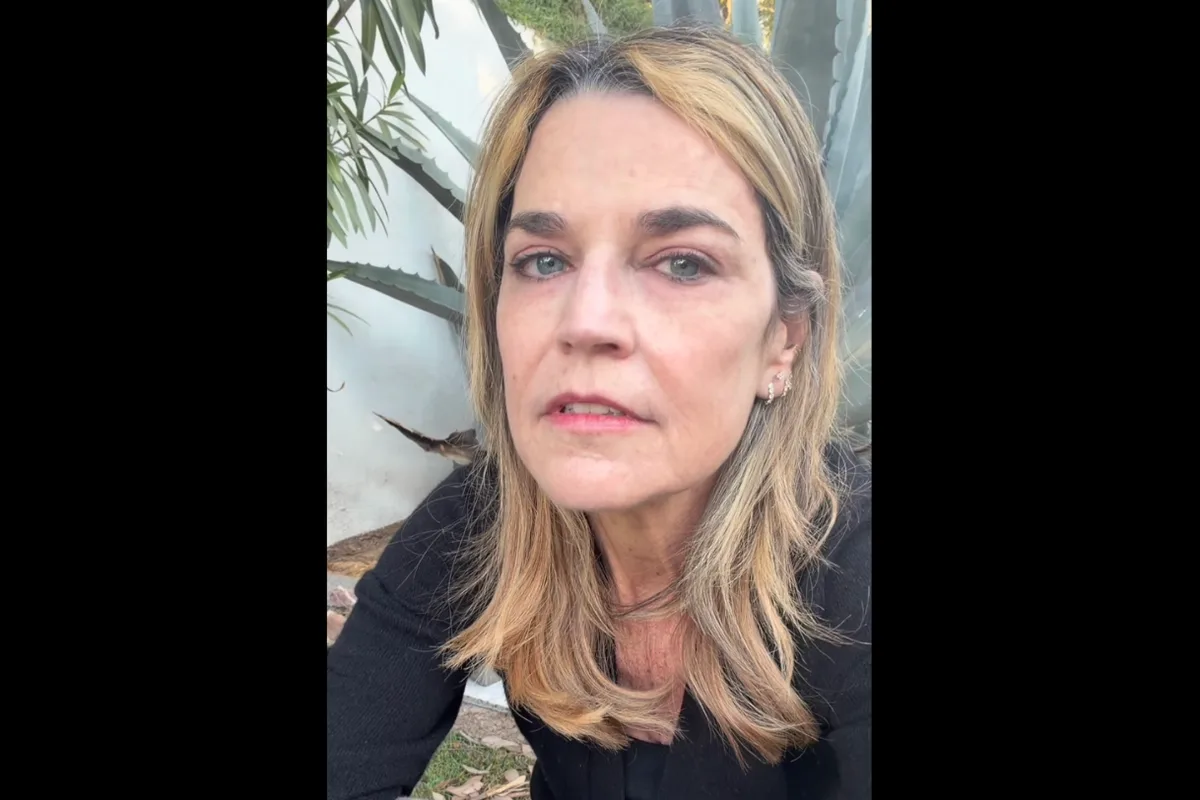
The article also emphasizes the emotional strain of navigating grief and uncertainty under constant observation. It describes Guthrie as confronting two crises at once: the fear that her mother may not be safe and the reputational fallout of being treated as a suspect by internet speculation.
In response to the growing public attention, the report says Guthrie has issued a public plea urging anyone with relevant information to come forward—an appeal that underscores both the family’s desperation and the limited control they have over the story’s direction.

Cases involving missing persons often produce a parallel “shadow investigation” online, where conjecture can outpace facts and where public figures face a higher burden of suspicion simply because they are visible. The article frames the Guthrie case as an example of that phenomenon: a private emergency unfolding in real time, with reputational consequences shaped by crowd-driven interpretation.
For now, the core reality remains unresolved: a mother is missing, the investigation is ongoing, and the public is absorbing the case through a fast-moving mix of emotion, partial information, and speculation. As the report concludes, the disappearance has become more than a search—it is a test of trust, and a reminder of how quickly uncertainty can transform into accusation in the modern media ecosystem.