SHOCKING TRUTH EXPOSED: Cartel Gunfire Triggers a Cross-Border Shockwave… as the U.S. Deploys ELITE Forces
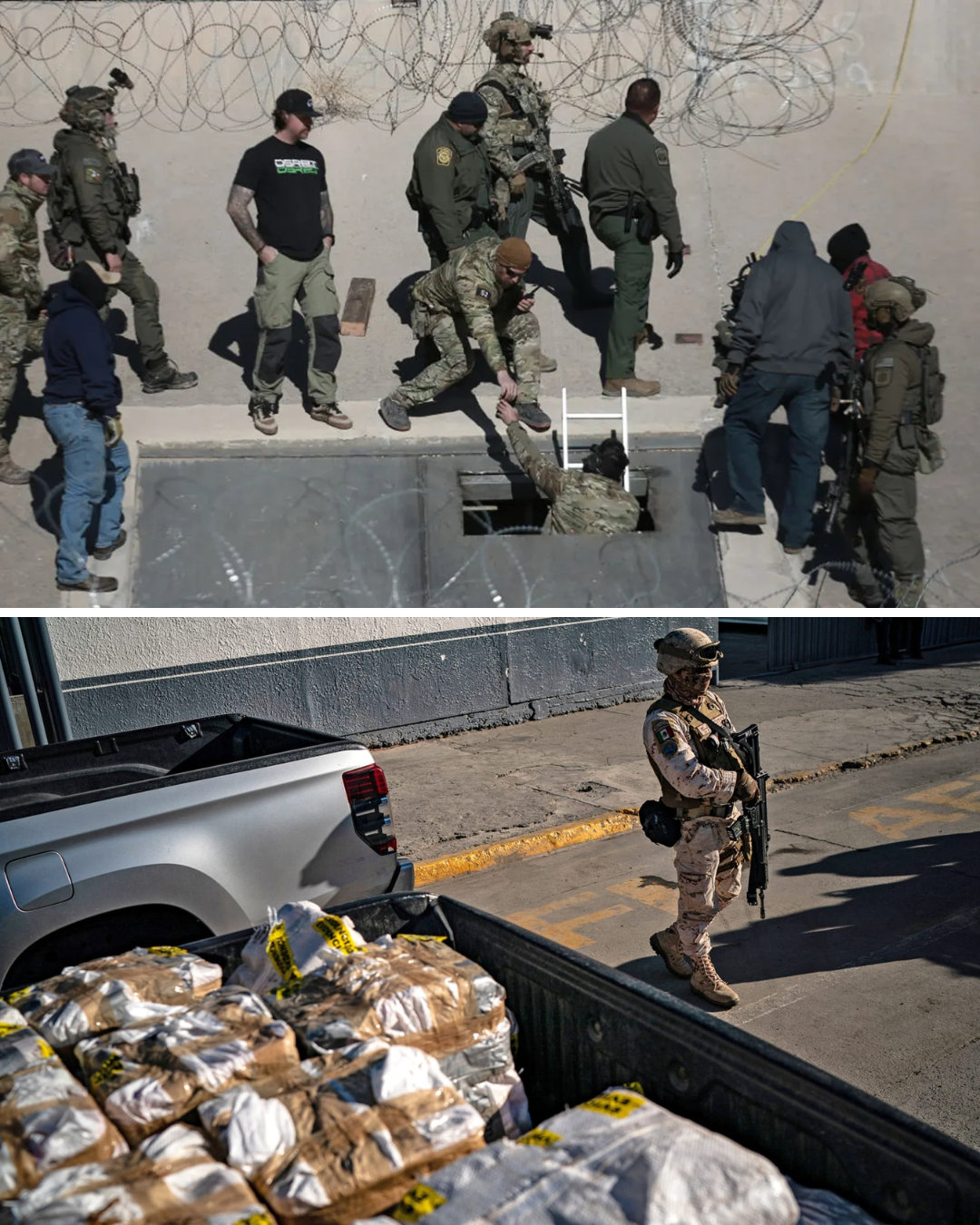
ARIVACA, Ariz. — A predawn traffic stop in the desert south of Tucson escalated into a gunfight that authorities say included shots fired at a federal helicopter, jolting an already tense U.S.-Mexico security environment and accelerating political pressure in Washington to treat cartel violence as a national-security threat rather than a border-control problem.
According to the Pima County Sheriff’s Department and federal officials, Border Patrol agents attempted to detain Patrick Gary Schlegel, 34, near Arivaca, Arizona, in what authorities described as a smuggling-related encounter. Schlegel fled on foot and exchanged gunfire with agents; investigators say he also fired at a Customs and Border Protection helicopter overhead before agents returned fire, wounding him. The FBI asked the sheriff’s department to lead the county’s standard use-of-force review when a federal shooting occurs.
Schlegel was taken into custody and is expected to face federal charges, including assault on a federal officer and firearms-related counts, officials said. Federal authorities also cited an active 2025 warrant for escape tied to a previous smuggling conviction.
A broader warning: “rules of engagement” shifting
The Arizona incident arrived amid an increase in internal warnings across U.S. agencies about the evolving tactics of cross-border criminal groups. Public reporting on the Arivaca shooting has emphasized its unusual feature — gunfire directed at an aircraft — as an escalation in a region where smuggling groups have typically relied on speed, terrain and decoys rather than direct confrontation with aerial assets.
Security officials and analysts increasingly view these confrontations through the lens of cartel fragmentation and rivalry, particularly as major organizations compete for routes and influence. In recent days, international reporting has pointed to renewed volatility tied to the power dynamics around Mexico’s most violent groups, including the Jalisco New Generation Cartel (CJNG), and the potential for splintering after high-profile leadership disruptions.
Mexico authorizes U.S. SEAL training — an unusual political signal
Against that backdrop, Mexico’s Senate approved the entry of 19 members of U.S. Navy SEAL Team 2 to participate in training with Mexican naval forces in Campeche, a vote widely reported as 105 in favor with one abstention. While Mexican authorities framed the deployment as a scheduled training mission, the timing has drawn heightened attention given the spike in cross-border security friction and the political sensitivity in Mexico around sovereignty and U.S. military presence.
Even when limited to training, special-operations cooperation carries strategic weight: it deepens interoperability, builds relationships and can expand the menu of joint capabilities in crisis scenarios. For supporters, that is the point — strengthening Mexico’s capacity to fight organized crime. For critics, it risks normalizing a U.S. military footprint in ways that could become politically explosive if violence intensifies.
El Paso airspace closure adds to a climate of uncertainty
The sense of escalating risk was amplified this month when the Federal Aviation Administration abruptly closed airspace over El Paso International Airport, disrupting flights and stranding travelers. Reuters reported that U.S. officials said the closure was tied to security concerns involving counter-drone measures and that the incident would be briefed to Congress — a reminder of how drone threats have become a central anxiety in border-security planning.
Washington’s posture: cartels as “terror” targets
In Washington, the political framing has sharpened. The Trump administration has moved to expand authorities for combating cartels by establishing a process for designating certain international cartels as Foreign Terrorist Organizations and Specially Designated Global Terrorists, according to the White House and State Department documentation from 2025. Supporters argue the shift unlocks stronger tools for financial disruption and cross-border targeting; critics warn it could blur lines between law enforcement and armed conflict and complicate diplomacy with Mexico.
The administration’s broader anti-cartel campaign has also included lethal operations in the region. The Associated Press reported this week on a U.S. military strike against an alleged drug-smuggling boat in the Caribbean, described as part of months-long action against what the administration calls “narcoterrorists,” a strategy that has triggered legal and ethical debate about transparency and the limits of executive power.
What the Arizona shooting changed — and what it didn’t
For border communities, the immediate impact is less abstract: more visible patrols, heightened alert posture and the growing expectation that smugglers may be willing to shoot their way out. The Arivaca case underscores the operational risk: if aircraft are increasingly targeted, air support — one of the key advantages U.S. agencies rely on for surveillance and rescue — becomes more contested.
Still, officials caution that a single violent episode does not, by itself, prove a systematic shift. Investigators will focus on Schlegel’s specific circumstances — his alleged ties to smuggling activity, his criminal history, and the sequence of gunfire — while federal prosecutors determine what can be proved in court.
But diplomatically and politically, the reverberations are already clear. Mexico’s authorization of a U.S. SEAL training contingent, the El Paso airspace disruption linked to drone-related security concerns, and a U.S. policy drive to expand terrorism-style authorities against cartels are converging into a single, volatile picture: two neighbors grappling with a shared threat, but with different red lines about sovereignty and escalation.
At the center of it all is the border itself — where a routine stop can turn into a firefight, and where each tactical decision carries the risk of strategic consequences neither side fully controls.