⚠️🪐 Mystery in the Sky: Separating Cosmic Curiosity from Fear
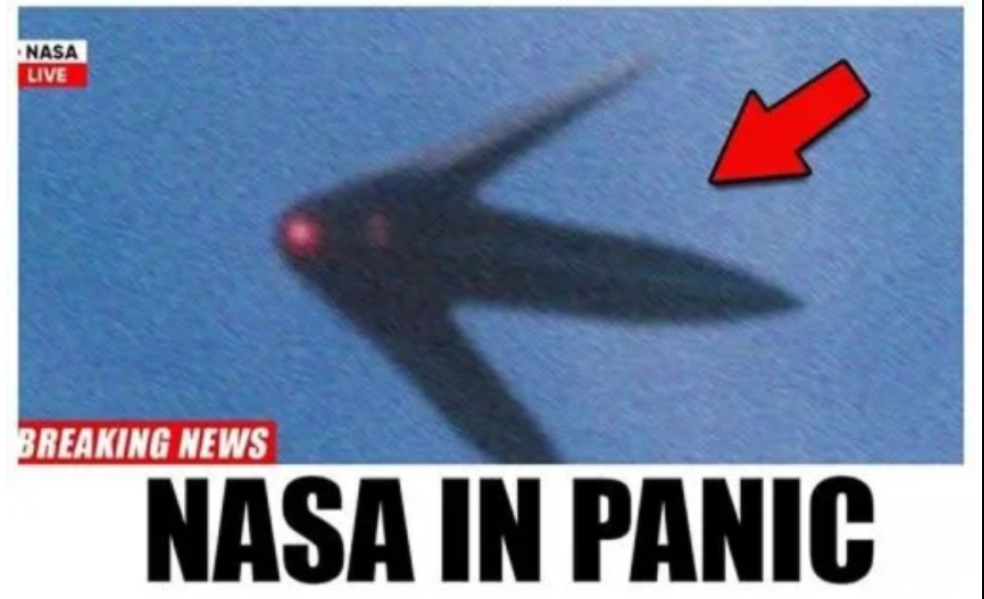
Dramatic headlines have been racing across the internet, claiming that a “worst-case scenario” has been confirmed by the final image of 3I/ATLAS. Some posts go even further, whispering about alien invasions and cosmic catastrophe. The language is urgent, almost cinematic—dark space, an unusual object, and the suggestion that something unknown is heading our way. In a digital age where speculation spreads at lightning speed, it does not take long for curiosity to transform into alarm.
Yet the calming truth is far less sensational. There is no confirmed evidence that 3I/ATLAS poses any threat to Earth, nor is there credible indication of extraterrestrial conquerors hiding within telescope images. Space agencies such as NASA regularly observe unusual celestial objects, especially those that originate beyond our solar system. Their mission is scientific: to gather data, refine models, and deepen our understanding of how the universe works—not to issue apocalyptic warnings without cause.
Interstellar visitors can indeed appear strange. When distant objects are captured by powerful telescopes, they often look blurry, elongated, or irregular. Lighting effects, motion blur, and cosmic dust can produce dramatic shapes that ignite the imagination. In the past, objects like ‘Oumuamua sparked similar waves of speculation simply because they did not resemble familiar comets or asteroids. But scientific investigation consistently favors evidence over excitement. Mystery in appearance does not automatically translate to danger in reality.
Part of the confusion stems from how easily complex scientific updates can be misinterpreted. Astronomers frequently discuss “worst-case scenarios” as part of routine risk analysis. These scenarios are hypothetical tools used to calculate probabilities and prepare for unlikely possibilities. When taken out of context, such language can sound ominous. Online platforms often amplify the most alarming interpretation, while careful explanations receive far less attention.
The cosmos is vast, ancient, and filled with phenomena that challenge human imagination. Every unusual object offers an opportunity to test our theories and expand our knowledge. Fear-driven narratives, however, can overshadow the genuine excitement of discovery. Instead of asking how the object might destroy us, scientists ask what it can teach us—about planetary formation, interstellar travel, and the forces shaping galaxies.
In the end, what we are witnessing is not an alien apocalypse but humanity’s enduring curiosity reaching into the dark. We build telescopes, launch probes, and analyze faint signals because we long to understand our place in the universe. 3I/ATLAS, whatever its precise composition may be, represents another chapter in that ongoing quest. And while dramatic headlines may capture attention, it is steady, patient science that truly illuminates the stars. 🌍✨