Operation Iron Dale: Breaking the Backbone of a Criminal Empire
- TranThuy
- February 25, 2026
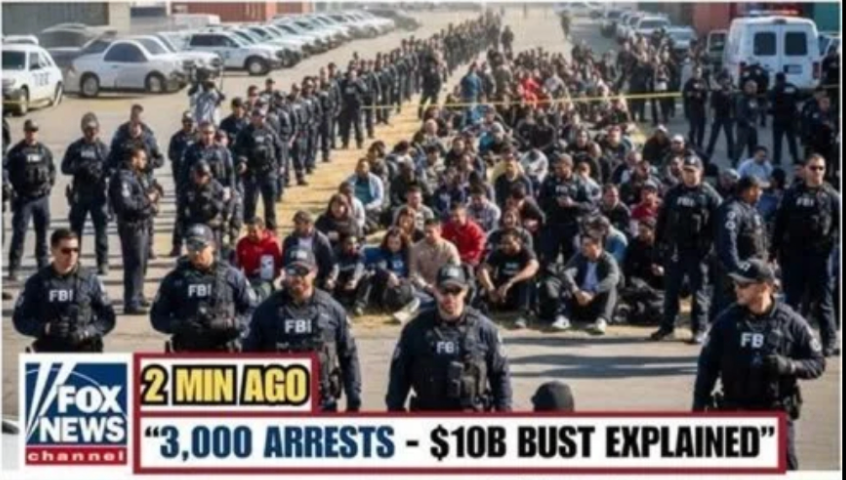
In what officials describe as one of the largest coordinated crackdowns in recent history, federal authorities announced the arrest of 3,000 individuals and the seizure of $10 billion in assets during a sweeping operation centered in Los Angeles. The initiative, known as Operation Iron Dale, targeted what investigators allege was a sprawling crime network operating across Southern California. Law enforcement leaders claim the operation dealt a crippling blow to an infrastructure that had quietly expanded for years, embedding itself into legitimate industries and financial systems.
According to prosecutors, the network was allegedly tied to the powerful Sinaloa Cartel, along with multiple organized crime groups active throughout the region. Authorities say the pipeline facilitated the movement of narcotics, bulk cash, and digital assets through major ports, airports, and financial hubs. By blending illicit activity with lawful commerce, the operation reportedly avoided detection while generating enormous profits. Officials described the system as “industrial in scale,” with logistics channels functioning almost like a multinational corporation.
During coordinated raids, agents seized weapons caches, cryptocurrency accounts, shell companies, and detailed financial ledgers. Investigators claim these records exposed a sophisticated structure designed to launder money and obscure ownership trails. Digital wallets were allegedly used to transfer millions across borders in seconds, while front businesses masked transactions behind ordinary invoices and contracts. The combination of traditional smuggling routes and emerging financial technology, authorities say, reflects how modern organized crime has evolved beyond conventional methods.
Prosecutors have filed charges under the Racketeer Influenced and Corrupt Organizations Act (RICO), a powerful federal statute designed to dismantle criminal enterprises rather than merely prosecute individuals. Bank accounts have been frozen, properties seized, and a permanent federal task force established to monitor potential remnants of the network. Officials argue that this legal strategy allows them to target the command structure and financial backbone of the alleged organization, not just its street-level operators.
Despite the scale of the arrests, authorities caution that the investigation is far from over. Complex networks rarely collapse overnight, and questions remain about how deeply the operation penetrated legitimate institutions. Could additional collaborators still be operating in the shadows? Were there international partners beyond those already identified? Experts note that dismantling infrastructure is only the first step; preventing its reemergence requires constant oversight and intelligence sharing.
Operation Iron Dale is being called a historic turning point in the fight against organized crime. Yet behind the dramatic headlines lies a deeper narrative about the hidden structures that allow criminal enterprises to thrive in plain sight. Investigators believe the lessons learned from this case could redefine strategies for combating transnational networks in the digital age. For now, officials celebrate a significant victory — but they acknowledge that this may be only the beginning of a much longer battle.