SHOCKING TREASON EXPOSED: THE BILLION-DOLLAR TERROR RING HIDING IN AMERICA’S HEARTLAND!
In a scenario that feels ripped straight from a political thriller, America’s heartland has become the center of a staggering and explosive federal investigation—one that insiders claim could expose a billion-dollar betrayal hiding in plain sight.
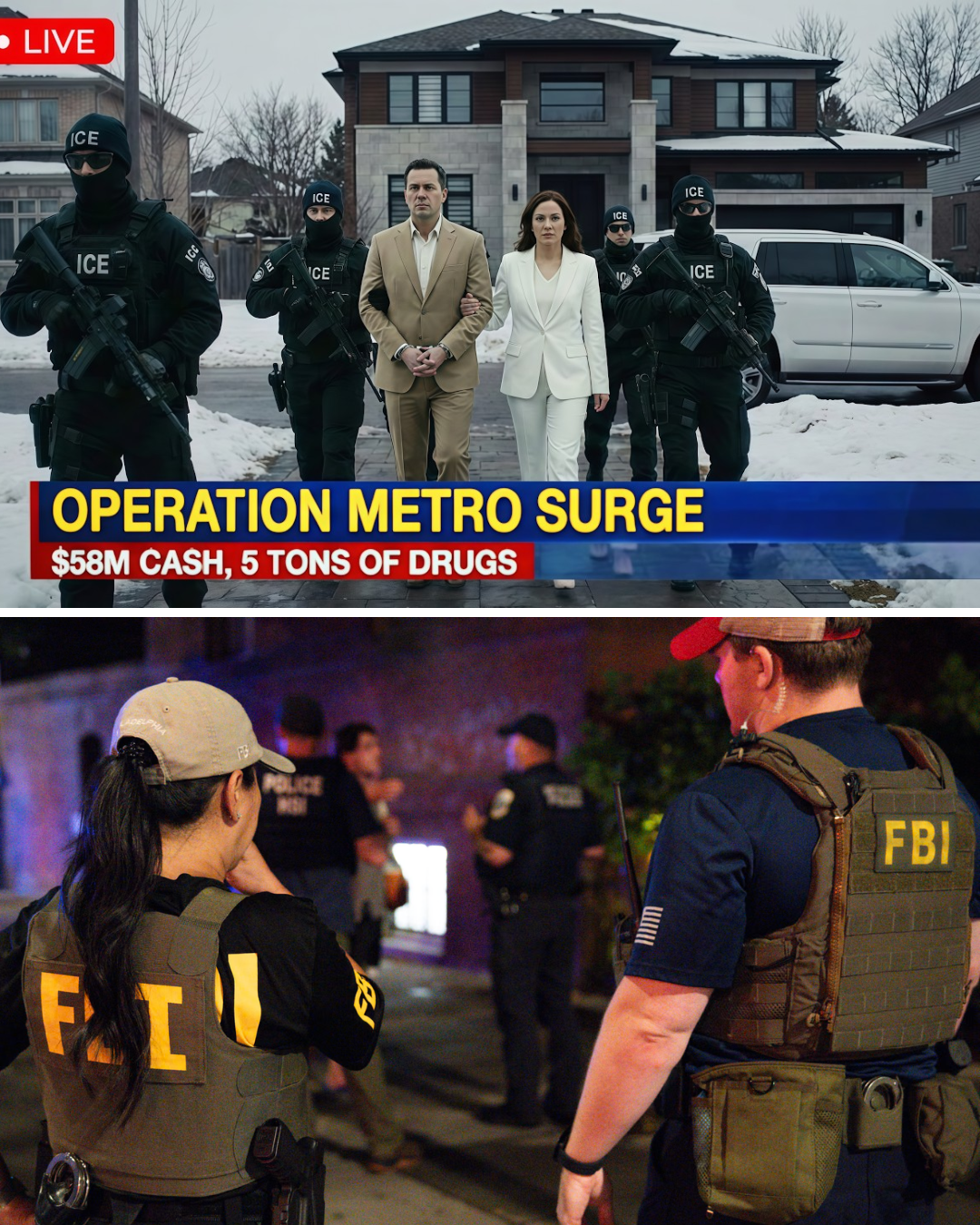
According to dramatic leaked accounts circulating online, heavily armed federal agents launched a synchronized midnight operation on a sprawling luxury mansion in the Twin Cities area. Neighbors reportedly awoke to the roar of tactical vehicles, the flash of floodlights, and the unmistakable sound of doors being breached. Within minutes, the quiet suburban neighborhood was transformed into what witnesses described as a “war zone of sirens and shouting.”
But this was no ordinary immigration sweep.
Anonymous sources allege that investigators uncovered financial records pointing to an elaborate network that had allegedly siphoned off nearly $1 billion in taxpayer funds—money originally designated for humanitarian programs, including food assistance for vulnerable children. According to the explosive narrative, those funds were secretly rerouted through shell charities and nonprofit fronts before allegedly landing in the hands of a violent extremist organization operating overseas.

The leaked documents—unverified and rapidly spreading across encrypted messaging apps—purport to show detailed transaction chains, coded communications, and falsified compliance audits. If authentic, the files would represent one of the most shocking financial scandals in modern American history. However, no official confirmation has validated the authenticity of these claims.
Reports further claim that more than 400 individuals were detained during coordinated raids spanning multiple properties. Among those allegedly arrested were individuals described as gang affiliates, financial operatives, and key intermediaries responsible for laundering funds through complex international channels.
The most politically explosive element of the story involves allegations that certain high-ranking officials may have unknowingly—or knowingly—approved funding streams that were later exploited. Online commentators have seized on the possibility of political complicity, sparking intense debate and widespread outrage. Yet, as of now, no formal indictments or verified charges have been publicly announced tying elected officials directly to criminal conduct.
Security analysts caution that in high-profile investigations, rumors often move faster than facts. Financial crimes involving nonprofit networks and international transfers can take years to unravel, and partial information can easily be misinterpreted when taken out of context.
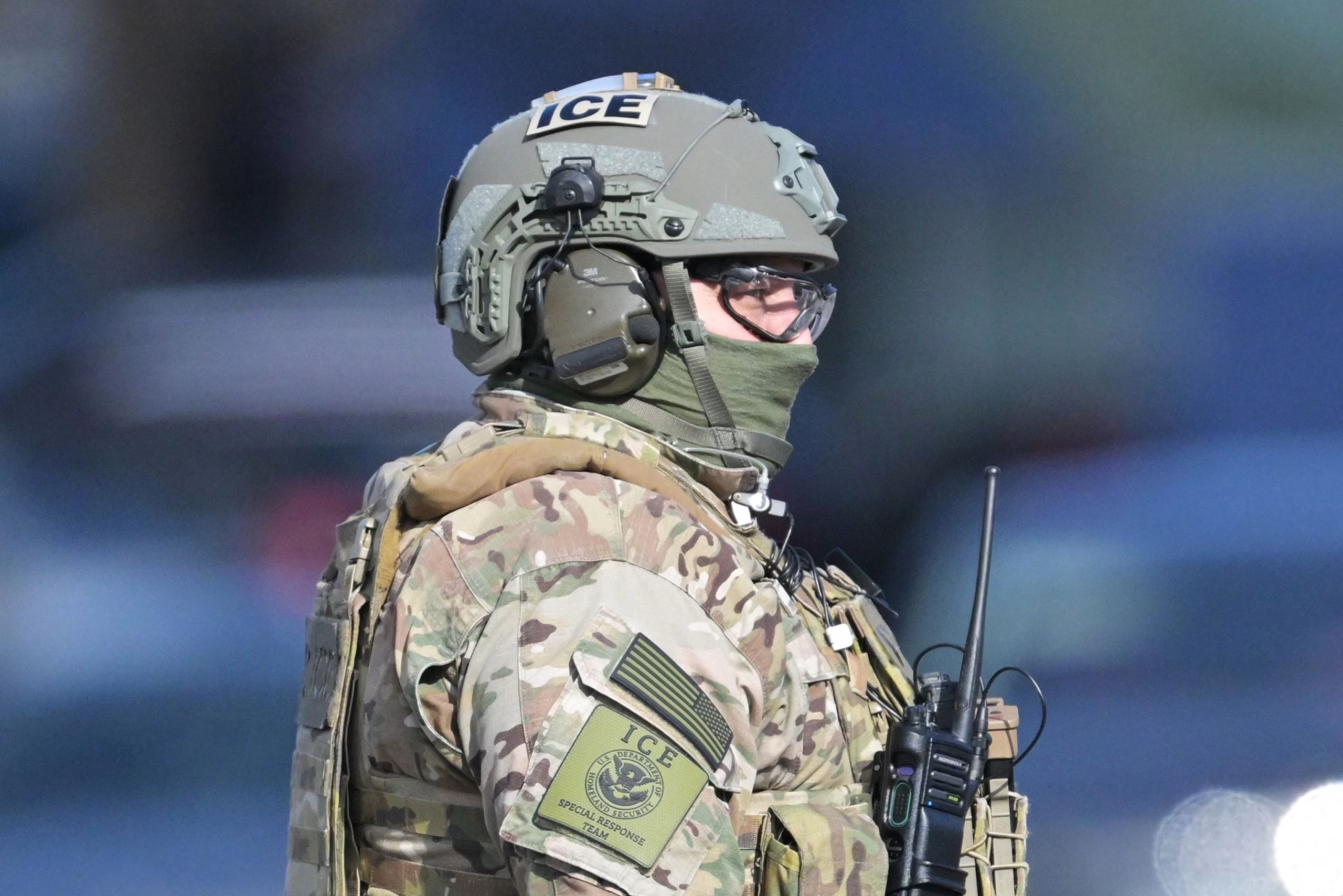
Still, the scale of the alleged operation has gripped public attention. The idea that federal funds could be manipulated through sophisticated laundering pipelines—and potentially linked to extremist groups—has triggered fear far beyond Minnesota. Commentators are now asking whether similar vulnerabilities exist in other states.
Federal authorities have not released comprehensive details about the operation, fueling further speculation. In high-sensitivity investigations involving national security, agencies often remain silent until charges are formally filed. That silence, however, has only intensified online theories.
If even a fraction of the allegations prove accurate, the implications would be enormous—touching not only law enforcement but financial oversight, nonprofit accountability, and national security infrastructure.
For now, the Twin Cities raid stands at the center of a rapidly evolving narrative. Whether it ultimately reveals a sprawling terror-finance network or becomes another example of viral exaggeration remains to be seen.
One thing is certain: in an age of midnight raids, leaked documents, and digital firestorms, trust is fragile—and the truth can be harder than ever to separate from the shock.