A Fiery Debate on Fiscal Responsibility in the United States Senate
- TranThuy
- February 26, 2026

Tensions ran high on the floor of the United States Senate as John Kennedy delivered a fiery speech that echoed through the historic chamber. His voice carried a mix of urgency and conviction, cutting through the murmurs of lawmakers seated beneath the grand ceiling. With sharp words and pointed arguments, he accused congressional Democrats of encouraging what he described as wasteful federal spending. At the center of his criticism stood Chuck Schumer, the Senate Majority Leader, whom Kennedy portrayed as the architect of policies that, in his view, burden taxpayers and expand government beyond its limits.
What unfolded that day was more than a dramatic exchange of partisan talking points. It was a vivid display of the ideological divide that has long shaped American politics. Kennedy argued that fiscal responsibility means limiting government growth, reducing deficits, and ensuring that taxpayer dollars are spent with strict accountability. He painted a picture of hardworking Americans struggling with inflation and economic uncertainty, suggesting that excessive federal spending only deepens those hardships. Across the aisle, Democrats defended their legislative agenda, insisting that strategic investments in infrastructure, healthcare, and social programs strengthen the nation and create long-term prosperity.
The debate reflected a broader national conversation about the role of government in people’s lives. For some, lower spending represents freedom, efficiency, and respect for individual responsibility. For others, public investment is a moral obligation—a way to provide opportunity, protect vulnerable communities, and build a stronger economic foundation. As voices rose and tempers flared, senators on both sides spoke not only to each other but also to the millions of citizens watching from home. Each lawmaker sought to frame the argument in a way that resonated with voters concerned about their jobs, savings, and future security.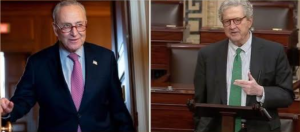
Yet beneath the sharp rhetoric lay a shared truth: decisions made within those marble walls shape the everyday realities of Americans. Budget allocations determine the quality of public schools, the strength of national defense, the availability of healthcare programs, and the stability of social safety nets. Every amendment, every vote, and every compromise carries consequences far beyond the chamber. In this sense, the heated exchange was not merely political theater but a reflection of the high stakes involved in governing a diverse and complex nation.
Moments like this reveal the paradox of democracy. It is often loud, messy, and imperfect. Disagreements are public, and conflicts can appear deeply personal. However, this openness is also a sign of democratic vitality. The passionate debate between Kennedy and his colleagues demonstrated that elected officials are actively contesting ideas, challenging priorities, and defending their visions for the country. Though critics may view such confrontations as divisive, they also represent a system in which differing perspectives are aired rather than silenced.
As the chamber gradually returned to order, the echoes of Kennedy’s speech lingered. Supporters praised his courage and clarity, while opponents dismissed his claims as partisan exaggeration. Still, the exchange served as a reminder that democracy is not defined by harmony alone but by the ongoing struggle to balance competing values and interests. In the end, whether one agrees with Kennedy or Schumer, the debate underscored a fundamental reality: the stewardship of public funds is not just a political issue—it is a matter that shapes the hopes, burdens, and futures of millions of Americans.