When Silence Spoke Louder Than Laughter
- TranThuy
- February 26, 2026
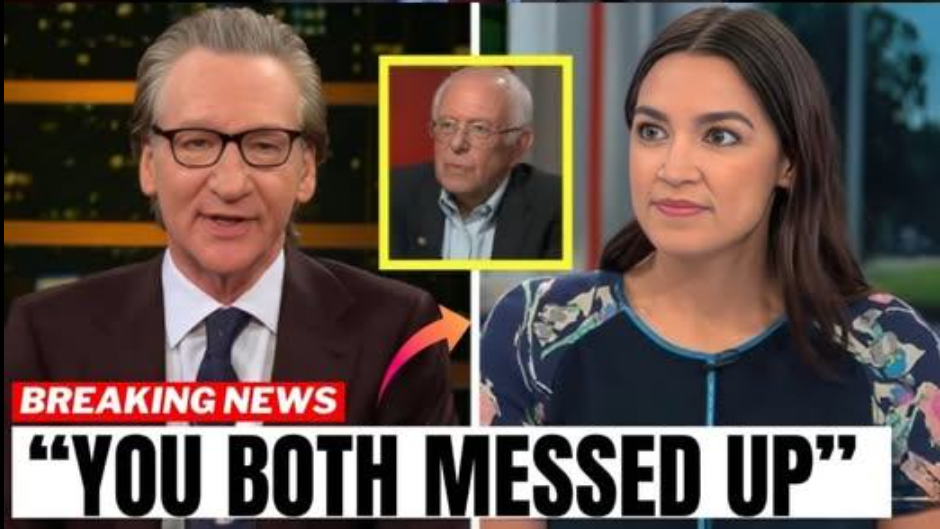
On a night charged with political tension, something unexpected unfolded on Real Time with Bill Maher. The host, Bill Maher, long known as a sharp critic of conservatives and a familiar liberal voice, turned his attention inward. Instead of aiming his satire across the aisle, he focused on two prominent progressive figures: Alexandria Ocasio-Cortez and Bernie Sanders. His target was not their personalities but the growing influence of democratic socialism within the Democratic Party.
The shift in tone was noticeable. Maher is famous for blending humor with political commentary, often delivering biting critiques wrapped in laughter. Yet this moment felt different. His words carried more weight than wit, more warning than punchline. As he outlined his concerns about the party’s direction, the familiar rhythm of jokes followed by applause seemed to falter. The audience, typically energized by his comedic timing, responded with an unusual stillness.
Maher questioned whether embracing democratic socialism too openly could alienate moderate voters and complicate electoral strategy. He suggested that while progressive ideals energize a passionate base, they may also create vulnerabilities in a deeply divided nation. His commentary was not framed as a dismissal of reform, but rather as a caution about political branding and public perception. In raising these points, he stepped into a sensitive internal debate—one that challenges not only policy positions but also the future identity of the Democratic Party.
The reaction in the studio was subtle yet powerful. Silence settled over the room, replacing the easy laughter that typically fills the set. It was not hostile, nor was it enthusiastic. It was contemplative. Sometimes the loudest sound in a room is not applause or protest, but quiet reflection. In that pause, the complexity of the issue became tangible. Political conversations, especially among ideological allies, can carry a different kind of intensity—less theatrical, more personal.
Beyond the studio walls, the moment echoed across social media and political commentary platforms. Supporters of Ocasio-Cortez and Sanders defended the progressive movement as a necessary response to economic inequality and systemic challenges. Others agreed with Maher, arguing that political pragmatism must temper ideological ambition. The exchange highlighted a broader struggle within American liberalism: how to balance bold reform with broad appeal in a competitive electoral landscape.
In the end, the episode served as a reminder that democracy is not only a clash between opposing parties but also a dialogue within them. Maher’s comments illustrated that allies can challenge one another without abandoning shared values. The brief, heavy silence in the studio captured that reality perfectly. It was a moment when comedy paused, reflection took center stage, and the weight of political evolution settled gently—but unmistakably—over everyone watching.