A Moment of Clarity in a Divided Debate
- TranThuy
- February 26, 2026
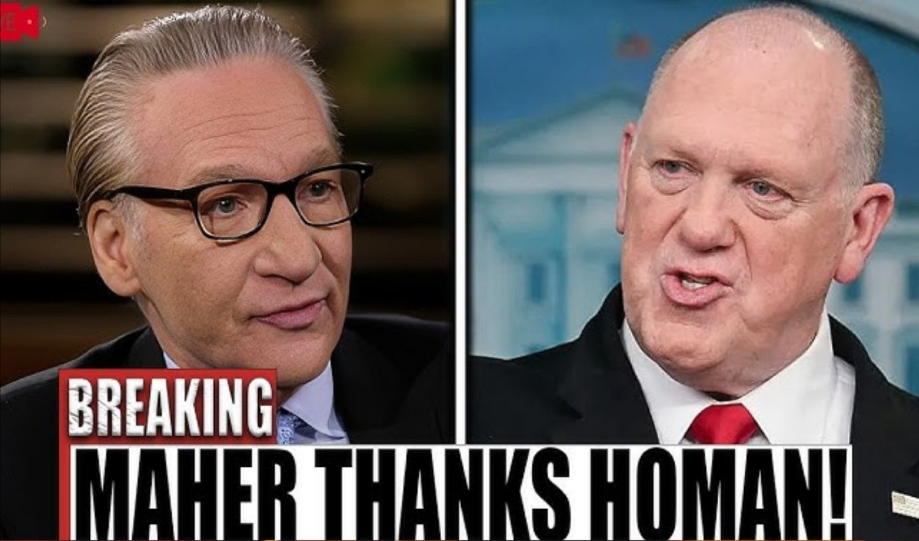
On a tense evening of Real Time with Bill Maher, sparks flew as immigration policy took center stage. Under the studio lights, the conversation between host Bill Maher and former immigration official Tom Homan quickly intensified. The word “amnesty” hung heavily in the air, carrying decades of political weight and emotional charge. Voices tightened as both men pressed their arguments, reflecting a broader national struggle over border enforcement, humanitarian responsibility, and the rule of law.
Maher, known for his sharp wit and unapologetic commentary, challenged what he viewed as inconsistencies in enforcement policy and political messaging. Homan, drawing from his years of experience in immigration enforcement, countered with firm assertions about border security and the practical realities faced by federal agencies. The exchange was not merely ideological; it was rooted in competing interpretations of history, legality, and national identity. As each defended his position, the audience could sense how deeply the issue resonates across the country.
The debate reached a pivotal moment when discussion turned to the historical use of the term “amnesty.” Homan clarified a key point about past immigration reforms, grounding his argument in specific legislative context. For a split second, the energy in the room shifted. Rather than escalating the disagreement, Maher paused. In a rare and refreshing gesture, he acknowledged the clarification and thanked Homan for setting the record straight. It was a brief interruption in the usual rhythm of televised confrontation—but it carried unusual weight.
That acknowledgment did not signal surrender or full agreement. Instead, it demonstrated something often missing in modern political discourse: the willingness to separate factual correction from ideological rivalry. Maher’s response showed that debate need not be a zero-sum contest where conceding a detail equals losing the war. By recognizing a factual point, he reinforced the principle that truth stands above partisan instinct. In a media environment frequently fueled by outrage and spectacle, such moments feel almost radical.
The studio audience responded not with explosive applause, but with attentive quiet—a subtle recognition that something meaningful had occurred. It was a reminder that dialogue grounded in facts can cut through division, even when disagreement remains sharp. Immigration policy will continue to provoke strong emotions and complex arguments, but that exchange illustrated the power of intellectual honesty in the midst of tension.
In a climate often defined by polarization, the brief pause between Maher and Homan felt unexpectedly human—and surprisingly hopeful. It suggested that while convictions may differ, mutual respect for evidence can create space for understanding. The debate did not resolve America’s immigration challenges, nor did it erase ideological divides. But for a fleeting moment, it modeled a higher standard of conversation—one where truth matters more than winning, and where dialogue remains possible even in the fiercest disagreements.