Privilege, Power, and Principle: A Defining Moment in Washington
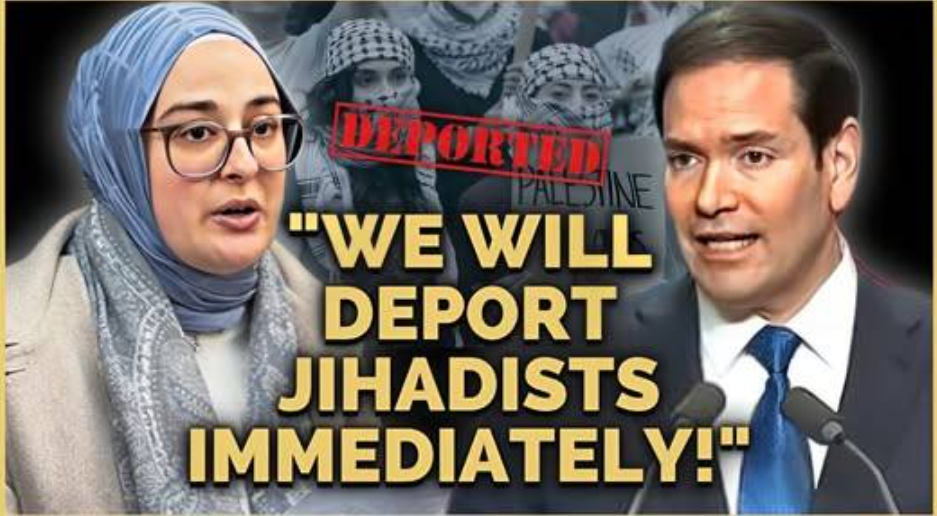
At a high-stakes press conference in Washington, Marco Rubio stood firm behind the podium, his message clear and unwavering. Reporters pressed him with pointed questions about recent immigration rulings and campus free speech controversies, including a debated case involving a student from Tufts University. The atmosphere was charged, reflective of a nation deeply divided over the balance between individual rights and federal authority. Yet Rubio did not hesitate. His central point cut through the noise: visas, he asserted, are privileges granted by the United States, not inherent rights guaranteed to non-citizens.
The controversy intensified after a federal judge suggested that threats of deportation might raise concerns under the First Amendment, particularly when speech on politically sensitive topics is involved. Rubio responded by defending the executive branch’s authority over immigration decisions. He argued that visa determinations fall squarely within the federal government’s responsibility to safeguard national sovereignty and security. While acknowledging America’s longstanding commitment to free expression, he maintained that constitutional protections must be interpreted within the broader framework of immigration law and national interest.
Beyond the legal nuances, the exchange highlighted a deeper philosophical tension. The United States has long defined itself as both a nation of immigrants and a nation of laws. Rubio’s remarks emphasized the latter, underscoring the idea that border control and visa oversight are essential elements of statehood. Critics, however, warned that aggressive enforcement could chill free speech, especially on college campuses where international students contribute to academic discourse. The debate revealed how immigration policy increasingly intersects with civil liberties, creating complex legal and moral questions.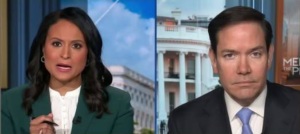
During the same conference, Rubio broadened his remarks to address international concerns, signaling a firm stance toward Iran amid rising geopolitical tensions. He emphasized that U.S. foreign policy must project strength and clarity, particularly in regions where instability can quickly escalate. By connecting immigration authority at home with assertive diplomacy abroad, Rubio framed his position as part of a cohesive strategy rooted in national security. For supporters, this approach demonstrated consistency and resolve; for opponents, it raised questions about proportionality and diplomatic balance.
The press conference quickly became more than a policy briefing. It evolved into a symbolic moment reflecting the broader American struggle to reconcile liberty with law enforcement. On one side stands the principle of open debate and academic freedom; on the other, the imperative to maintain control over who enters and remains within national borders. Rubio’s firm delivery captured the intensity of this balancing act, illustrating how a single statement can ripple through courtrooms, campuses, and communities alike.
In a time marked by polarization, Rubio’s words echoed far beyond the podium. They sparked renewed discussion about where compassion meets security, where constitutional ideals intersect with executive power, and how leadership shapes that delicate boundary. Whether one agrees with his stance or challenges it, the moment underscored a vital democratic truth: the ongoing negotiation between freedom and authority remains at the heart of the American experiment.