An Alarm in the Night: Glenn Beck’s Warning and America’s Uncertain Crossroads
- TranThuy
- February 26, 2026

With urgency in his voice and warning in his eyes, Glenn Beck delivered a broadcast that felt less like routine commentary and more like an alarm bell ringing in the night. Known for his dramatic style and impassioned analysis, Beck spoke directly to viewers with a tone that suggested deep concern rather than mere political critique. His central message was stark: “What’s coming for America is bigger than anyone realizes.” It was a statement designed not to comfort, but to awaken.
Throughout the broadcast, Beck pointed to what he described as warning signals flashing across the nation’s early detection system—deep political division, cultural fragmentation, and rising global instability. He argued that partisan hostility has hardened into something more corrosive, eroding trust not only in government but in neighbors and institutions. International tensions, economic uncertainty, and rapid technological change, he suggested, compound domestic fractures. To Beck, these are not isolated challenges but interconnected pressures testing the country’s resilience.
His delivery was intense, even unsettling at times. Yet beneath the dramatic tone lay a plea for awareness and preparation. Beck urged citizens to look beyond headlines and partisan talking points, encouraging civic engagement and personal responsibility. He framed his warning not as prophecy, but as a call to vigilance—an insistence that history shows how quickly societies can drift when complacency replaces accountability. Whether one agrees with his interpretation or not, the emotional force of his appeal was unmistakable.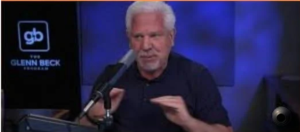
Supporters viewed the broadcast as a passionate defense of foundational principles. To them, Beck’s message echoed concerns about constitutional integrity, economic stability, and national sovereignty. They interpreted his words as a rallying cry to protect institutions and traditions they believe are under strain. In this reading, the alarm was not fearmongering but foresight—an attempt to prompt action before challenges escalate further.
Critics, however, saw the moment differently. Some argued that such rhetoric amplifies anxiety in an already polarized environment, framing complex issues in apocalyptic tones. They contend that while America faces undeniable challenges, dramatic language risks deepening division rather than bridging it. For them, the broadcast reflected the turbulence of the times more than an impending crisis, highlighting how media voices can shape public perception as much as public policy.
Yet beyond agreement or disagreement, the moment captured something undeniably real: a nation wrestling with uncertainty. Americans across the political spectrum sense that they are living through a period of rapid transformation. Economic shifts, cultural debates, and geopolitical tensions all contribute to a feeling of instability. Beck’s broadcast, whether seen as warning or exaggeration, tapped into that shared unease. And in doing so, it reminded viewers that the future—however uncertain—will ultimately be shaped not by fear alone, but by the courage, conviction, and choices of the people themselves.