Self-Driving Countdown: Tesla’s Moment of Truth
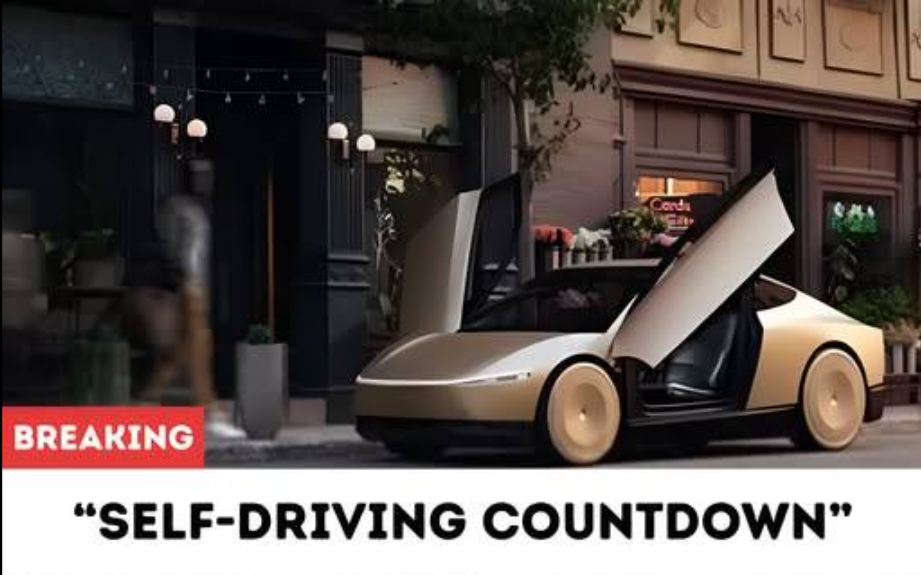
The spotlight has never burned brighter on Tesla, Inc.. As bold internal deadlines approach, investors, analysts, and the broader tech world are watching with intense focus. At the center of attention stands Elon Musk and his long-promised robotaxi vision—an ambition that could redefine not just a company’s valuation, but the very rhythm of daily life in modern cities. The countdown feels real, and the stakes feel enormous.
For years, Musk has spoken about a future in which Tesla vehicles operate autonomously, generating revenue for owners while transforming urban transportation. The idea is simple yet revolutionary: a fleet of self-driving robotaxis, summoned by smartphone, navigating streets without a human driver. If successful, such a system could disrupt ride-hailing services, reshape car ownership models, and even alter city infrastructure planning. For Tesla, it represents more than innovation—it represents evolution.
Imagine cities where cars glide silently through the night, no steering wheel, no driver—just software, sensors, and constantly learning algorithms guiding the way. Streets hum not with engine noise, but with electric precision. Commuters reclaim time once spent gripping steering wheels. Elderly passengers and people with disabilities gain new independence. The promise is compelling: safer roads, fewer accidents, and transportation available at the tap of a screen.
Yet the road to autonomy is paved with complexity. Developing full self-driving technology requires solving some of the hardest problems in artificial intelligence—interpreting unpredictable human behavior, navigating extreme weather, and responding instantly to rare edge cases. Regulators demand rigorous safety validation. Critics question whether timelines have been overly optimistic in the past. Each approaching deadline carries both anticipation and scrutiny, amplifying the sense that this is a pivotal chapter for Tesla.
Financial markets reflect that tension. Supporters argue that a successful robotaxi rollout could unlock entirely new revenue streams, justifying bold valuations and reinforcing Tesla’s identity as a technology leader rather than merely an automaker. Skeptics caution that delays or setbacks could test investor patience. The ticking clock symbolizes more than product development; it represents credibility, execution, and the challenge of turning visionary statements into operational reality.
For Tesla, this is not just another launch—it is a moment of truth. If the robotaxi vision materializes at scale, mobility itself may begin to “think,” shifting from human-controlled machines to autonomous networks. If obstacles persist, the dream may require recalibration. Either way, the countdown underscores a powerful reality: we stand at the edge of a transportation transformation. And as the seconds pass, the world watches to see whether Tesla will once again redefine what feels possible.