No Evidence Supports Viral Claim That the Ark of the Covenant “Returned” to Jerusalem at 3 A.M.

A dramatic story circulating online claims that at exactly 3:00 a.m., unmarked convoys entered Jerusalem, communications were disrupted, and the Ark of the Covenant was secretly transported into the Old City.
There is currently no verified evidence that any such event occurred.

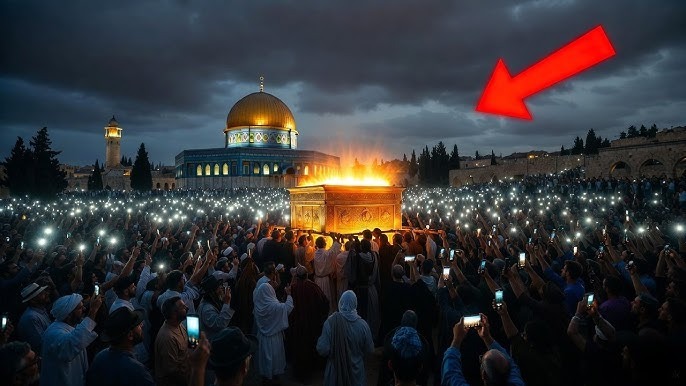
No official statement from the Government of Israel, law enforcement agencies, or major international news organizations has reported unusual military lockdowns, communication blackouts, or the recovery of the Ark. In a city as closely monitored and globally scrutinized as Jerusalem—particularly around the Old City and sensitive religious sites—an operation of that magnitude would almost certainly generate immediate and widespread documentation.
The Ark of the Covenant is described in the Hebrew Bible as a sacred chest said to have held the stone tablets of the Ten Commandments. Its historical fate remains unknown, and scholars debate whether it was destroyed, hidden, or lost during the Babylonian conquest of Jerusalem in 586 BCE. Despite centuries of speculation, no credible archaeological evidence has confirmed its discovery in modern times.
Claims involving sealed convoys, vanished security footage, or citywide silence are serious and extraordinary assertions. At this time, none are supported by independent verification, official documentation, or reputable reporting.
Viral narratives often combine religious symbolism, mystery, and contemporary tension to create compelling stories. However, there is no confirmed indication that any artifact identified as the Ark of the Covenant was moved, returned, or “released” in Jerusalem.
Readers are encouraged to rely on credible historical research and verified news sources when evaluating claims of this scale and significance.