2026: Tesla at the Crossroads of Artificial Intelligence and Destiny
- TranThuy
- February 26, 2026
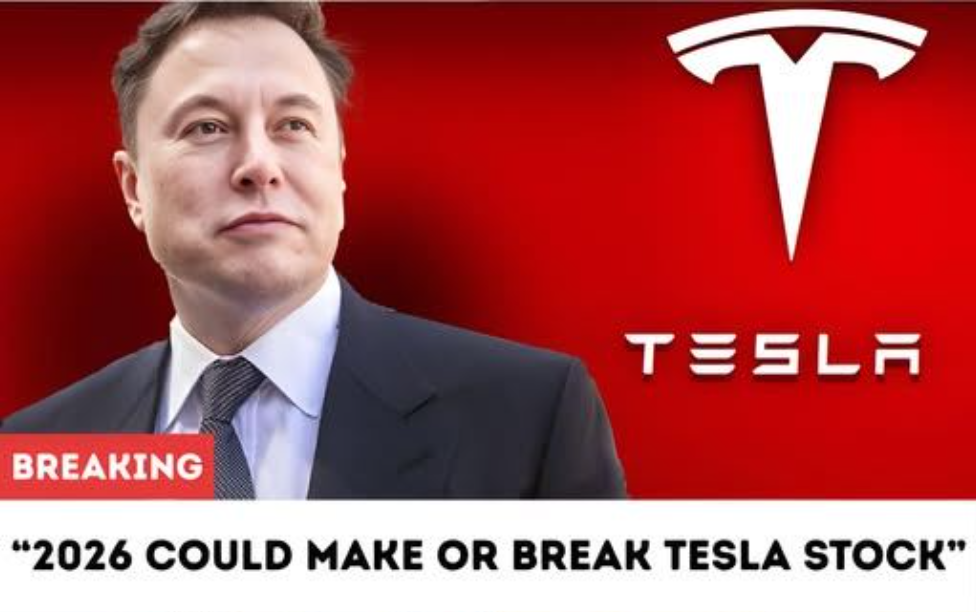
At the edge of 2026, the air around Tesla, Inc. feels charged with destiny. Financial analysts across Wall Street have described it as a make-or-break year—not only for TSLA shareholders, but for the sweeping technological vision championed by Elon Musk. After years of ambitious promises and rapid innovation, the company now stands before a defining test. The question is no longer whether Tesla can dream boldly, but whether it can execute flawlessly in an increasingly competitive and skeptical market.
Yet this pivotal moment is not merely about stock charts rising or falling. It is about belief. Tesla has built its identity around the conviction that artificial intelligence can fundamentally transform transportation. Autonomous systems, powered by advanced neural networks and massive real-world data collection, are meant to redefine how people move, commute, and interact with their environments. If successful, this transformation would ripple far beyond the automotive sector, influencing urban planning, logistics, and even daily human behavior.
For Musk, the stakes extend beyond quarterly performance metrics. His vision centers on the idea that vehicles should become intelligent agents—machines capable of navigating the world with precision and safety that surpasses human drivers. In this future, cars would not simply transport passengers; they would operate as nodes in a vast, AI-driven network. Traffic congestion could diminish, accidents could decline dramatically, and mobility could become more accessible to millions. The promise is revolutionary, but so are the technical and regulatory challenges that stand in the way.
By 2026, expectations surrounding Tesla’s autonomous technology will reach critical mass. Investors will look for measurable progress in Full Self-Driving capabilities, scalability, and regulatory approvals. Competitors are advancing their own AI mobility platforms, intensifying pressure on Tesla to maintain its leadership. Every milestone achieved will strengthen confidence. Every delay will amplify skepticism. In such an environment, even small developments may carry outsized symbolic weight.
If 2026 delivers on its bold ambitions, it could cement Tesla’s place at the heart of an AI-driven future. The company would not only solidify its dominance in electric vehicles but also position itself as a leader in applied artificial intelligence. Such success could validate years of risk-taking and reinforce Musk’s reputation as a visionary capable of bending industries toward his predictions. It would mark a historic turning point in how society understands transportation and machine intelligence.
But if progress falters, doubts may grow louder than ever. Markets are unforgiving, and public patience can erode quickly when expectations remain unmet. For Musk, this moment is more than a financial crossroads—it is a test of resilience, credibility, and the courage to wager everything on tomorrow. In 2026, the world will not simply evaluate a company’s performance. It will judge whether a bold dream of AI-powered mobility truly belongs to the future—or remains just beyond reach. 🚀✨