HILLARY AND BILL CLINTON SUBPOENAED: The Epstein Files Connection That Could Rewrite Political History
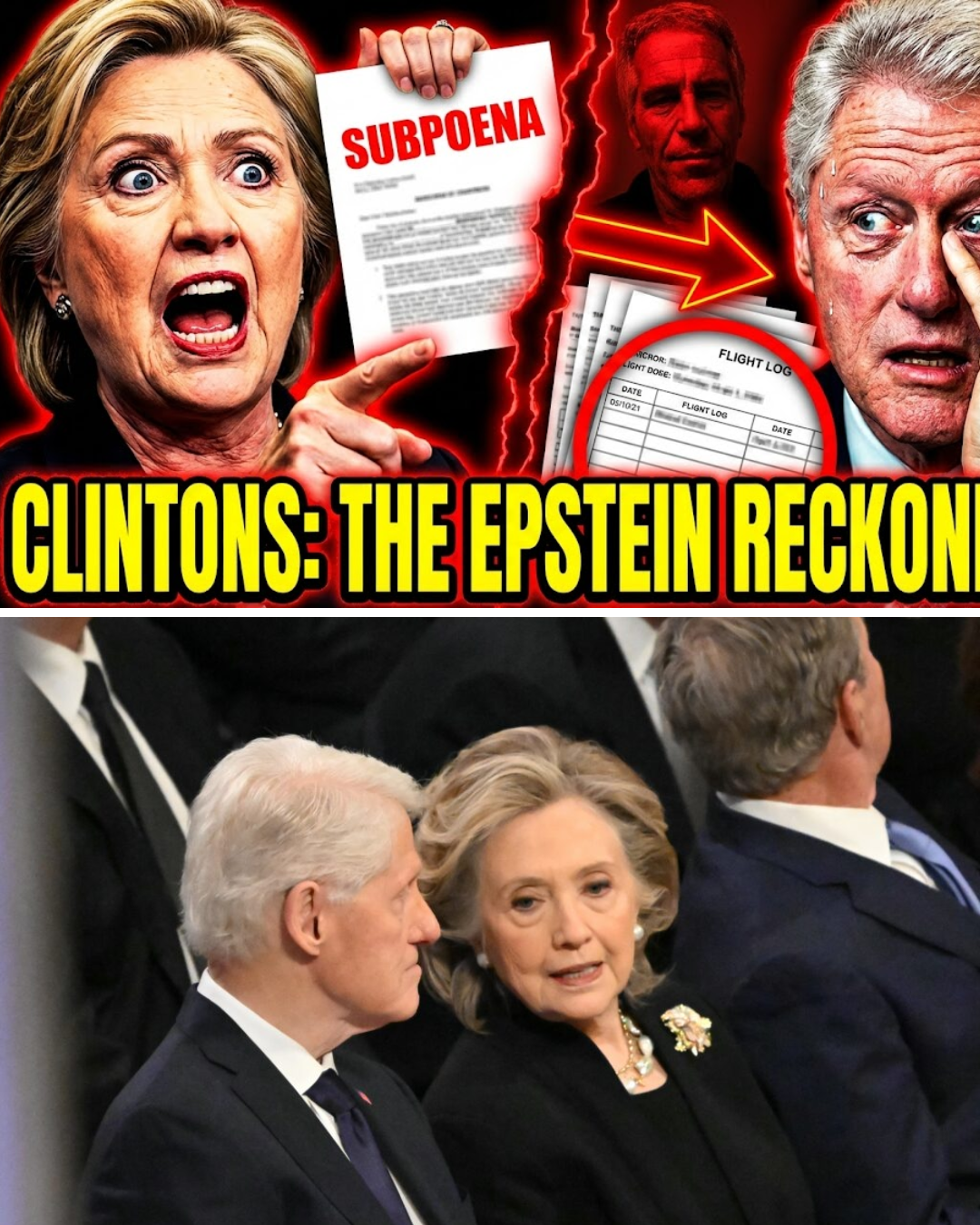
Washington is once again bracing for political shockwaves as Hillary and Bill Clinton are reportedly facing subpoenas tied to renewed scrutiny over their past associations with convicted financier Jeffrey Epstein. After years of speculation, flight logs, sealed depositions, and unanswered questions, the House Oversight Committee is said to be digging deeper than ever before.
According to explosive insider claims, Hillary Clinton will be called to testify first, followed by her husband, whose past encounters with Epstein have long fueled controversy. Though Bill Clinton has previously acknowledged flying on Epstein’s private jet for philanthropic trips—while denying any knowledge of criminal activity—the resurfacing of documents has reignited scrutiny.
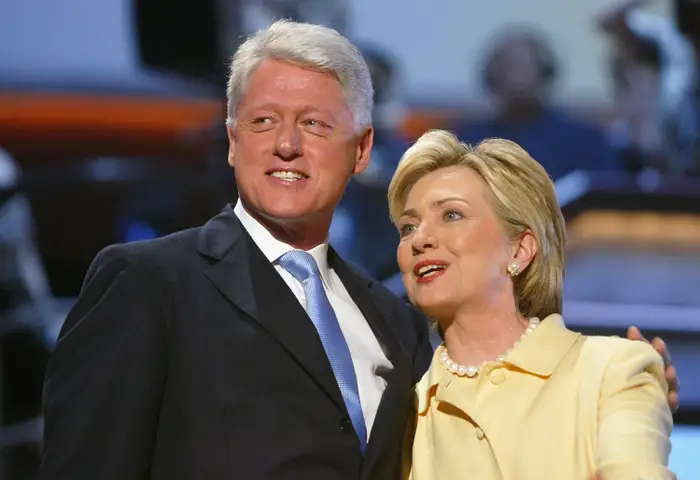
The timing has intensified intrigue. As Prince Andrew, Duke of York faces renewed public examination over his own Epstein-linked controversies, investigators appear to be widening the lens. Some speculate that newly unsealed materials or classified correspondence could connect powerful figures across political and royal spheres in ways never fully examined before.
Sources familiar with congressional procedures suggest the subpoenas are part of a broader review into how Epstein cultivated relationships with influential leaders, academics, and global elites. What did he gain from proximity to power? And more crucially—what did those in power know?
The most combustible allegations center around the possibility of undisclosed meetings and conversations that were never formally logged. Rumors swirl about whether Epstein leveraged access to political figures for strategic advantage, or whether he positioned himself as a benefactor to gain credibility. In an era where public trust in institutions is fragile, even the perception of impropriety can have seismic consequences.
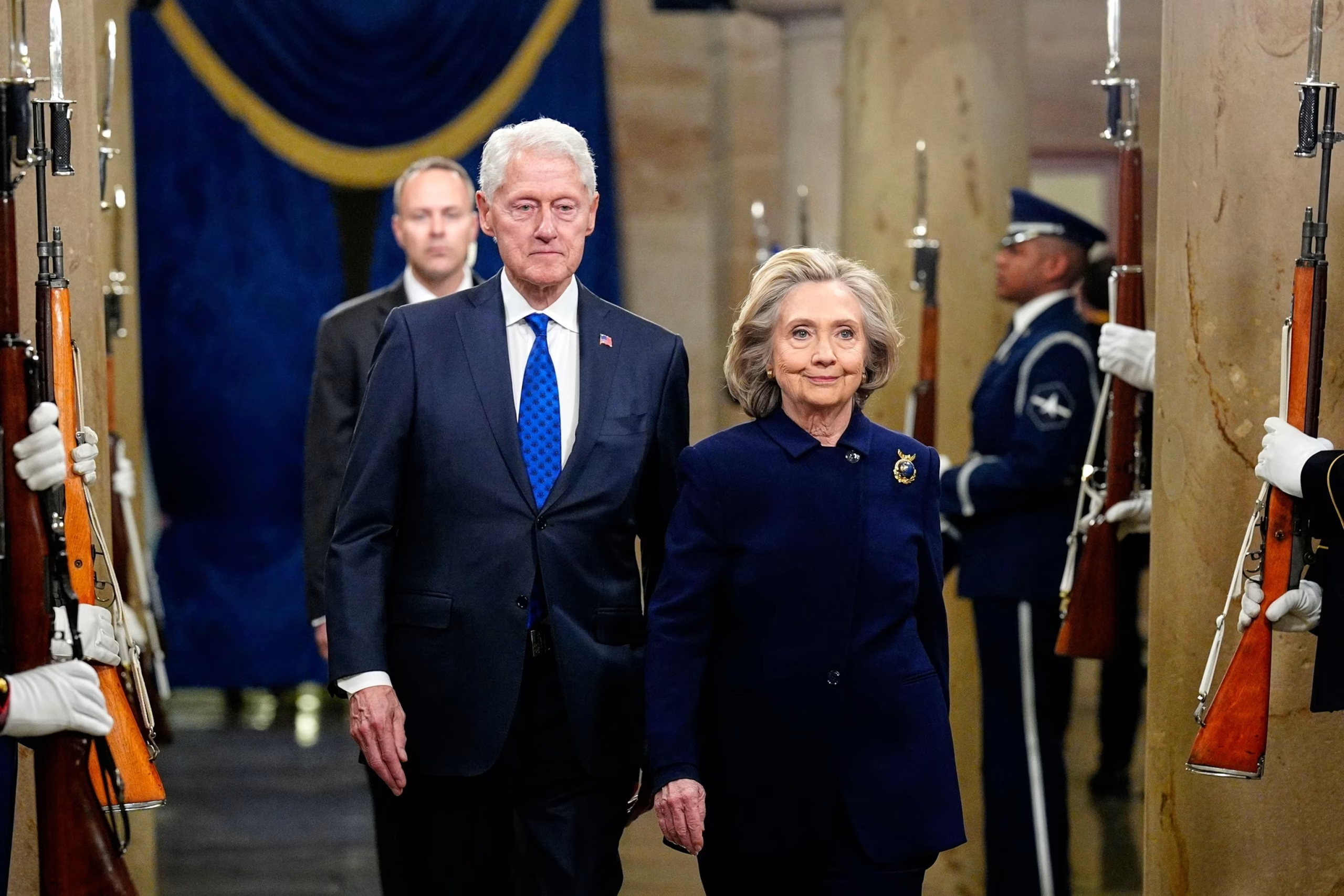
Critics argue that the Clinton name, synonymous with decades of political dominance, has weathered countless storms—Whitewater, impeachment proceedings, email controversies—yet remains resilient. But this moment feels different to some observers. The House Oversight Committee’s inquiry reportedly focuses not just on social connections, but on whether any official actions or policy discussions intersected with Epstein’s financial networks.
Adding to the drama are whispers of sealed testimony that could soon be made public. If new flight records, financial transactions, or communications are introduced into the congressional record, the implications could ripple far beyond one political dynasty.
Supporters of the Clintons dismiss the narrative as recycled conspiracy, pointing out that previous investigations did not result in criminal charges against either of them in connection with Epstein. They emphasize that proximity does not equal participation. Yet critics counter that unanswered questions remain—and that transparency is the only way to restore public confidence.
The broader story may not simply be about individuals, but about a system that allowed Epstein to embed himself within elite circles for years. Universities, billionaires, royalty, and politicians all appear in the orbit of his once-expansive network. The Clinton subpoenas, if confirmed, could signal a willingness to reexamine old assumptions.
As testimony looms, Washington waits. Will this hearing expose groundbreaking revelations—or merely reignite familiar political divides? In a climate where perception shapes legacy, even the act of appearing before Congress can redefine history.
One thing is certain: if the House Oversight Committee proceeds, the testimony could become one of the most watched political moments in recent memory. And in a story that has already shaken institutions worldwide, the next chapter may prove even more consequential.