30 ROOMS OF SECRETS: What Police Found Inside Prince Andrew’s Mansion During the Dawn Raid
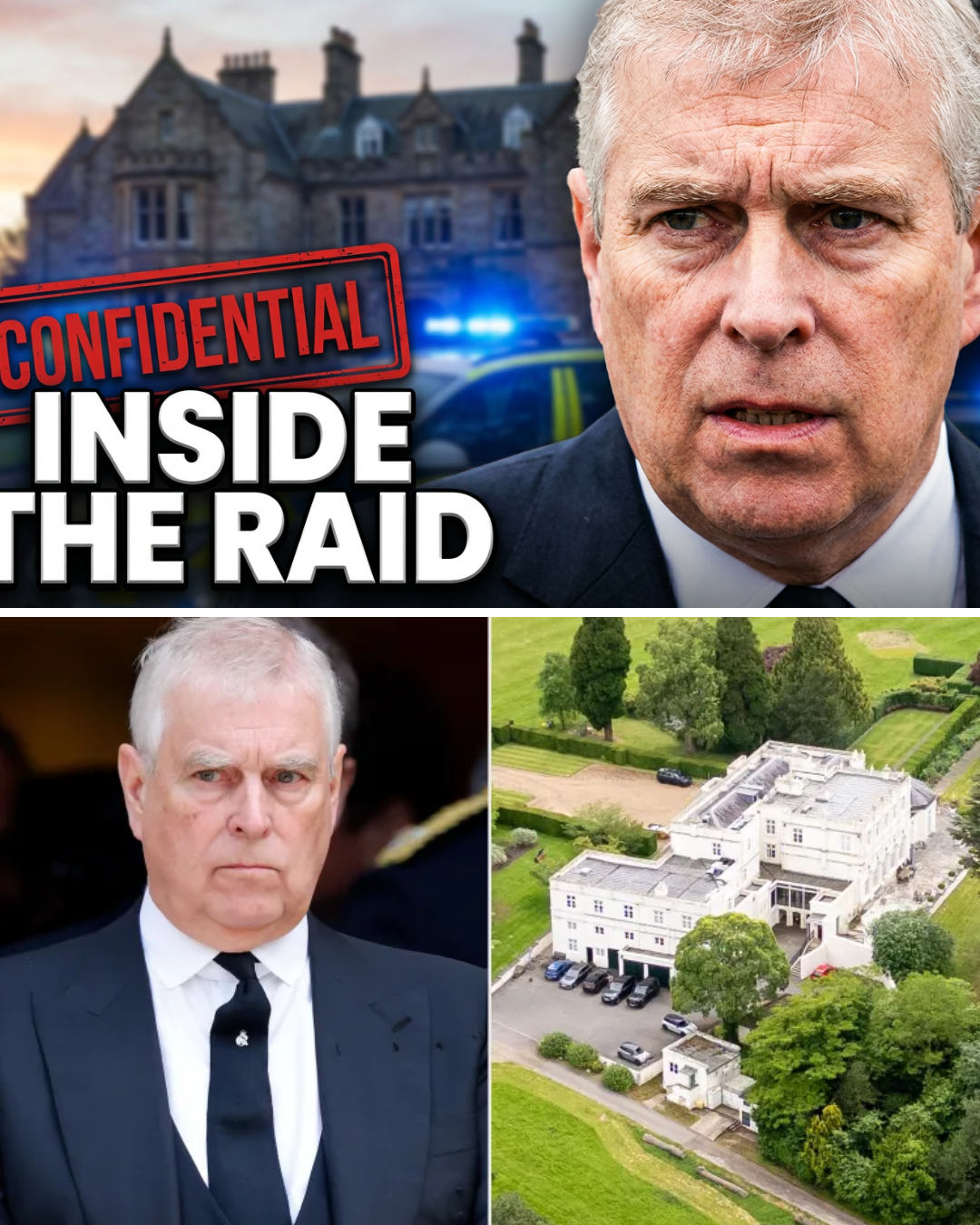
For decades, Royal Lodge has stood as one of the British monarchy’s most private residences—a sprawling, 30-room mansion tucked inside Windsor Great Park. But according to explosive new claims circulating among legal insiders, that quiet façade was shattered by a dramatic pre-dawn police operation that has sent shockwaves through royal circles.
In what sources describe as a tightly coordinated “dawn raid,” investigators reportedly arrived at the gates of Prince Andrew’s residence armed with warrants and forensic teams. The objective, according to whispers from individuals familiar with the alleged operation, was not merely document retrieval. Detectives were said to be searching for tangible, physical evidence that could connect the Duke of York more directly to the criminal network of the late Jeffrey Epstein.
Official confirmation of such a raid has not been publicly issued, but the rumors themselves have ignited a media firestorm.
According to accounts emerging from unnamed insiders, officers moved systematically through the estate, sealing off sections of the property while digital forensics experts examined computers, storage devices, and private study areas. Particular attention was allegedly paid to a room described as the Duke’s “travel room”—a space said to house memorabilia, itineraries, and gifts collected from international trips over decades.
Why that room? Sources speculate that investigators were tracing historical travel patterns and possible links between overseas visits and known associates within Epstein’s circle.
The most sensational claims involve discoveries inside locked safes and secured cabinets. Insiders allege that encrypted hard drives were seized, along with photographic materials dating back years. While there is no verified inventory publicly available, those close to the purported investigation describe veteran detectives reacting with visible shock to certain items uncovered during the hours-long search.
Among the most talked-about allegations are references to “gifts” believed to have originated from Epstein. Though details remain murky, speculation centers on luxury items, framed photographs, and personal correspondence. Whether such items, if they exist, hold any legal significance is unknown. Possessing gifts from an associate—even one later convicted of serious crimes—is not, in itself, evidence of wrongdoing.
Another thread fueling speculation concerns contact lists allegedly retrieved from seized devices. According to circulating claims, these lists may contain names of high-profile individuals spanning politics, finance, and entertainment. If true, the implications could extend far beyond one royal residence. However, no official documentation has confirmed the authenticity of these assertions.
Legal experts caution that leaks during active investigations—if an investigation is indeed underway—often blur the line between fact and rumor. The suggestion that someone “inside” is releasing details raises serious questions about confidentiality and procedural integrity. In cases involving high-profile figures, misinformation can spread rapidly, amplified by public fascination and longstanding controversy.
Prince Andrew stepped back from public royal duties in 2019 following intense scrutiny over his past association with Epstein. He has consistently denied any criminal conduct. Buckingham Palace has not commented on the latest claims, maintaining its longstanding position of refusing to address speculative reports.
Still, the image of investigators combing through a royal mansion at dawn is powerful. It evokes a moment where privilege and power intersect with the machinery of law enforcement. Whether the alleged raid yields evidence of consequence—or proves to be exaggerated rumor—remains to be seen.
For now, the narrative hangs in uncertainty. The supposed inventory list has not been officially released, and any authentic documentation would likely surface through formal legal channels, not anonymous leaks.
Yet the questions persist. If doors were opened and safes unlocked inside Royal Lodge, what truths—if any—were uncovered in those thirty rooms of silence?