A Crown Divided: Duty, Destiny, and a Royal Reckoning
- TranThuy
- February 27, 2026
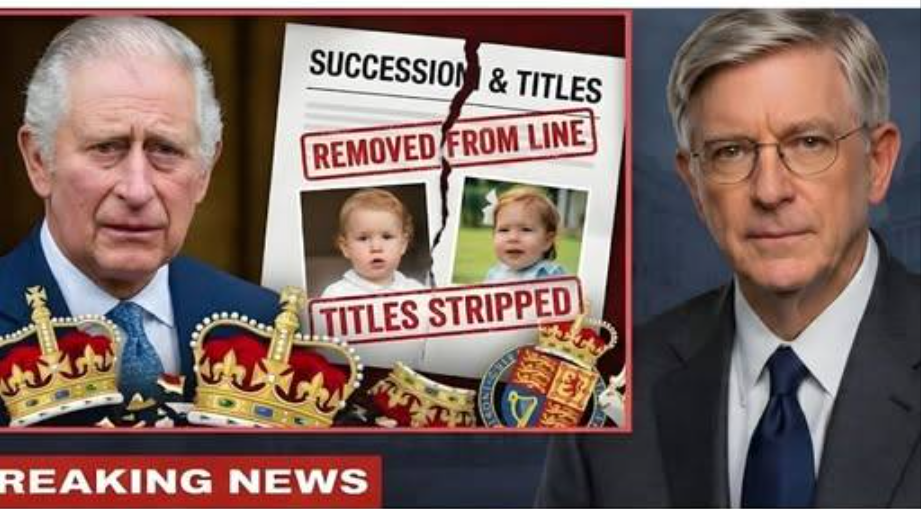
In a dramatic and deeply emotional twist of royal destiny, imagine King Charles III taking the unprecedented step of formally severing royal ties with his youngest son, Prince Harry. Such a decree would reverberate far beyond palace walls. It would not merely be a procedural adjustment within the monarchy, but a symbolic fracture in one of the world’s most enduring institutions. The image of a father compelled by duty to distance himself from his son would strike at the heart of both tradition and family.
The consequences of such an action would be historic. Stripping the Duke of Sussex title, revoking royal designations from Meghan Markle, and removing their children — Archie Harrison Mountbatten-Windsor and Lilibet Diana Mountbatten-Windsor — from the line of succession would send shockwaves through the United Kingdom and across the Commonwealth. The line of succession is not merely a list of names; it is a living thread connecting generations of history. To alter it so dramatically would feel like rewriting a chapter of Britain’s constitutional narrative in real time.
For generations, the British monarchy has symbolized continuity, stability, and unity. Even during times of political upheaval, the Crown has stood as a steady emblem of national identity. A complete constitutional break within the royal family would feel less like palace protocol and more like the closing of a family chapter written under the relentless glare of the global spotlight. The monarchy has survived abdications, scandals, and wars — yet this would carry a uniquely modern resonance, shaped by media scrutiny and public opinion in the digital age.
Supporters of such a decisive move might argue that it demonstrates firm leadership in defense of the institution. They could claim that the preservation of the Crown requires clear boundaries and accountability, even when personal relationships are at stake. Critics, however, would see heartbreak rather than strength — a father and son divided by duty, distance, and the heavy weight of history. They would question whether tradition must always prevail over reconciliation, and whether institutional preservation justifies personal loss.
Across Britain, emotions would run high. Some would mourn the finality of it all, remembering the fairy-tale wedding that once captivated millions and symbolized a hopeful new chapter for the royal family. Others would insist that institutions must evolve to survive, even when that evolution comes at a painful cost. Public debate would fill newspapers, television panels, and social media feeds, reflecting a nation both protective of its heritage and empathetic toward the human story unfolding within it.
Whether viewed as necessary resolve or tragic rupture, such a moment would reveal one undeniable truth: behind the grandeur of crowns and titles lie human bonds — fragile, complicated, and profoundly real. The monarchy may represent ceremony and continuity, but it is also a family navigating extraordinary pressures. In the end, beneath the velvet robes and gilded halls, the story would not simply be about power or protocol, but about love, loyalty, and the difficult choices that shape both nations and the hearts of those who lead them.