A Question That Froze the Room: Immigration, Identity, and a Global Reckoning
- TranThuy
- February 27, 2026
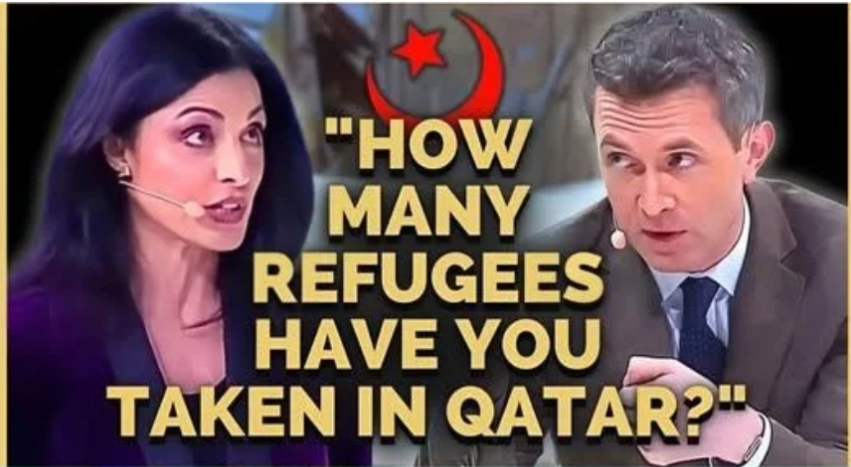
A tense silence fell over a television studio in Doha when a Qatari host passionately defended Muslim immigration — only to pause, visibly startled, as Douglas Murray calmly posed a piercing question. The exchange unfolded on air with the familiar rhythm of a panel discussion, yet something shifted in that instant. Murray’s tone was measured, almost cool, but the weight of his inquiry seemed to hang in the air. The host, moments earlier confident and animated, suddenly found himself navigating a far more complicated terrain.
What began as a routine segment soon transformed into a moment that rippled far beyond the studio. Though the debate took place in Doha, its echoes carried across continents. In an age of instant clips and viral commentary, a single exchange can transcend geography within hours. Viewers from Europe to North America watched, replayed, and dissected the confrontation, projecting onto it their own national anxieties and political struggles.
In the United States, where discussions about border security, refugee admissions, and cultural identity remain deeply personal and politically charged, the clip struck a particular nerve. Supporters of stricter immigration controls saw Murray’s question as a necessary challenge to what they view as idealistic rhetoric. Advocates of more open policies, meanwhile, interpreted the moment as emblematic of a broader skepticism toward multicultural integration. The overseas debate became, in effect, another chapter in America’s ongoing internal conversation.
At its heart, the exchange illuminated a deeper global tension: how nations balance compassion with cohesion, humanitarian responsibility with social stability. Immigration is rarely just about numbers; it touches history, religion, economics, and identity. When the Qatari host defended Muslim immigration, he spoke from a perspective shaped by regional realities and moral conviction. When Murray responded, he drew from a different tradition of political thought, one concerned with integration, social trust, and long-term consequences.
The silence that followed Murray’s question may have lasted only seconds, but it symbolized something larger. In that brief pause, viewers witnessed not merely disagreement but the friction between competing visions of the future. It was a reminder that debates over migration are not abstract policy exercises — they are reflections of how societies understand themselves. The stillness in the studio captured the emotional weight behind statistics and slogans.
Ultimately, the moment underscored the interconnectedness of modern discourse. A question asked in Doha can ignite conversations in Washington, London, or Paris within hours. In that frozen instant, audiences around the world were not just watching a debate; they were confronting the raw tension of a global reckoning over values, responsibility, and the evolving identity of nations. Whether one sided with the host or with Murray, the exchange revealed a simple truth: the future of immigration policy is not only political — it is profoundly human.