Inside Chicago’s Shadow Network: FBI and DEA Expose Insider Corruption, Millions Seized, 59 Arrested
A routine tip arrived quietly, embedded in an otherwise unremarkable lead: “You’re looking in the wrong places. Look closer. Some of the enemy are on your side.” For FBI Special Agent Marcus Delaney, the message struck a deep chord. After years on the job, he had seen countless leads, but this one hinted at something far worse than ordinary criminality—corruption within the very institutions meant to protect the city.
Chicago’s long history of organized crime is widely known—its gangs, cartels, and violent enterprises are legendary. But this investigation would reveal something different: networks protected not just by criminal enforcers, but by individuals within law enforcement itself. The tip suggested that some officers, entrusted with public safety, were quietly aiding organized crime. Federal agents were about to uncover a shadow network of a scale that would shake Chicago’s foundations.
Joint Federal Investigation
Over several months, the FBI and U.S. Drug Enforcement Administration (DEA) coordinated a complex operation. Surveillance teams tracked suspected gang movements, undercover operatives infiltrated deep into trafficking cells, and forensic accountants followed the flow of money—tracing transactions through shell corporations, coded transfers, and financial conduits designed to obscure origins.
As patterns emerged, federal investigators identified troubling signs: certain drug corridors, street distribution points, and storage facilities seemed to operate with impunity. Arrests that should have curtailed activity repeatedly failed to disrupt the networks. Agents concluded their operations had been compromised from within. Someone on the inside was providing information—before raids, before arrests, and before surveillance actions could succeed.
Coordinated Raids and Major Seizures
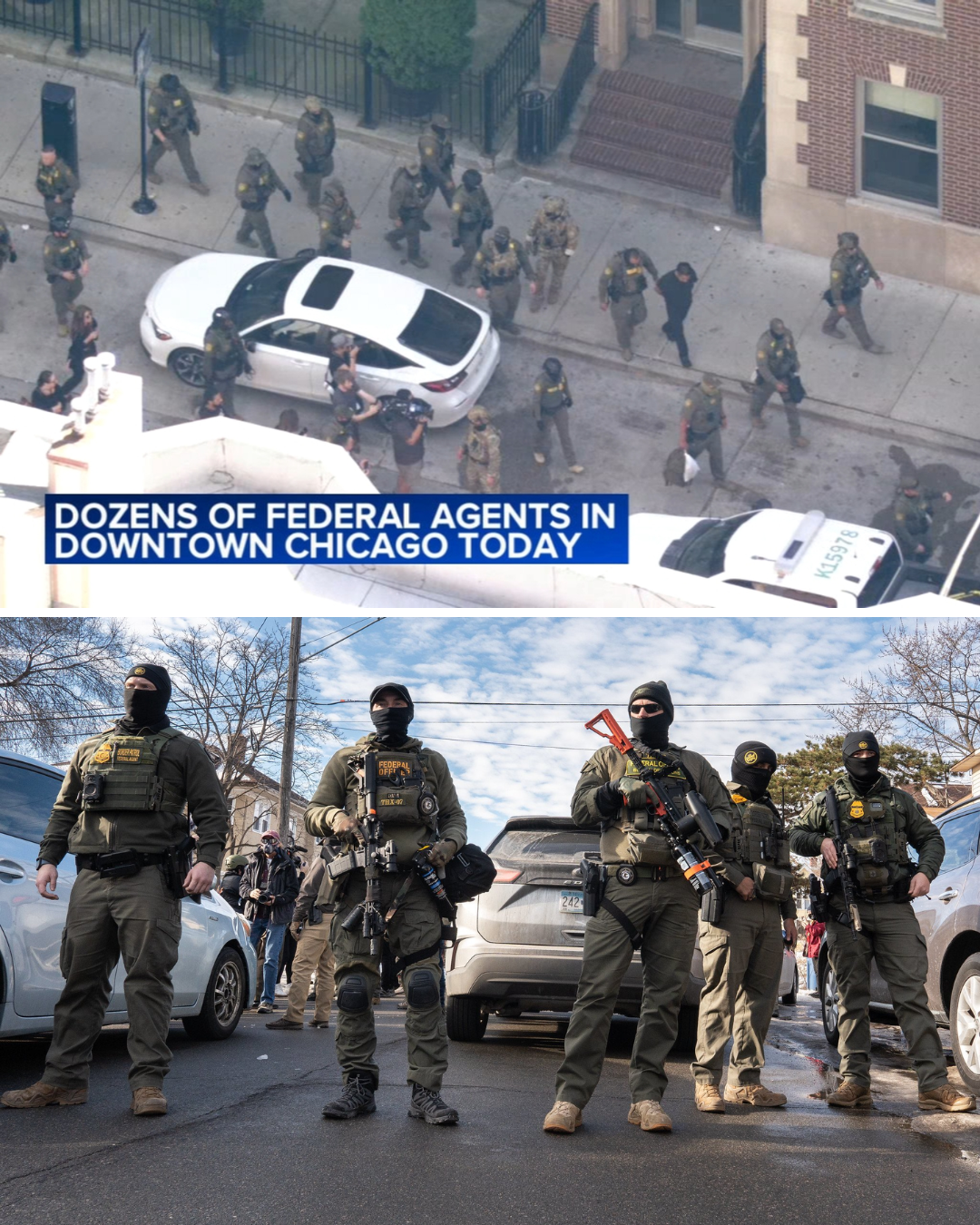
On a crisp November morning, federal teams executed synchronized raids across multiple locations in Chicago. Tactical units breached properties, detained suspects, and secured warehouses. Inside one estate that doubled as a trafficking hub, agents uncovered millions of dollars in cash, sizable quantities of fentanyl, heroin, and cocaine, as well as encrypted digital devices detailing logistics, contacts, and operational hierarchies.
Most unsettling to federal investigators were the names that surfaced in the communications: Chicago police officers. Patrol supervisors, analysts, and other personnel appeared repeatedly in intercepted messages and financial records—implicated not merely as passive observers, but as active facilitators of the criminal enterprise.
Delaney recalled the sinking realization. These were colleagues he had trained alongside, officers he had trusted. The betrayal was not abstract—it was deeply personal.
Insider Threats and Expanding Scope
One of the arrested individuals, a mid-level distributor identified only as Hector, provided insight into the network’s reach. According to his testimony, the operation was far more pervasive than originally believed: “The cops aren’t the only ones. The network has people in city hall, in courts… even in the banks we use. They know everything before we do.” Federal teams soon understood they were confronting not just a street-level trafficking ring, but an entrenched shadow empire embedded across municipal infrastructure.
Encrypted communications, financial logs, and shipment records painted a picture of a sophisticated operation. Every shipment route, safe house, and distribution pattern appeared shielded by insiders—sometimes within law enforcement, sometimes in other civic institutions.
Escalating Threats
As the raids continued, Delaney received encrypted threats directly aimed at him and his team: “Stop digging. Or the next strike will be at your door.” The case was no longer just professional; it had become personal. With each discovery, agents realized the extent of the risk they faced. Allies could be adversaries, and every move had to be weighed against the possibility of retaliation.
Federal analysts traced illicit funds through offshore accounts and complex corporate structures, revealing widespread money laundering that funneled illicit proceeds into legitimate businesses and financial markets. Interviews with suspects showed that some officers believed they were protecting only minor players, unaware of the full scope of the enterprise they were shielding.
Aftermath and Unfinished Business
In the final tally, federal forces reported 59 arrests and the seizure of millions in assets. Insider corruption within the Chicago Police Department had been exposed, and significant operational nodes were dismantled. But as federal teams regrouped, one critical conclusion emerged: the network’s alleged mastermind—referred to only as “The Architect”—remained at large.
Despite the high-profile arrests and substantial seizures, the shadow network had adapted, survived, and persisted. A final encrypted message confirmed the grim reality: “Phase Two begins. You won’t see me coming.” Chicago’s streets, courtrooms, and police stations remained contested terrain in a covert war few truly understood—and the battle for control was far from over.