Princess Eugenie and Prince Harry: The Unlikely Alliance That Reveals Everything About the Windsor Fracture
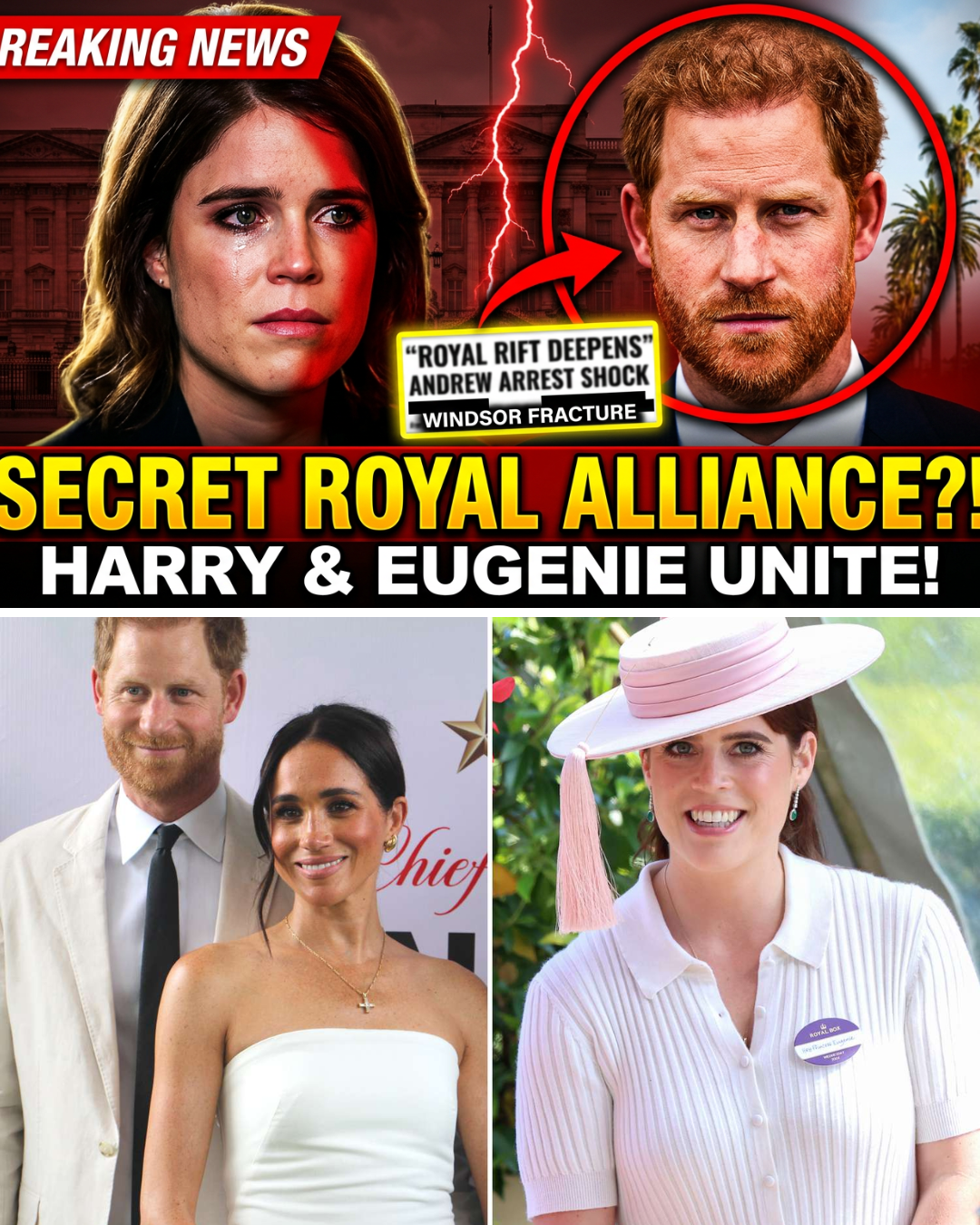
They were not, by any measure, the obvious pair. Princess Eugenie — daughter of the disgraced Andrew Mountbatten-Windsor, deeply embedded in the Windsor establishment, close to her mother Sarah Ferguson and fiercely loyal to the Crown. Prince Harry — self-exiled in California, estranged from his family in a rupture that has been played out publicly and bitterly across two continents and several books. And yet, in the aftermath of Andrew’s arrest, it is Harry that Eugenie is reported to be leaning on.
Multiple sources, as reported by People magazine, describe Eugenie and Harry as “still very close” despite the public fracture between Harry and the wider royal family. The friendship, sources say, has only deepened as Eugenie has grappled with the collapse of her father’s public standing and the extraordinary pressure of being the child of a man at the center of one of the most damaging royal scandals in modern history.
The psychology of this alliance is fascinating and somewhat counterintuitive. On the surface, Harry and Eugenie represent opposite ends of the royal spectrum: the prince who fled and the princess who stayed. But they share something more fundamental — the experience of watching a parent’s public reputation destroyed by decisions that the children had no part in making. Harry’s mother, Diana, died in circumstances that still generate conspiracy theories and visceral public emotion. Eugenie’s father has been arrested. Both know what it means to inherit a legacy of scandal, to wake up every morning to headlines about someone you love that are almost impossible to read.
What is politically significant about this friendship is what it reveals about the internal geography of the House of Windsor. The formal architecture of the family — Charles at the center, William and Kate as the inheritors, the Sussex exile carefully managed — conceals a more complicated human reality. Individual members of the family maintain relationships that cross the official fault lines. Harry may be persona non grata at Buckingham Palace, but he remains a cousin, a friend, and a confidant to a princess who is currently living through one of the most difficult periods of her life.
There is also a more complicated subtext worth examining. Both Harry and Eugenie have, in their different ways, been defined by a royal system that they did not choose and that has treated them — in their own estimation — as expendable. Harry’s departure from royal duties was driven, by his own account, by a sense that the institution would sacrifice him and Meghan to protect itself. Eugenie has watched her father sacrificed by that same institution, stripped of titles and residences as the Palace worked systematically to insulate the Crown from the damage his association with Epstein was causing. Whether that parallel experience of institutional dispensability has created a bond between them is speculative. But the friendship appears to be real, and in the current context, it is one of the more genuinely human stories to emerge from an otherwise relentlessly grim narrative.
It is also a reminder that behind the statements and the strippings of title and the police interviews, there are human beings — daughters and sons, cousins and friends — navigating a family crisis in the full glare of global attention, with very few places to turn.