THE MINAB MASSACRE — 108 Dead Schoolgirls and the War Crime That Could Break the Coalition
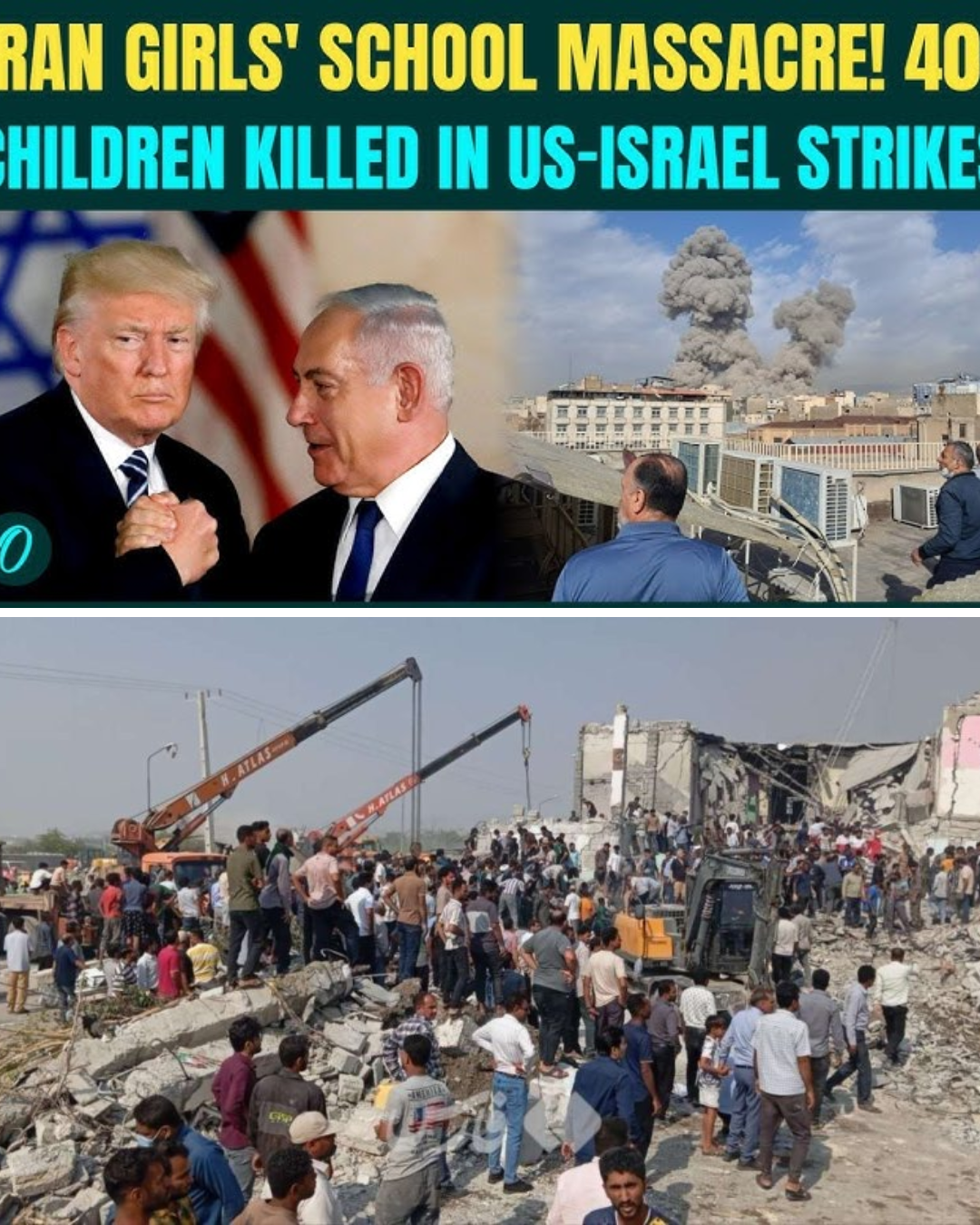
The number keeps climbing. What was initially reported as more than 40 killed in a strike on a girls’ elementary school in Minab, Hormozgan Province, has now been revised upward by Iranian state media to 108 confirmed dead — a figure released Saturday evening by the Minab prosecutor to the Fars news agency. The building, reduced to rubble according to footage broadcast by Iranian state television, was a primary school. The victims were children. And the strike that killed them is now at the center of the most explosive legal and moral controversy of Operation Epic Fury.

What makes the Minab strike so politically combustible is not simply the scale of the killing — it is the extraordinary scarcity of accountability. As of Sunday morning, neither U.S. Central Command nor the Israeli Defense Forces has specifically addressed the Minab school. CENTCOM’s public communications have focused exclusively on military targeting rationale and the successful repulsion of Iranian counterstrikes. The silence is not neutral. Under the laws of armed conflict, parties to a conflict bear an affirmative obligation to investigate apparent violations of international humanitarian law. That investigation has not been announced, let alone conducted.
The ambiguity around attribution deepens the story further. Three possible explanations exist: the school was struck deliberately because of alleged military use — a claim that would require extraordinary evidence given the civilian character of the building; the school was struck accidentally due to targeting error; or the school was struck by misfired Iranian air defense ordnance, a scenario that has occurred repeatedly in previous conflicts when surface-to-air missiles without viable aerial targets fall back to earth and detonate. Iranian officials have attributed the strike directly to the U.S.-Israeli coalition. The coalition has not responded.

For the European governments watching the conflict with a mixture of strategic calculation and moral unease, the Minab school is exactly the kind of incident that transforms a war from a geopolitical event into a human catastrophe demanding political response. France, Germany, and the United Kingdom had already issued civilian evacuation orders, implicitly anticipating the strikes, but had stopped well short of endorsing the operation. If evidence emerges that the U.S. or Israel struck a primary school containing 108 civilians, European governments will face enormous domestic political pressure to formally condemn the operation — fracturing the Western solidarity that American officials have been at pains to project.
The footage currently in circulation shows a crowd gathered around a devastated building in Minab, but, as Le Monde noted, actual footage of victims remains scarce, even as the building’s destruction is clearly documented. The Iranian government’s interest in maximizing the propaganda impact of the school strike creates its own credibility challenges — Tehran has every incentive to inflate the death toll, and its casualty figures have historically required independent verification. But independent verification is currently impossible: Iran’s communications infrastructure is largely offline following an internet blackout imposed by or resulting from the strikes, and no international journalists are present in Minab.
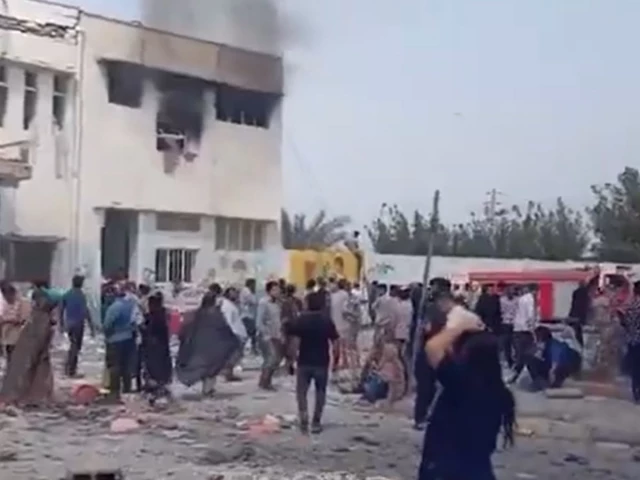
The Minab girls’ school is not yet confirmed as a war crime. But it carries all the defining hallmarks of atrocities that later define a war’s historical and legal legacy. The International Criminal Court, the United Nations Human Rights Office, and multiple international human rights organizations are already signaling they will demand accountability. Whether that accountability ever arrives, given the enormous power differential between the parties, is a different question — and one that says something deeply uncomfortable about how international law actually functions in conflicts involving the world’s most powerful military.
For the 108 families in Minab, legal classifications are irrelevant. Their children are gone. And the world, for now, is still searching for who is responsible.