Between Freedom and Order: A Tense Afternoon in Whitechapel
- TranThuy
- March 1, 2026
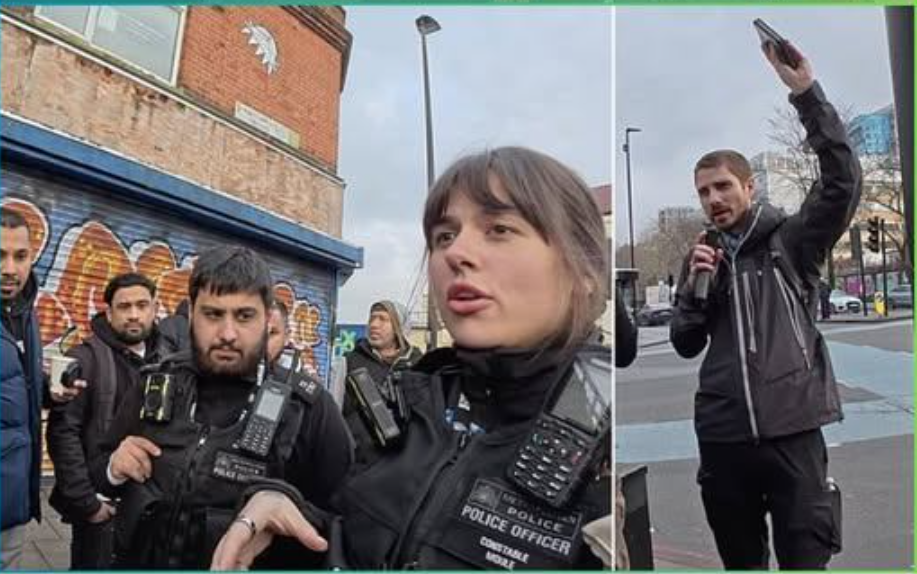
On the busy streets of Whitechapel, an ordinary afternoon shifted abruptly into tension when a controversial sermon ignited outrage among a growing crowd. What began as public preaching soon drew sharp reactions from passersby who felt offended or provoked by the speaker’s words. Voices rose above the hum of traffic, emotions flared, and the narrow pavement filled with people demanding to be heard. In a matter of minutes, disbelief and frustration hung thick in the London air.
Amid the swelling confrontation stood a lone police officer, determined to prevent the situation from spiraling out of control. With limited backup and cameras pointed in her direction, she positioned herself between the preacher and the crowd. Her posture was steady, her expression focused, as she tried to hold the fragile line between anger and order. The scene, captured on smartphones and shared widely online, showed faces tight with emotion and gestures sharp with accusation.
For many in the crowd, the sermon’s message crossed a line. Some argued that freedom of speech should not shield rhetoric that wounds communities or fuels division. Others countered that the right to express unpopular or uncomfortable views is a cornerstone of democratic society. In that crowded corner of East London, abstract principles collided with personal feelings, turning a philosophical debate into a raw and immediate confrontation.
The officer’s response became a focal point of discussion. Calmly but firmly, she reminded those present that free speech and public safety must coexist—even when words sting. Her role was not to endorse or silence the message, but to ensure that disagreement did not erupt into violence. It was a delicate balance: protecting the legal right to speak while safeguarding the peace of a diverse neighborhood.
As tensions gradually eased and the crowd began to disperse, reactions across London remained divided. Some praised the officer’s composure as an example of professionalism and courage under pressure. Others felt the incident exposed deeper fractures within the community, where trust and understanding are still works in progress. Online debates mirrored the street scene, filled with arguments about rights, respect, and responsibility.
Long after the noise faded, a deeper question lingered: how do we defend both freedom and respect in a city built on diversity? London’s strength has long been its mosaic of cultures, beliefs, and voices. Yet that diversity requires ongoing dialogue and mutual restraint. The afternoon in Whitechapel served as a reminder that coexistence is not automatic; it is something that must be carefully maintained—through law, empathy, and the willingness to listen even when disagreements run deep.