Gulf States Under Fire: The Arab World’s Impossible Position
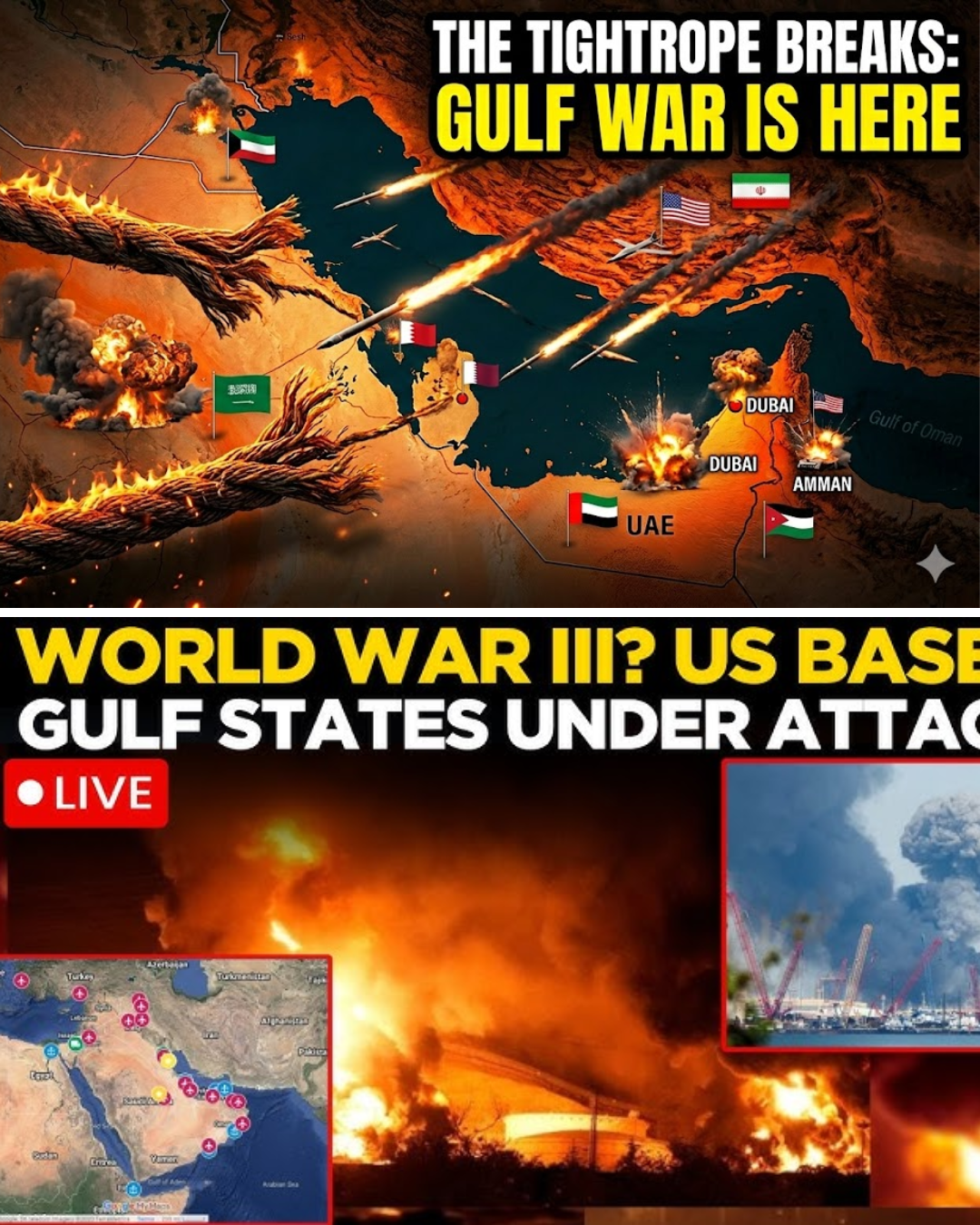
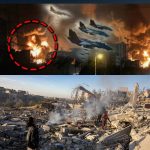
For years, Gulf Arab states walked a tightrope that was as lucrative as it was precarious — hosting American military bases while maintaining pragmatic economic and diplomatic relations with their powerful Iranian neighbor across the water. That tightrope no longer exists. On February 28, 2026, it was cut by a joint U.S.-Israeli military operation launched partly from the very bases those Gulf states agreed to host, triggering Iranian missile barrages directed at six Arab nations simultaneously.
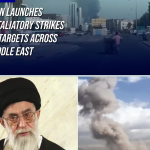
The IRGC’s formal declaration that all U.S. and Israeli military installations across the Middle East are “legitimate targets” was not rhetorical. It was operational. Bahrain, Qatar, Jordan, Kuwait, Saudi Arabia, and the UAE all absorbed Iranian missile and drone attacks within hours of Operation Epic Fury commencing. CENTCOM confirmed that U.S. forces defended successfully against hundreds of incoming projectiles, but “successfully defended” is a statistical concept: at least two people were killed and over 100 injured from Iranian counterstrikes across the region.

Saudi Arabia presents perhaps the most complex case. Riyadh normalized diplomatic relations with Tehran in 2023 in a China-brokered deal that was hailed as a breakthrough in regional stability. That normalization is now effectively a dead letter. Iranian missiles targeting Saudi territory — even if aimed at American military facilities — represent an act of war under any conventional international legal framework. Riyadh’s response will be calibrated carefully, but the Abraham Accords-era vision of a U.S.-Gulf-Israel security architecture being constructed in parallel with Arab-Iranian pragmatism now looks like a pre-war relic.
Qatar’s position is uniquely paradoxical. It hosts Al-Udeid Air Base, the largest U.S. military installation in the Middle East, which almost certainly played a role in Operation Epic Fury logistics. Simultaneously, Qatar has historically served as one of the few Arab states with functioning diplomatic back-channels to Tehran. In the hours after the strikes, calls began multiplying from Western capitals for Qatar to activate those channels as an emergency communication conduit. Whether Doha can sustain that mediating role while absorbing Iranian missiles aimed at its own territory is an open question.

The UAE has the most exposure on the energy side. Abu Dhabi’s economy is built on oil exports, much of which depend on Hormuz being open. Iranian threats — implicit and explicit — to disrupt maritime traffic in the strait represent an existential economic threat that no amount of American air defense can fully neutralize.
There is also the domestic political dimension. Gulf Arab governments are monarchies and emirates that maintain social stability partly through economic prosperity funded by oil revenues. A prolonged conflict that disrupts energy exports, triggers market volatility, and positions their countries as active theaters of an American-Iranian war carries real risk of internal unrest — particularly in younger populations already restive about economic inequality and governance.

The most dangerous near-term scenario for Gulf states is not a single catastrophic missile strike but a slow war of attrition: sustained low-level Iranian missile harassment targeting American facilities, keeping their territory on permanent alert, disrupting civilian infrastructure adjacent to military targets, and gradually making the political cost of hosting U.S. forces too high for any government to sustain.
The Arab world did not choose this war. But it is now fully inside it.