Mohammad Bagher Qalibaf: The Strongman Waiting in the Wings
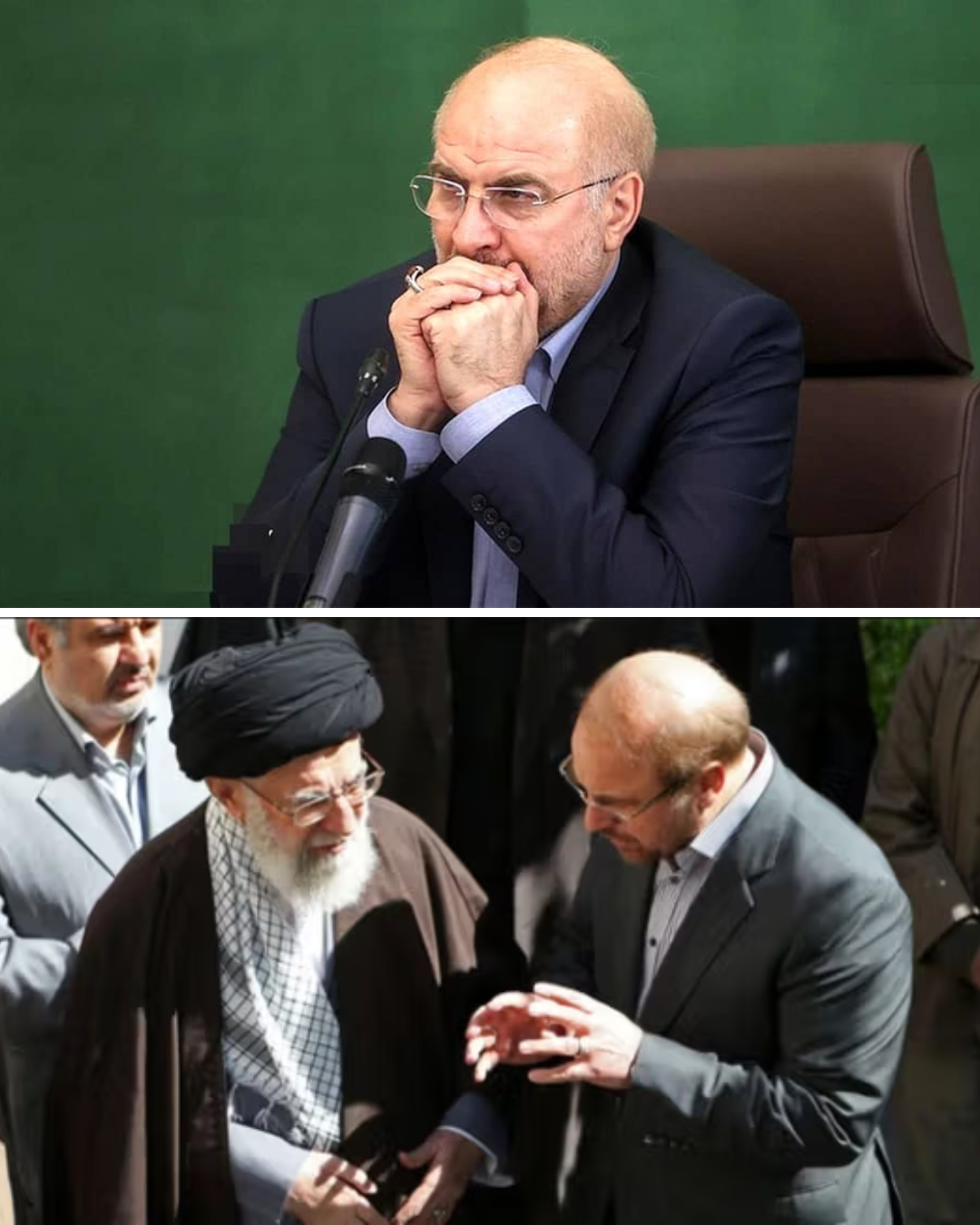
When Iran’s parliamentary speaker Mohammad Bagher Qalibaf appeared on state television on March 1, 2026 to deliver Tehran’s defiant response to Operation Epic Fury, he was not simply reading a prepared statement. He was, consciously or not, auditioning for the most powerful role in the Islamic Republic — a position now vacant for the first time in 35 years, following the death of Supreme Leader Ayatollah Ali Khamenei.
Qalibaf is, by any measure, one of the most formidable figures to emerge from Iran’s post-revolutionary institutional landscape. A former IRGC commander, former chief of Iran’s national police, three-time presidential candidate, and current parliamentary speaker, he represents a specific and historically significant strain of Iranian politics: the military-political hybrid who straddles the IRGC’s institutional power and the Islamic Republic’s formal governmental structures. He is not a cleric. He is a soldier-administrator — and in the power vacuum left by Khamenei’s death, that combination may be exactly what the moment demands.
His televised performance on Sunday was calibrated for an audience of both millions of ordinary Iranians and the dozen or so men who will effectively decide Iran’s immediate future. The rhetoric — fierce, unyielding, nationalist — was designed to project leadership at precisely the moment when the absence of leadership is the regime’s most acute vulnerability. “We will deliver such devastating blows that you yourselves will be driven to beg,” Qalibaf declared. These are not the words of a man preparing to negotiate a ceasefire. They are the words of a man staking a claim.
His IRGC background is both his greatest asset and his most significant liability in any succession contest. The Revolutionary Guard is the dominant institution in post-Khamenei Iran — it controls the missiles still flying, the proxy networks still active, and the coercive apparatus that maintains domestic order. A leader who commands genuine loyalty from IRGC factions has an enormous practical advantage over a purely clerical figure who lacks that institutional base. Qalibaf, having spent decades embedded in the IRGC hierarchy, has those relationships.
But the Islamic Republic’s legitimacy architecture is fundamentally theological, not military. The velayat-e faqih requires the supreme leader to be a recognized religious scholar. Qalibaf is not a cleric. He cannot claim the theological authority that the position formally requires. Any power arrangement in which he plays a dominant role would therefore need either a clerical figurehead to provide legitimacy cover, or a constitutional revision — a genuinely radical step in the middle of an active war.
Qalibaf’s three presidential runs — in 2005, 2013, 2017, and 2024 — suggest sustained personal ambition for executive authority. In several of those runs, he was considered a frontrunner before being outmaneuvered by clerical establishment figures. He has spent his career navigating the gap between military power and political legitimacy in the Islamic Republic. The current crisis, chaotic as it is, may represent the opening he has been positioning for throughout his career.
The wild card in any Qalibaf succession scenario is the IRGC itself — not as a monolith but as a collection of factions with their own commanders, loyalties, and institutional interests. Iran’s next supreme leader will emerge from negotiations between clerical scholars, IRGC commanders, and political figures, largely in secret and under extraordinary stress. Qalibaf is not guaranteed that role. But his Sunday performance ensured his name will be on every list.