China and Russia’s Silence: The Most Revealing Statement of the War
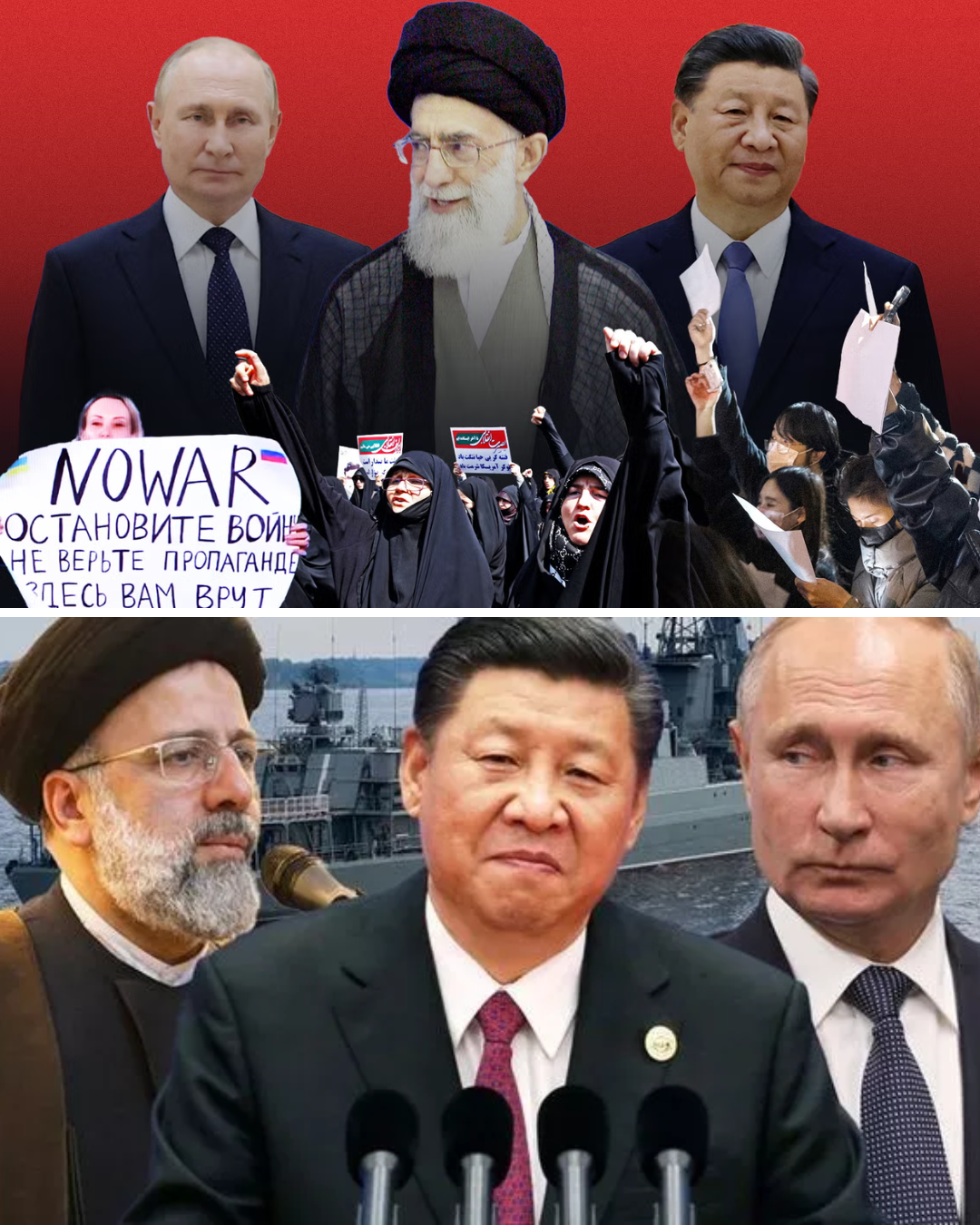
In diplomacy as in warfare, what is not said is often as significant as what is. As the United States and Israel prosecuted the most aggressive military operation against a sovereign state since the 2003 Iraq invasion, two permanent members of the UN Security Council — the countries most structurally positioned to constrain American military power within the international system — have been notable for the studied moderation of their public responses. China and Russia’s restrained reaction to Operation Epic Fury may be the most geopolitically revealing development of this entire crisis.
Russia’s official response, delivered through the Kremlin spokesman and the foreign ministry, condemned the strikes as a “gross violation of international law and the UN Charter” and called for an “immediate cessation of hostilities.” These are the formulaic diplomatic noises that Moscow makes whenever its adversaries do something it disapproves of. They are not the response of a country that feels genuine urgency, or that is prepared to take any material action to change the situation. Russia, with its military entirely consumed in Ukraine — a conflict that it started and cannot conclude — has nothing to offer Iran in this moment except words.
China’s response was similarly muted. Beijing issued a statement “deeply concerned” about the military escalation, called for “all parties to exercise restraint,” and indicated it would raise the matter at the UN Security Council. Notably absent from China’s statement was any of the strong language about “sovereignty violations” or “imperial aggression” that Beijing routinely deploys against U.S. military operations in Asia. The modulation was deliberate. China has significant economic interests in Gulf Arab states — and in the UAE specifically, whose Jebel Ali port handles enormous volumes of Chinese exports. An Iran that is firing missiles at Chinese economic infrastructure is, from Beijing’s perspective, not entirely a sympathetic victim.
The UN Security Council convened in emergency session Sunday, with Iran’s UN ambassador calling for an immediate resolution condemning the strikes as illegal under international law. The outcome was predictable: the United States exercised its veto, and Russia and China did not push beyond rhetoric. The Security Council “action” — if one can call it that — was a procedural demonstration of helplessness. The veto structure of the Security Council, designed to prevent great power conflict by requiring consensus, has long since evolved into a mechanism that enables it by immunizing the permanent members from legal accountability.
But the silence of China and Russia carries implications beyond this specific conflict. Both countries have been the principal architects of a rhetorical framework — the “multipolar world,” the challenge to U.S.-led rules-based international order — that positioned itself as a counterweight to American unilateralism. A U.S.-Israeli military operation of this scale, launched without UN authorization, without NATO consensus, against a sovereign state with which active diplomatic negotiations were ongoing — this is precisely the kind of action that the multipolar framework was supposed to constrain.
It has not constrained it. China is watching its trade interests burn. Russia is watching its diplomatic credibility tested. And neither is willing to do anything material about it.
The lesson for smaller states — particularly those without nuclear weapons and without reliable great-power patrons — may be the most dangerous legacy of the great powers’ silence. If neither Moscow nor Beijing will take meaningful action when a U.S.-Israeli coalition kills a sitting head of state and decapitates a government, what restraint can any state without its own nuclear deterrent realistically count on? The silence from Beijing and Moscow is not just diplomatic passivity. It is a statement about the actual structure of power in the world — and it is deafening.