The Lebanon Front Is Open. The War That Was Two-Sided Is Now at Least Four-Sided.
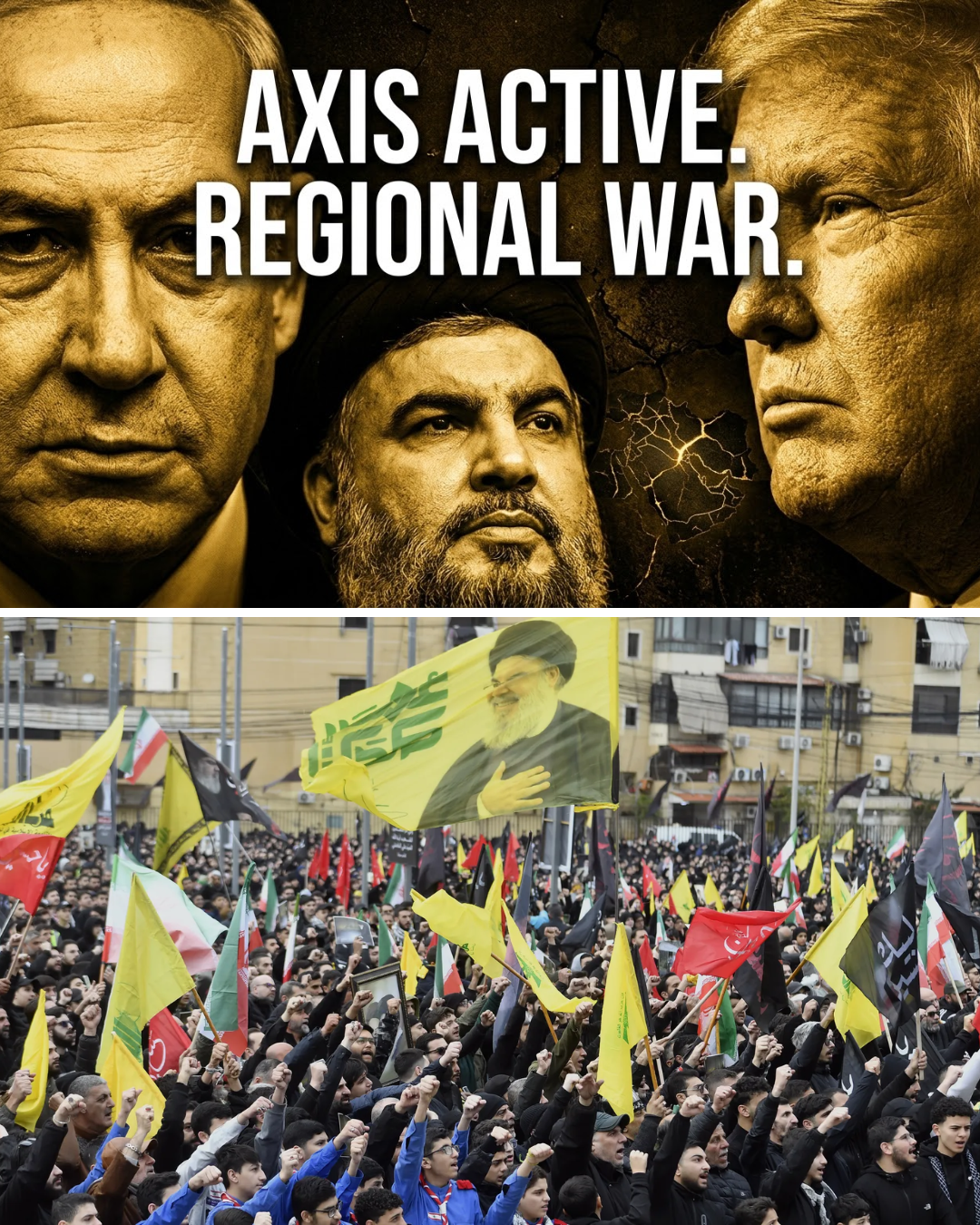
BEIRUT / TEL AVIV — The moment many Israeli defense planners had most feared for three years arrived on the evening of March 1, 2026: Hezbollah officially declared its re-entry into active combat operations against Israel, launching a combined rocket and drone attack from southern Lebanon following the death of Ayatollah Ali Khamenei, whom Hezbollah’s leadership described as “the father of the resistance.”
The Israel Defense Forces confirmed the Lebanese front had reopened, stating it had launched retaliatory strikes on Hezbollah infrastructure in southern Lebanon and Beirut’s southern suburbs. Israeli air raid sirens were reported active across northern Israel, the Galilee region, and, for the first time in this conflict cycle, the Haifa metropolitan area.
Hezbollah’s reactivation transforms the strategic geometry of the US-Iran war in ways that are not merely additive but multiplicative. Israel is now fighting a two-front war simultaneously — conducting offensive strikes against Iran while defending its northern border against a Hezbollah force that, since the 2006 war and the October 2023 conflict, has substantially rebuilt and upgraded its arsenal with Iranian and Russian assistance. Hezbollah is estimated to possess between 120,000 and 200,000 rockets and missiles of varying range and accuracy, including precision-guided munitions capable of striking deep inside Israel.
The Israeli military, by any metric, is among the most capable in the world. But military capability is not infinite, and the simultaneous demands of an offensive campaign against Iran, an active air defense battle across the Gulf, and a new ground-adjacent confrontation on the Lebanese border will test the limits of any military system’s capacity to allocate, prioritize, and sustain.
For the United States, Hezbollah’s entry creates an immediate political complication. American military planners were not publicly prepared for the Lebanese front reopening this quickly. Additional American naval assets and air defense resources — already strained by the six-wave Iranian missile campaign — must now be considered for potential deployment to support Israeli operations in Lebanon, even as the core Iran campaign continues.
The Houthis in Yemen have also announced the resumption of Red Sea attacks, making the active combat frontage of this conflict: Iran, Lebanon, Yemen, the Persian Gulf, and the Red Sea shipping lanes. A war that began with two parties — the US, Israel, and Iran — has, within 72 hours, activated a regional network that Iran spent 40 years and billions of dollars constructing precisely for this contingency.
The “Axis of Resistance” is no longer a theoretical construct. It is operational.