Renewed Debate Surrounds Fatima Events and Modern Claims of Cosmic Significance
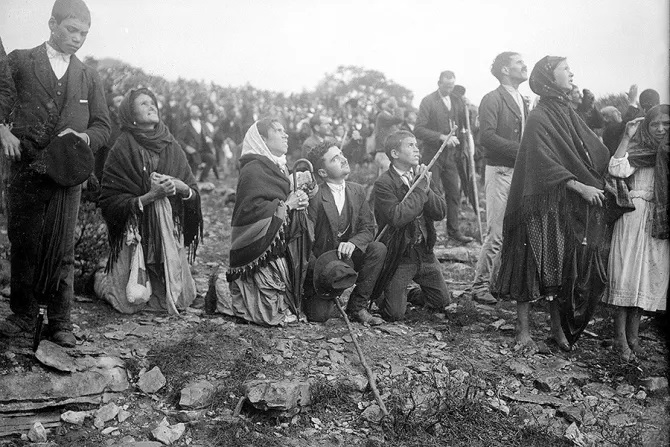
More than a century after the reported apparitions in Fátima, Portugal, the 1917 events continue to spark discussion among theologians, historians, and independent researchers. While the Catholic Church has long framed the Fátima occurrences within a spiritual context, alternative interpretations linking the phenomenon to unidentified aerial sightings and non-human intelligence have resurfaced in recent years.
In 1917, three shepherd children in Fátima — including Lúcia dos Santos — reported a series of apparitions that culminated in what became known as the “Miracle of the Sun.” Thousands of witnesses claimed to see the sun appear as a spinning, silver disc that shifted colors and seemed to descend toward the crowd before returning to its normal position. Contemporary journalists described the object as emitting blue, red, and gray light — details that modern commentators often compare to present-day reports of unexplained aerial phenomena.
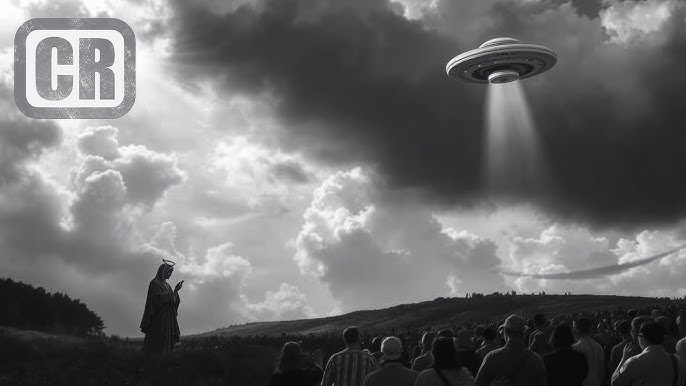
One point that continues to generate speculation is the so-called “Third Secret of Fátima.” According to historical accounts, Lúcia stated that the message should have been revealed in 1960 because “it would have been easier to understand then.” When Pope John XXIII reviewed the contents, he ultimately chose not to publish it at that time.
The reported statement attributed to him — “I cannot reveal the secret of Fatima. It would cause panic.” — has become central to modern reinterpretations. Analysts note that the language suggests concern over public reaction rather than simple theological complexity. The phrasing implies that the message, whatever its content, was perceived as potentially destabilizing or deeply unsettling if misunderstood.
Similarly, remarks attributed to church officials, including references that the message concerned “the fate of humanity,” have fueled speculation. Observers argue that such wording broadens the scope beyond a strictly religious prophecy, opening the door to interpretations involving global transformation, existential risk, or profound societal change. Importantly, however, official Church releases over the years have framed the secret within themes of spiritual struggle, repentance, and perseverance through hardship.
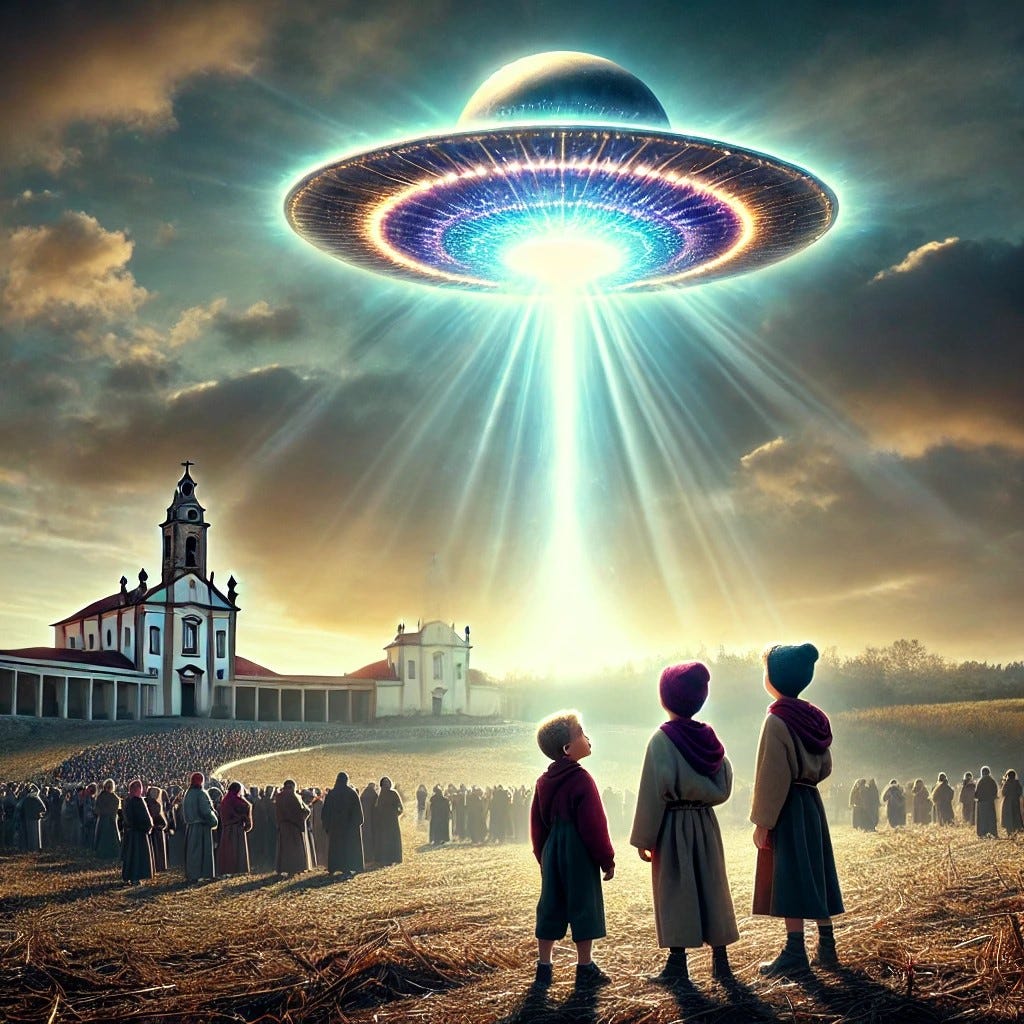
Adding to contemporary debate are claims from American experiencer Chris Bledsoe, who has publicly stated that he received guidance from what he describes as a “female superconsciousness,” referred to as “The Woman.” According to Bledsoe, a significant celestial alignment involving the star Regulus — historically known as the “Star of the King” — will occur on April 5, 2026, appearing red near the horizon in alignment with the Great Sphinx of Giza.
Bledsoe interprets this predicted event as symbolizing the beginning of a new civilizational cycle, the awakening of hidden knowledge, and an energetic shift affecting humanity. Astronomers note that Regulus, the brightest star in the constellation Leo, does periodically shift in apparent color when viewed near the horizon due to atmospheric distortion. Researchers emphasize that such visual effects are natural phenomena, though symbolic interpretations vary widely among spiritual communities.
Another layer of intrigue involves a historical note recorded by Loris Capovilla, private secretary to Pope John XXIII, referencing unusual experiences at Castel Gandolfo. While some writers interpret these entries as implying contact with a non-human presence, mainstream historians caution that such claims lack independent verification and are often based on secondary accounts.
Modern scholars analyzing the “First Secret” — traditionally associated with a vision of suffering and spiritual struggle — suggest that symbolic language about “dangers” could be interpreted metaphorically. Some contemporary commentators frame it as a warning about environmental instability, planetary transitions, or shifts in human consciousness. However, these interpretations extend beyond official theological explanations and remain speculative.
The enduring power of the Fátima story lies in its layered meanings. For believers, it represents a call to reflection and spiritual awareness. For researchers exploring unidentified phenomena, it offers a historical case study of mass sightings and collective experience. For cultural historians, it stands as a pivotal moment when faith, media, and public expectation intersected dramatically.
More than a century later, the events of 1917 continue to inspire debate across disciplines. Whether viewed through a religious, symbolic, astronomical, or speculative lens, Fátima remains a focal point in discussions about humanity’s search for meaning — and about how societies interpret extraordinary events when they challenge conventional understanding.